By Staff Reporter
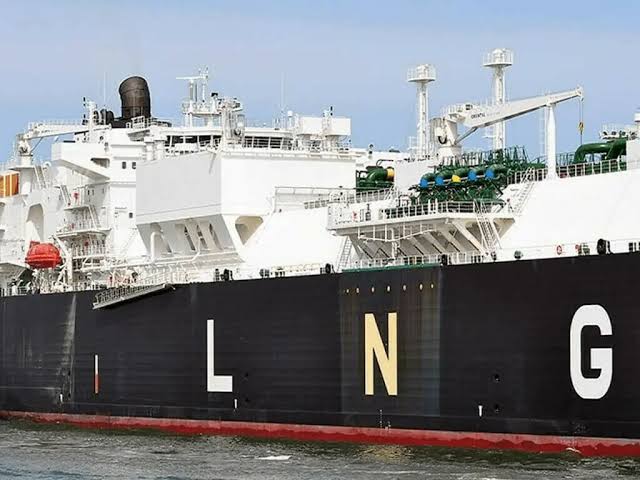
KARACHI: Pakistan is considering allowing power plants and other private companies to import liquefied natural gas directly, a move that would loosen the state’s hold on LNG procurement as the government tries to shore up supplies without straining public finances, Bloomberg reported on Wednesday.
The Energy Ministry’s petroleum division has submitted a proposal to greatly expand the auctioning of unused terminal capacity and let private companies import LNG themselves.
The country’s two LNG import terminals have been largely idle since March, when the Middle East conflict virtually halted shipments from Qatar, Pakistan’s biggest LNG supplier. Existing rules make it difficult for any buyer other than state-owned Pakistan LNG Ltd. to procure cargoes on the spot market.
Rather than allocating spare capacity on a three-month rolling basis, the division wants Sui Southern Gas Co. and Pakistan LNG to be able to auction operationally available capacity at their respective terminals for a set period and quota. The regulator would fix both after weighing downstream demand and import needs. The proposal has been sent to the Economic Coordination Committee for approval and draws on Clause 6.2(a) of the 2011 LNG Policy.
The proposal targets a cost problem as well as a supply one. According to the Petroleum Division, consumers have been paying more than $0.2 million a day in terminal capacity charges, even during stretches when state entities weren’t supplying any gas through the facilities. Pakistan had also agreed with Qatar to divert 24 cargoes to other buyers this year because domestic demand was soft. Demand then rose after the escalation of the US-Iran conflict, just as Qatari deliveries were disrupted.
Pakistan has been struggling with rolling blackouts and a fuel shortfall since the near-closure of the Strait of Hormuz to gas vessels sharply cut its LNG deliveries. The government has bought some spot cargoes to replace the lost Qatari volumes, but prices are more than double prewar levels, which is weighing on the state’s finances. With few alternatives, authorities have bought expensive spot cargoes to keep gas flowing to power generators and industrial users.
Pakistan GasPort Ltd., which operates one of the terminals, has long called for non-state firms like itself to be allowed to import LNG. The idea is not new. A Senate committee urged the government in 2022 to help the private sector import LNG, and was told at the time that only one private company, Universal Gas Distribution Co., was in a position to do so. That company had signed a supply deal with ExxonMobil in 2019.
Supplies have recovered only in part. The Al Marrouna, carrying about 82,000 tonnes from Qatar’s Ras Laffan terminal, docked at Port Qasim on Sept. 10. It was the first Qatari cargo to reach Pakistan through the strait since July 11. It was delivered under a government-to-government arrangement with Qatar, and Pakistan LNG cancelled a spot tender it had issued days earlier.
A second vessel, the Shandong Redwood, arrived at the Pakistan GasPort terminal on Sept. 23 under the long-term Qatar contract, priced at 13.37% of Brent crude. Pakistan reached an arrangement with Iran to allow the tanker to pass through the strait. The cargo was the tenth Pakistan has received since April.
Qatar, which supplied around a fifth of global LNG exports before the war, largely halted shipments after one of its tankers was attacked in late July, and last month extended force majeure on deliveries to European and Asian customers into October. In the high-demand season, Pakistan needs four to five cargoes a month to sustain about 5,000 megawatts of LNG-fired generation. Delays have forced blackouts of up to 12 hours.
Copyright © 2021 Independent Pakistan | All rights reserved