By Staff Reporter
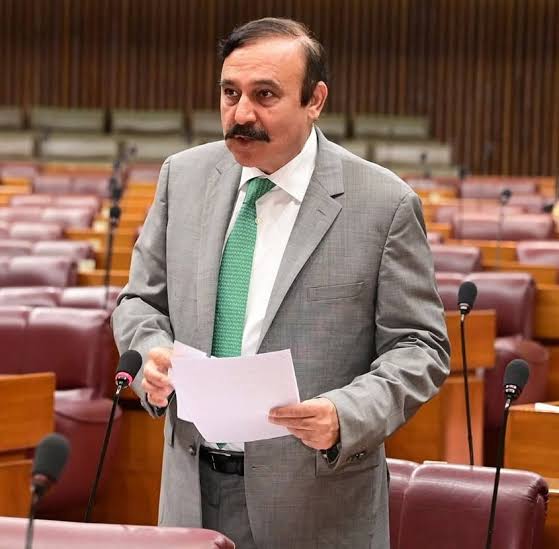
ISLAMABAD: The federal government is “seriously considering” declaring an emergency in Khyber Pakhtunkhwa, a senior minister has said, escalating a confrontation with the opposition-run province days before Imran Khan’s party marches on the capital.
Tariq Fazal Chaudhry, the minister for parliamentary affairs, told reporters at Parliament House on Wednesday that the measure would be imposed under Article 232 of the Constitution. He blamed the provincial government, led by Pakistan Tehreek-e-Insaf (PTI), for what he called a failure to curb a rapid rise in terrorism.
“The federal government is seriously considering the imposition of emergency in KP,” he said. He accused the provincial administration of becoming “an obstacle” to federal efforts to prevent terrorism.
Chaudhry insisted the proposal was not driven by the government’s quarrel with PTI, and said ministers were prepared to bear any political cost. He said people and security personnel were losing their lives as the situation deteriorated. He also drew a contrast with Balochistan, which he said faces terrorism too, but where the chief minister was taking steps to counter it.
The Pakistan Peoples Party (PPP), a key partner of the governing coalition, would be brought on board, he said. Chaudhry described it as a party that had “always fought terrorism with full force”. A PPP delegation led by Senator Naveed Qamar was due to meet National Assembly Speaker Ayaz Sadiq on Wednesday to discuss legislation “in view of the prevailing circumstances”, he added.
Prime Minister Shehbaz Sharif chaired a high-level meeting in Islamabad the same day to review options for Khyber Pakhtunkhwa, including governor’s rule or emergency measures. Interior Minister Mohsin Naqvi briefed participants on security, and discussion reportedly covered the PTI march and backchannel contacts with the party’s leadership. Reports said Articles 232 and 234 of the Constitution were discussed. Article 232 covers emergencies caused by internal disturbance beyond a provincial government’s ability to control, while Article 234 applies where a province’s constitutional machinery cannot function.
The talk of federal intervention is not new, and the government’s message has been inconsistent. On 21 September, Mr Naqvi said the Law Ministry was being consulted on legal options for the province, including governor’s rule, if PTI went ahead with its march. Two days later Information Minister Atta Tarar ruled out any plan to remove the PTI administration.
On Monday, several ministers reopened the question. Amir Muqam, the minister for Kashmir affairs, said consultations were under way on the “constitutional and legal option” of governor’s rule. Law Minister Azam Nazeer Tarar said such a step, or an emergency, could be taken if the constitutional conditions were met. Governor Faisal Karim Kundi warned the provincial government against creating a situation that would force the Centre’s hand.
PTI has rejected the threats. Barrister Gohar Ali Khan, the party chairman, said at Parliament House that the answer to the march should be “political engagement” with Khan rather than governor’s rule. He said the 4 October march would stay “peaceful and completely political” and would go ahead as planned. “Only the release of Imran and Bushra Bibi can pave the way for resolving political problems,” he said. Khan and his wife Bushra Bibi are in jail.
Gohar also said Sohail Afridi, the chief minister, had the backing of Khan and the whole party. “It is Imran’s province, Imran’s mandate prevails, and Imran’s directions are followed,” he said. Another report said PTI had invited a PPP delegation to an all-parties conference.
Afridi said he would not back down over threats of governor’s rule or an emergency. He warned that PTI would “rebel” if necessary to force a change in federal policies he said were harming the province. He also said supporters could take to the streets at short notice if any attempt was made to remove him. The Chief Minister’s House said the federal government could take whatever measures it wished, but that the march would proceed.
There are signs of strain within the party. According to party sources, Afridi told a meeting of PTI’s parliamentary party in Peshawar that he was unhappy with preparations for the march. Some lawmakers had joined by video link rather than attending in person. “We also have Mir Jafars and Mir Sadiqs within our ranks,” he reportedly said, using terms of betrayal from South Asian history. The sources said he told the meeting the party would leave Peshawar on 4 October. “We are not going to conquer Islamabad, and the federal government is blocking our way,” he reportedly said. Responding to claims that marchers might carry sticks or slingshots, he said: “We will go with two hands and two feet.” Later he posted on X: “You should prepare; I am ready.”
PTI’s provincial president, Junaid Akbar, ordered lawmakers and party leaders abroad to return. He said anyone absent on 4 October would have no connection with the party and could form another one. Shafi Jan, the provincial information minister, said the march would start from southern Khyber Pakhtunkhwa and be led by Mr Afridi.
Another PTI figure, Shaukat Yousafzai, has urged the leadership to postpone the march again, warning that the risk of emergency rule makes delay imperative. That contrasts with the public line from Afridi and Gohar.
PTI first announced the march for 27 September, saying it had exhausted constitutional and legal avenues. Before the date, the Islamabad High Court told federal and provincial authorities not to use state resources for the protest, and ruled that political parties and office holders could not block roads. The government stepped up security and warned against disrupting traffic and economic activity. The march was then pushed back to 4 October.
The government has repeatedly urged PTI to call it off, saying Islamabad cannot be shut down. Talal Chaudhry, the minister of state for interior, called for dialogue, saying a route that could be opened through talks could not be opened by marching. Governor Kundi said the “ground reality” was not in PTI’s favour. He has also warned that the province cannot afford a long march in the current security climate.
Removing the provincial government does not require an emergency. Reports have circulated of a possible disqualification of the chief minister, an in-house change, dissolution of the assembly, or a no-confidence motion under Article 136. Such a motion needs signatures from 20 percent of the assembly’s members. A session must then be convened within three to seven days on a single-point agenda, with a secret ballot. If it succeeds, the speaker sets a schedule to elect a new chief minister. Under Article 130(7), the governor can also require the chief minister to seek a confidence vote if he believes the chief minister has lost the house’s majority.
Copyright © 2021 Independent Pakistan | All rights reserved