By Staff Reporter
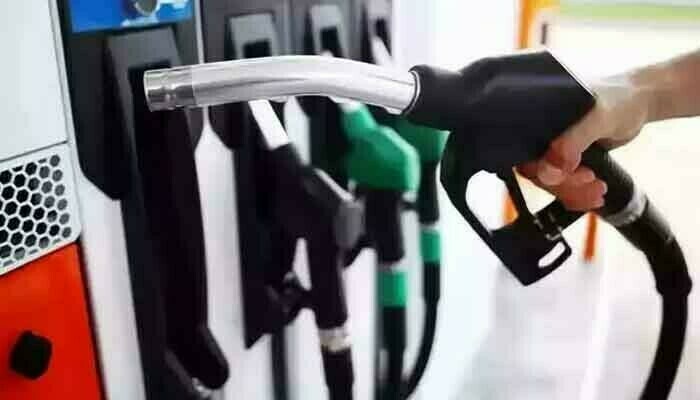
ISLAMABAD: The government lowered pump prices for a third consecutive day, though the cut in petrol was a token 14 paisa a liter, as fuel remains far more expensive than before the US-Iran war began.
The government reduced petrol by Re0.14 to Rs387.40 a liter and high-speed diesel by Rs1.89 to Rs400.35, according to a Petroleum Division notification. The prices apply to Thursday, Oct. 1. Petrol had been Rs387.54 and diesel Rs402.24. The division attributed the change to global developments, including shifts in Platts benchmark rates, premiums and incidental costs.
The latest move follows cuts of Rs1.49 on petrol and Rs2.73 on diesel for Sept. 30. On Monday, the government cut petrol by Rs2.27 to Rs389.03 and diesel by Rs3.56 to Rs404.97. Over the three announcements, petrol has fallen by Rs3.90 and diesel by Rs8.18.
The scale of the past seven months is clearer against the longer record. Diesel started at Rs281 a liter before the war broke out on Feb. 28 and peaked at Rs520.35 on April 3. It is now about 23% below that high but still roughly 42% above its pre-war level. Petrol climbed from Rs266 in the first week of March to a peak of Rs458.41 on April 3. It is about 15% below that level and about 46% above where it began. Taxes and duties still add Rs114 a liter to petrol and Rs100 to diesel.
Petrol is used mainly by private motorists, rickshaws and two-wheelers, so its price bears most heavily on middle- and lower-middle-income households. Diesel, used in heavy transport, power plants and large generators, feeds through to the wider economy. Petrol and diesel are the main revenue earners in the fuel market, with combined monthly sales of about 700,000 to 800,000 tons. Kerosene demand is only about 10,000 tons a month.
The pricing system has changed repeatedly. After the war began, the government announced weekly revisions and conservation measures against the risk of supply disruption. On July 17, Petroleum Minister Ali Pervaiz Malik said prices would be set daily because of swings in global markets after renewed hostilities between Iran and the U.S. The cabinet and Prime Minister Shehbaz Sharif gave the Oil and Gas Regulatory Authority responsibility for setting them based on international trends. Islamabad also announced targeted subsidized fuel in April.
Pressure on household budgets has prompted further steps this month. On Sept. 13, Sharif announced a relief scheme offering Rs100 a liter off petrol for motorcycles, three-wheeler rickshaws and cars with engines up to 800cc. About 10 million two-wheeler users and 800,000 three-wheeler users can claim relief on 20 liters a month, worth up to Rs2,000 each. Another 1 million small-car owners can claim on 30 liters, worth up to Rs3,000. Those caps imply a maximum outlay of about Rs24.6 billion a month, by Bloomberg-style arithmetic on the announced figures.
Deputy Prime Minister and Foreign Minister Ishaq Dar chaired a meeting of the National Steering Committee on Fuel Subsidy on Tuesday and praised the program as a “whole of government” effort. Officials said about 7.60 million registrations have been completed and 7.71 million tokens redeemed, with redemptions now in their second week.
On Sept. 17, the government reinstated austerity and fuel-conservation measures. Shops, markets, malls and bazaars must close by 9 p.m. Marriage halls and similar venues must close by 10 p.m., and restaurants and cafes by 11 p.m. Takeaway and home delivery are exempt. Fuel allocations for official vehicles have been cut by 50% for three months.
Pakistan imports most of its petroleum, so moves in crude reach domestic prices quickly. Those are shaped by OPEC+ decisions, Middle East conflicts, sanctions and disruption to shipping lanes such as the Strait of Hormuz and the Red Sea.
Global prices rose Wednesday and were heading for a large monthly gain as U.S.-Iran peace talks stalled and U.S. fuel markets tightened. Brent for November, which expires Wednesday, rose $1.12, or 1%, to $103.71 a barrel in New York. The more active December contract gained $2.65, or 2.8%, to $98.81. West Texas Intermediate climbed $1.98, or 2.2%, to $91.98.
Goldman Sachs estimated in a note that Gulf oil exports have recovered to 23.3 million barrels a day over the past week, in line with the 2025 average, after doubling in September. Analysts at Japan’s MUFG said recovering crude flows should ease supply-driven price pressure, though “persistent product shortages and elevated freight costs” are likely to keep the wider energy market tight.
Copyright © 2021 Independent Pakistan | All rights reserved