By Staff Reporter
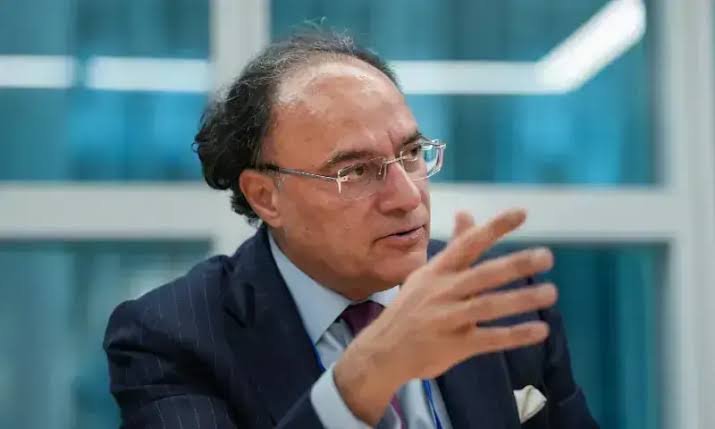
KARACHI: Pakistan intends to keep widening its sources of overseas funding, with more yuan-denominated bonds and a possible debut in Japan’s samurai market under consideration, Finance Minister Muhammad Aurangzeb said.
Aurangzeb told Nikkei Asia on Monday that Pakistan will continue to “diversify its funding sources.” He spoke on the sidelines of the annual meetings of the International Monetary Fund and World Bank, which opened in Bangkok the same day.
The aim is not to borrow more. “We do not want to increase the quantum of our external debt,” he said, adding that he is interested in ways to spread the burden, including yen-denominated samurai bonds. Such an issue “would make sense” and is “something which we should think through,” he said. “We need to do more homework.”
Pakistan sold its first panda bond in mid-May, raising 1.75 billion yuan ($261 million) under a 7.2 billion yuan program. The Asian Development Bank and the Asian Infrastructure Investment Bank provided partial guarantees. Panda bonds are yuan-denominated securities sold by foreign issuers in China’s domestic market.
Aurangzeb said the May deal will not be a “one-time issuance,” and that Islamabad plans to “keep going back and be a repeat issuer.” He described China as the “second largest and deepest capital market in the world.”
Pakistan is one of several emerging economies, Indonesia among them, to use the panda market to expand its investor base. Issuance reached roughly 160 billion yuan ($23.8 billion) in the first half of 2026, up 68% from a year earlier, according to S&P Global. Foreign borrowers accounted for 50% of the total, compared with 39% last year.
Tariff Policy
Aurangzeb also said Pakistan is working to attract foreign direct investment by making key industries, including autos, more competitive. Last year the government unveiled a five-year National Tariff Policy that gradually lowers import duties in key sectors.
“We will not make any compromise on the national tariff policy,” he said. “It’s not only about the auto industry — it’s about industries in general.”
Past governments granted protection without sunset clauses, he said. “That has not worked for Pakistan,” Aurangzeb said. “We want to make our industry competitive.” He said the policy can help exports, “especially for raw materials and intermediate goods.”
He pointed to ASEAN, which cut tariffs in the late 1990s. “This can very much be a Southeast Asia moment for Pakistan,” he said.
Pakistan is seeking cabinet approval for a revamped auto policy that backs electric-vehicle adoption as part of its energy-transition and climate strategy. Islamabad wants 30% of new vehicles sold to be electric by 2030.
The policy’s strict export targets for automakers have drawn criticism, and some observers say they favor Chinese new-energy-vehicle makers. BYD Co., which has begun local assembly, is among the Chinese EV companies already drawn to Pakistan. Aurangzeb said Islamabad welcomes Chinese automakers, “all of them.”
China is Pakistan’s largest bilateral lender. The two countries marked 75 years of diplomatic relations in May, a partnership that spans economic, defense and geopolitical cooperation.
IMF Program
Pakistan joined the IMF in 1950 and has entered more than two dozen programs since, making it one of the fund’s most frequent borrowers. It is now in its 25th arrangement. As of Monday, it owed the IMF about $10.5 billion.
“We’re in good shape with respect to the program itself, which in turn helps us with our discussions with rating agencies and investors,” Aurangzeb said. The program carries a “structural reform agenda” that will “lead to sustainability,” he said.
Pakistan will graduate from IMF assistance once the “rest of the world becomes convinced that we don’t need the lender of last resort,” he said.
An IMF mission led by Iva Petrova was due in Pakistan from Sept. 23 for roughly two weeks to conduct the fourth review of the $7 billion Extended Fund Facility and the third review of the Resilience and Sustainability Facility, covering the period ended June 30. Official reports indicate that only a few of more than three dozen governance targets set for January to June 2026 were met.
Copyright © 2021 Independent Pakistan | All rights reserved