By Staff Reporter
KARACHI: The International Monetary Fund raised its forecast for Pakistan’s inflation in the fiscal year through June 2027 to 9.9%, from 8.4% in April, while leaving its growth projection near 3.5%.
The fund’s World Economic Outlook, released on Tuesday at its annual meetings in Bangkok, puts consumer-price growth 2.8 percentage points above the 7.1% it estimates for the year that ended in June. It is also above the 8.2% benchmark set by the federal government.
The revision traces to the energy shock from the war involving the US and Iran. The report assumes oil will average $95.74 a barrel this year, up from $67.74 in 2025, based on futures prices. The assumed price eases to $87.39 in 2027. Global inflation is projected at 4.7% this year, which the IMF attributes largely to higher energy and food prices, before easing to 4.1% in 2027.
Deniz Igan, an IMF Research Department division chief, said at the report’s launch that global resilience is becoming increasingly uneven. Growth is projected at 3.1% this year and 3.4% next year, but economies benefiting from the AI-driven investment boom or favourable terms of trade are doing relatively well, Igan said. Many energy-importing and lower-income economies face a much tougher environment.
The Middle East and Central Asia is the hardest-hit region, contracting 0.3% in 2026. Gulf producers face double-digit declines, with Kuwait at 16.7%, Iraq at 16.0%, Qatar at 15.6% and Bahrain at 11.3%. The IMF described its outlook for the region as consistent with a longer closure of the Strait of Hormuz than it assumed in April.
The fund said energy importers outside the technology boom face the most difficult configuration. It said the risks weigh most heavily on emerging markets with limited fiscal space and external buffers, where higher commodity prices could widen current-account deficits, raise external financing needs and add to exchange-rate pressure. Medium-term downgrades are concentrated in economies directly affected by the conflict and in energy-importing emerging markets, excluding India.
Pakistan fits that description. The country draws more than 90% of its imported LNG from Qatar, and imported gas supplied about one-fifth of consumption in the nine months through March. QatarEnergy has extended its delivery suspension until November. Pakistan normally receives about nine cargoes a month from Qatar and secured two in September through diplomacy. Officials are seeking extra supplies before winter.
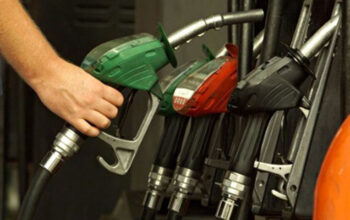
Prices show the strain. Motor fuel was 37.7% more expensive in September than a year earlier, and electricity charges were up 32.5%. Wholesale inflation accelerated to 13.3%.
The current account is projected to swing to a deficit of 1.0% of gross domestic product in fiscal 2027 from balance in fiscal 2026. That follows a surplus of 0.5% in 2025, which IMF staff described last year as the first in 14 years. The new deficit forecast is a touch wider than the 0.9% projected in April.
The economy is forecast to expand 3.6% in fiscal 2026 and 3.5% in fiscal 2027, after 3.2% in 2025, matching April’s projections. The government targets 4% growth, and Finance Minister Muhammad Aurangzeb has said output will exceed that. The IMF sees unemployment easing to 6.9% in 2026 and 6.5% in 2027 from 7.1% in 2025. Pakistan’s figures are on a fiscal-year basis ending in June.
The buffers that helped economies absorb recent shocks are shrinking, Igan said. That keeps risks tilted to the downside, with Middle East tensions able to persist or escalate, sovereign bond yields rising and trade tensions renewing. Emergency oil stocks released this year are now depleted, the report warns, and governments with high debt and deficits have little room to shield consumers from another price jump. Without rebuilt buffers, the fund said, the global economy could soon test the limits of resilience. India is the exception among importers, with its growth forecast raised to 7.0%.
Pakistan sits in the group of oil importers that the IMF projects to grow 4.7% in both 2026 and 2027, faster than Pakistan. Their inflation is seen at 9.4% this year and 11.0% in 2027, and their current-account deficits at 4.4% and 4.5% of GDP. Egypt is forecast to expand 5.1% and 4.7%, with inflation of 13.3% and 14.8%. Bangladesh is seen at 3.6% and 3.2%, with inflation of 8.7% and 10.9%. The Middle East and Central Asia region is seen rebounding 6.3% in 2027.
At home, consumer prices rose 10.3% in September from a year earlier, slowing from 11.1% in August, according to the Pakistan Bureau of Statistics. Inflation averaged 10.2% in the first quarter of the fiscal year. Urban core inflation was 8.6% and rural core 8.1%. Against that first-quarter average, the IMF’s full-year figure implies readings averaging roughly 9.8% over the remaining nine months, only modest easing.
The State Bank of Pakistan left its policy rate at 11.5% on Sept. 14, a real rate of about 1.2 percentage points over September inflation. Its next policy meeting is scheduled for Oct. 26. Igan said monetary policy should stay data-dependent and tailored to country circumstances, including how exposed an economy is to disruption from the war.
Igan also said governments need to rebuild fiscal space without delay, given high debt and rising borrowing costs. Any support for households facing higher food and energy prices should be temporary, targeted, and non-distortionary, Igan said. The fund had objected during recent talks to Pakistan’s monthly cash payments of 2,000 rupees to motorcyclists and 3,000 rupees to small-car owners. The IMF viewed the scheme as costly and broad-based.
The outlook arrives days after IMF staff reached a staff-level agreement with Pakistan on the fourth review of its Extended Fund Facility and the third review of its Resilience and Sustainability Facility. If the executive board approves, Pakistan would gain access to about $1 billion under the first and about $210 million under the second. That would bring total disbursements under the two arrangements to about $5.7 billion. Mission chief Iva Petrova said the authorities had steered the economy through the impact of the Middle East conflict, pointing to sovereign rating upgrades and renewed access to international markets. The board meeting is tentatively scheduled for late November. Aurangzeb is in Bangkok leading Pakistan’s delegation to the meetings, which run through Oct. 18, with more than 60 engagements planned.
Some indicators have been firmer. The current-account deficit in August narrowed 78% month-on-month to $98 million, and remittances rose 12.7% year-on-year in September to $3.59 billion. The government also posted a primary surplus of 2.9% of GDP in fiscal 2026, above the IMF target. S&P Global Ratings has upgraded Pakistan’s sovereign rating to B.
Political risk has also risen. On Sunday, President Asif Ali Zardari declared an emergency in Khyber Pakhtunkhwa, ending the provincial government led by jailed former Prime Minister Imran Khan’s party, as his supporters marched toward Islamabad demanding his release.
Copyright © 2021 Independent Pakistan | All rights reserved