By Staff Reporter
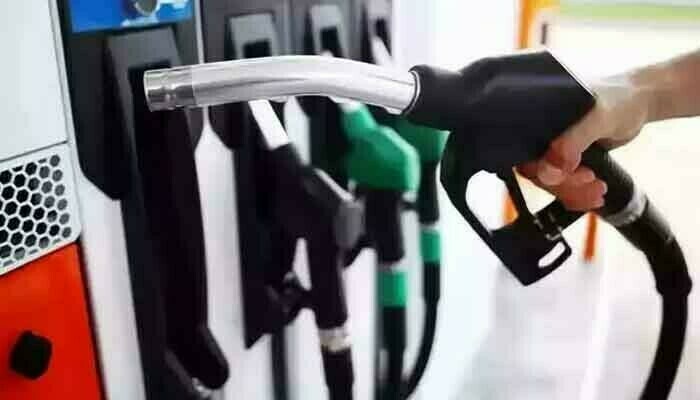
ISLAMABAD: The government lowered petrol prices for a second straight day, cutting the rate by 2.71 rupees a liter to 392.66 rupees for Wednesday.
The Petroleum Division also reduced high-speed diesel by 3 paisas to 396.82 rupees a liter, according to a notification issued on Tuesday. That leaves diesel almost unchanged after a 61-paisa increase a day earlier. The government continues to levy 114 rupees a liter in taxes and duties on petrol and 100 rupees on diesel, about 29% and 25% of the pump prices.
Monday’s revision took 2.93 rupees off petrol, so the two cuts together total 5.64 rupees from 398.30 rupees. Even so, petrol is almost 48% above the 266.17 rupees it fetched on March 1, days after the U.S.-Iran war began on Feb. 28. Petrol was selling for just Rs266.17 per litre on March 1, 2026. Diesel has risen about 41% from 281 rupees over the same period.
Both fuels remain well below their records. Petrol peaked at 458.41 rupees and diesel at 520.35 rupees in early April, leaving current prices about 14% and 24% under those highs.
Prices are now set every day; The government announced the change on July 17, citing swings in international markets after hostilities between Iran and the U.S. resumed. The cabinet and Prime Minister Shehbaz Sharif had given the Oil and Gas Regulatory Authority responsibility for daily decisions based on global trends. The government had revised prices weekly since early March, and in April it announced targeted measures to provide subsidised fuel.
On Sept. 13, Sharif announced a scheme cutting 100 rupees a liter off petrol for motorcycles, three-wheeler rickshaws and cars of up to 800cc. It covers an estimated 11.8 million people. About 10 million two-wheeler owners and 800,000 three-wheeler users are entitled to relief on 20 liters a month, for a maximum of 2,000 rupees each. One million owners of cars up to 800cc get relief on 30 liters, worth up to 3,000 rupees. Officials said the scheme could be extended for up to 10 months, at a monthly cost of 35 billion to 40 billion rupees, with more than 6 million registrations.
On Sept. 17, the government reintroduced austerity and fuel conservation measures, according to a Cabinet Division notification effective immediately. Shops, markets, shopping malls, bazaars, department stores, grocery stores and general stores must close by 9 p.m. every day. Marriage halls, marquees and other venues hosting festive events must shut by 10 p.m. Restaurants, cafes, food outlets and standalone fruit and vegetable shops may stay open until 11 p.m., and takeaway and home delivery are exempt. Public events face restrictions, and fuel allocations for official vehicles have been cut by 50% for three months.
The subsidy question is sharpening. Pakistan reached a staff-level agreement with the International Monetary Fund after talks from Sept. 23 to Oct. 7, opening the way to $1.2 billion pending Executive Board approval, with the government under pressure to phase out fuel subsidies. The fund estimates inflation at about 10.3% for September, according to local media reports. The petroleum levy has been a recurring point of friction. The IMF granted a two-month relaxation of the levy during the Gulf crisis, and the government raised the levy on petrol by 9.64 rupees a liter in July after the concession expired, the Express Tribune reported.
Oil prices were mixed Tuesday. Brent futures fell 59 cents, or 0.6%, to $106.06 a barrel at 12:59 p.m. Eastern time, while West Texas Intermediate rose 73 cents, or 0.8%, to $94.47. Traders weighed hopes that a U.S.-Russia diesel deal could free up supply from Moscow against attacks in Saudi Arabia and Yemen that could cause further disruption.
President Donald Trump said Russia would immediately supply more than 300,000 tons of diesel to the U.S. and global markets, and another 500,000 tons in November, while the U.S. Treasury issued a temporary license for Russian diesel to flow. The Group of Seven has agreed to release 100 million barrels of diesel and crude from emergency reserves. Against that, Houthi attacks left Saudi Arabia’s East-West pipeline offline, putting as much as 4% of global supply at risk, and Goldman Sachs said the escalation raised the probability of Brent rising above $120 a barrel.
Diesel prices have reached record highs in many parts of the world in recent weeks, driven by Ukrainian attacks on Russian energy infrastructure and Iranian attacks on Middle East facilities. Half of Russia’s six top diesel-producing refineries significantly cut or halted output in September after drone damage, according to Reuters calculations.
Pakistan imports most of its petroleum, so moves in crude and freight costs feed quickly into domestic prices. Those moves are shaped by OPEC+ decisions, Middle East conflict, sanctions on producers and disruption to routes such as the Strait of Hormuz and the Red Sea.
Petrol is used mainly in private transport, small vehicles, rickshaws and two-wheelers, so its price weighs on middle and lower-middle income households. Diesel fuels heavy transport, power plants and large generators, so its price changes reach the public more broadly. The two fuels are the main revenue earners, with monthly sales of about 700,000 to 800,000 tons, compared with about 10,000 tons of monthly kerosene demand.
Copyright © 2021 Independent Pakistan | All rights reserved