By Staff Reporter
ISLAMABAD: The government has offered to bring all political parties together to agree a counterterrorism strategy, nine days after it removed the PTI-led provincial government in Khyber Pakhtunkhwa.
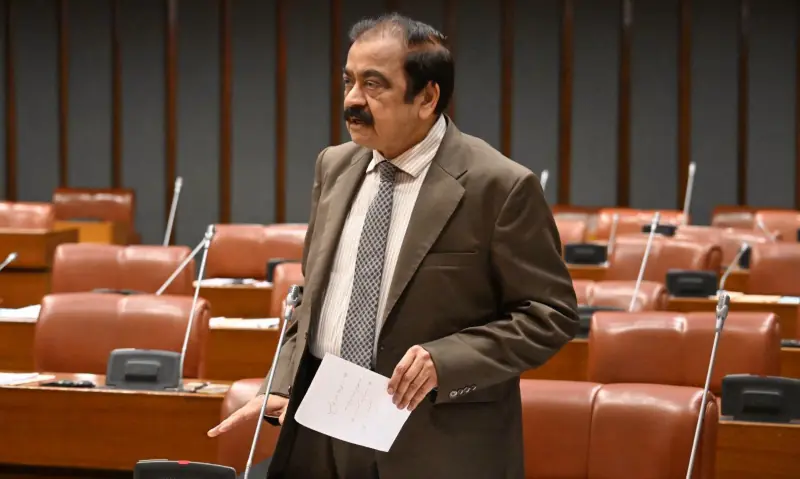
Rana Sanaullah, the prime minister’s adviser on political affairs, told the Senate on Tuesday that Shehbaz Sharif was prepared to convene the parties and urged the opposition to “set other demands aside”.
“This is a national issue. We can sit together and formulate a policy,” Sanaullah said. “When everyone puts their heads together, a decision can be made, as happened when Zarb-e-Azb was launched.” He was referring to the 2014 military operation against militants in North Waziristan.
“Even now, if all parties … can agree to sit down to discuss this issue, then Prime Minister Shehbaz Sharif is willing to invite them and find a way forward,” he said, adding that the aim was to ensure operations had the backing of the whole nation.
The offer follows the federal government’s decision on 11 October to impose an emergency and governor’s rule in Khyber Pakhtunkhwa (KP). It cited the provincial government’s “deliberate disengagement” from the fight against terrorism. The imprisoned former prime minister Imran Khan’s Pakistan Tehreek-e-Insaf (PTI) had led the province’s government. Parliament endorsed the measures last week, over the protests of opposition members.
The proclamation was issued after President Asif Ali Zardari approved it on the prime minister’s advice under Articles 232 and 234 of the Constitution. Governor Faisal Karim Kundi now runs the province, assisted by an 11-member technocratic advisory council.
Sanaullah accused the dismissed provincial administration of staying away from security forums. “In 11 months, there was one apex committee meeting in which the KP CM was in attendance, and the way he was brought there, Interior Minister Mohsin Naqvi already spoke about it,” he said.
He contrasted KP with Balochistan, whose government, he said, was fully cooperating with the armed forces and the centre. He said he had attended apex committee meetings in Balochistan with the prime minister, where issues were discussed openly. Sohail Afridi, the KP chief minister whose government was removed, had repeatedly said he would not allow operations in the province, Sanaullah said.
“If you only raise the issue of terrorism to create headlines, I do not think that is national service or the right approach to resolving the problem,” he told opposition members.
He said the government and PTI had agreed during talks earlier this month to form a joint political committee. “The talks broke down on one single point,” he said: “the PTI fulfilling its responsibilities and supporting the federal government in counterterrorism efforts.”
Sanaullah also addressed a PTI claim that its negotiators had been asked to sign an agreement under which an emergency would be imposed within 72 hours and the party’s march would be called off unconditionally. “If this was your preparation, as has now come to light, then I consider this another missed opportunity,” he said.
He criticised the opposition for what he called a campaign against the head of a state institution, and for amplifying derogatory remarks on social media. If party leaders continued, he said, the government could restrict meetings with Khan. “Then, under the rules and the law, restrictions can be imposed on meetings,” he said.
Access to the jailed former prime minister was one of the sticking points that wrecked the negotiations earlier this month. PTI blamed the deadlock on the government’s refusal to meet its demands, in particular access to him. He also urged Maulana Abdul Wasey of the Jamiat Ulema-e-Islam-Fazl party to speak to his party chief, Maulana Fazlur Rehman.
He criticised the National Assembly opposition leader, Mahmood Khan Achakzai, saying he had taken the post after the speaker approved his appointment but would not accept the speaker’s authority. Achakzai, he said, was unwilling to meet the prime minister and had refused to sit with him in the speaker’s chambers.
“A peace game”
The parliamentary affairs minister, Tariq Fazal Chaudhry, later repeated the invitation to the opposition and proposed a single-point agenda. “Why can we not develop a consensus, at least on this issue?” he asked reporters. He said Pakistan’s peace and its children’s future were at stake.
Chaudhry rejected the idea that the move in KP was an attempt to seize control of the province. “This is not a power game; it is a peace game,” he said. He said advisory councils of tribal elders had been set up in 12 districts to help shape intelligence-based operations.
He said the provincial government had refused to cooperate on the federal government’s Afghanistan policy, in particular on efforts to stop cross-border infiltration. “This was the only reason why the emergency was imposed,” he said. He said the provincial government was now cooperating and that results should soon be visible.
He said smuggling networks and influential people who protected them had helped terrorism persist in the province. He attacked PTI’s record after more than a decade in power in KP, and accused it of staging a “strange spectacle on the streets, as if it were an Under-19 tournament” while soldiers’ bodies were being sent home.
“The PTI is not even prepared to condemn terrorism,” he said.
Chaudhry also dismissed claims that the emergency was linked to the province’s mineral wealth. He said the people of areas where minerals were found would have the first right to them, and that foreign firms would have to meet international standards.
He said the emergency would stay in place until lasting peace was established and terrorism eliminated. “We can compromise on politics, but we cannot compromise on the state, the interests of the state or state institutions,” he said.
The Peshawar High Court fixed 20 October, the day of the Senate speeches, to hear petitions against the emergency and governor’s rule. PTI chairman Barrister Gohar Ali Khan argues that terrorism has hit other regions, notably Balochistan, without elected governments being removed. An alliance of six opposition parties, Tehreek Tahaffuz-e-Aeen-e-Pakistan, has filed its own petition. The petitioners also include the Majlis Wahdat-e-Muslimeen chief Allama Raja Nasir Abbas and Achakzai.
The alliance announced it was ending negotiations with the centre over what it called unconstitutional measures. Achakzai has said the opposition will hold peaceful protests nationwide while leaving the door open to talks. He has also demanded permission to meet Khan.
The government has said little about how long the arrangement will last. Parliament’s joint sitting approved the emergency and governor’s rule for two months. Ministers said it could last at least a year and might run until 2029, and called that an affordable price for peace. Local media have also reported government ministers saying the arrangement could be reconsidered if PTI agreed to meet its constitutional and legal responsibilities.
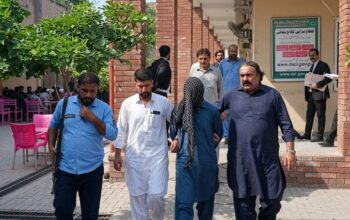
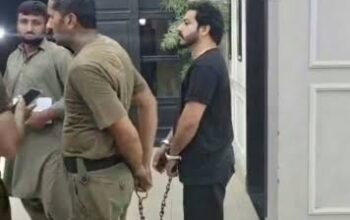
Police took Afridi and seven other PTI leaders into protective custody the day after the proclamation. The opposition alliance has described the removal of the chief minister as an abduction. Before the dismissal, the Pakistan Peoples Party chairman, Bilawal Bhutto-Zardari, urged the government to pursue dialogue before resorting to constitutional measures. He later offered to approach Sharif about ending the emergency if the opposition agreed to talks. Sharif said the government had been left with no option after efforts to reach an agreement failed.
Copyright © 2021 Independent Pakistan | All rights reserved