By Staff Reporter
ISLAMABAD: Pakistan raised the price of diesel to more than 400 rupees a liter on Friday, adding to the cost pressures on households and businesses just days after the central bank lifted interest rates to contain inflation driven by the war in the Middle East.
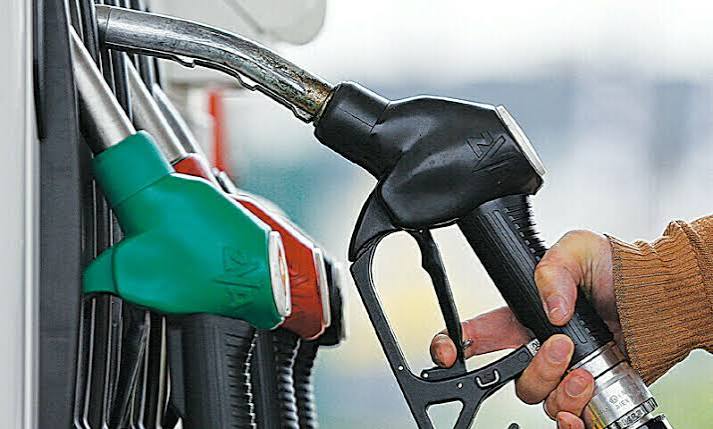
The government increased high-speed diesel by 85 paise to 400.67 rupees a liter for Oct. 30, according to a Petroleum Division notification, and left petrol unchanged at 377.91 rupees. It follows increases of 1.85 rupees for petrol and 1.75 rupees for diesel announced a day earlier. Diesel has now gone up in three straight daily revisions, by about 4.85 rupees from 395.82 rupees on Oct. 27. It had been priced at 400.35 rupees on Oct. 1.
Petrol is still well below its early-October level. The price fell from 398.96 rupees on Oct. 9 to 376.06 rupees on Oct. 28, so the latest increases have reversed only a fraction of that decline. The government continues to levy 114 rupees a liter in taxes and duties on petrol and 100 rupees on diesel.
The adjustment comes four days after the State Bank of Pakistan raised its policy rate by 50 basis points to 12%, the first increase since April. Nine of the 10 members of the Monetary Policy Committee backed the decision, which took effect on Oct. 27. The remaining member voted for a larger increase, Governor Jameel Ahmad said.
In its statement, the committee said the intensification of the Middle East conflict and slim prospects of a near-term resolution are keeping global energy prices persistently high. It added that the domestic economy had so far absorbed the shock, though the inflation outlook had worsened and risks had grown. The committee described the move as “important to keep the real policy rate adequately positive on forward-looking basis.” It said the increase would also help bring inflation back to its 5% to 7% target range.
Ahmad said domestic factors, including a rise in wheat prices over the past two or three months, had contributed to inflation alongside geopolitics. Annual inflation eased to 10.3% in September from 11.1% in August, though it has stayed above the target range for seven consecutive months. Foundation Securities estimated the move lifts the real interest rate to about 2.5% on October estimates, from 1.2% in September. The Pakistan Institute of Development Economics had argued for a conditional hold.
The bank pointed to some buffers. Its foreign-exchange reserves are stable at about $21.5 billion, and broad money growth rose to 12.7% year on year as of Oct. 9. It kept its growth forecast for the fiscal year through June 2027 at 3.5% to 4.5%.
The fuel prices are also a political problem for Prime Minister Shehbaz Sharif. On Tuesday, Jamaat-i-Islami chief Hafiz Naeemur Rehman met Sharif in Islamabad to press the party’s demand that the government abolish the petroleum levy. The two sides agreed to form a joint committee to consider expanding the fuel relief scheme in place since Sept. 17. Rehman said the party would march on Islamabad in mid-November if the government did not announce major relief by then.
The threat has precedent. Jamaat-i-Islami announced a Sept. 20 march on the capital, then postponed it after a phone call from Sharif. Rehman has said the government is collecting about 150 billion rupees a month in petroleum levy and that the party wants it removed immediately, not in phases.
Supply worries have added to the unease. Last Friday, the Pakistan Petroleum Dealers Association urged consumers not to resort to panic buying, warning that excessive purchases could distort the market. The same day, senators raised concerns over fuel supply, even after Minister of State for Finance and Revenue Bilal Azhar Kayani said there were no supply issues.
Price path and relief measures
Diesel has retreated from a peak of 520.35 rupees a liter on April 3, though it remains about 43% above the 281 rupees it cost before the U.S.-Iran war began on Feb. 28, by Bloomberg calculation. Petrol, which peaked at 458.41 rupees on the same day, is about 42% above the roughly 266 rupees it fetched in the first week of March.
The government moved to daily price reviews on July 17, replacing a weekly mechanism in place since early March. Petroleum Minister Ali Pervaiz Malik said the cabinet and the prime minister had given the Oil and Gas Regulatory Authority responsibility for setting prices each day based on international trends. The change followed renewed hostilities between Iran and the U.S.
On Sept. 13, Sharif announced a relief scheme to “alleviate the burden” of high oil prices for lower-income motorists, offering 100 rupees a liter off petrol for motorcycles, three-wheeler rickshaws and cars with engines up to 800cc. The plan covers an estimated 11.8 million beneficiaries. About 10 million two-wheeler users and 800,000 three-wheeler users are entitled to relief on 20 liters a month, a maximum of 2,000 rupees each. Another 1 million owners of cars up to 800cc would get relief on 30 liters, or as much as 3,000 rupees a month.
Austerity measures were reintroduced on Sept. 17. Shops, markets, shopping malls, bazaars and department, grocery and general stores must close by 9 p.m. daily, according to a Cabinet Division notification. Marriage halls and marquees close by 10 p.m., while restaurants, cafes and food outlets may stay open until 11 p.m. Takeaway and home delivery are exempt. Fuel allocations for official vehicles have been cut by 50% for three months.
Petrol and diesel are the main revenue earners, with monthly sales of about 700,000 to 800,000 tons, against about 10,000 tons of demand for kerosene. Petrol is used mainly for private transport, small vehicles, rickshaws and two-wheelers, so price changes fall on the middle and lower-middle classes. Diesel, used in heavy transport, power plants and large generators, affects the public at large.
Oil market
Pakistan imports most of its petroleum, so swings in crude feed quickly into pump prices. Prices are shaped by OPEC+ decisions, Middle East conflicts, sanctions on producers and disruptions to shipping routes including the Strait of Hormuz and the Red Sea.
Oil fell in choppy trading on Thursday as hopes for U.S.-Iran peace talks offset concerns about supply disruptions from an escalating regional conflict. Brent futures declined 40 cents, or 0.35%, to $114.92 a barrel by 1:35 p.m. in New York, while West Texas Intermediate dropped 66 cents, or 0.64%, to $102.12.
Prices recovered some of their losses after a media report that Yemen’s army had targeted Saudi Aramco in a wave of missile attacks, said John Kilduff, a partner at Again Capital. Earlier, the Wall Street Journal reported, citing U.S. officials and people familiar with the matter, that Vice President JD Vance had sent a letter to Mohsen Rezaei, head of Iran’s Supreme National Security Council, to try to revive negotiations. UBS analyst Giovanni Staunovo said prices were under pressure from “renewed diplomatic efforts to de-escalate” the conflict.
Copyright © 2021 Independent Pakistan | All rights reserved