By Staff Reporter
ISLAMABAD: Pakistan told lawmakers on Thursday that it has enough petrol and diesel to last three to four weeks and needs no new fuel-saving measures, three days after the central bank raised interest rates to contain an energy-driven surge in inflation.
In written replies to the National Assembly, Petroleum Minister Ali Pervaiz Malik said existing austerity measures would stay in place, and current stocks were sufficient to meet demand. He was responding to a question from lawmaker Sharmila Faruqui.
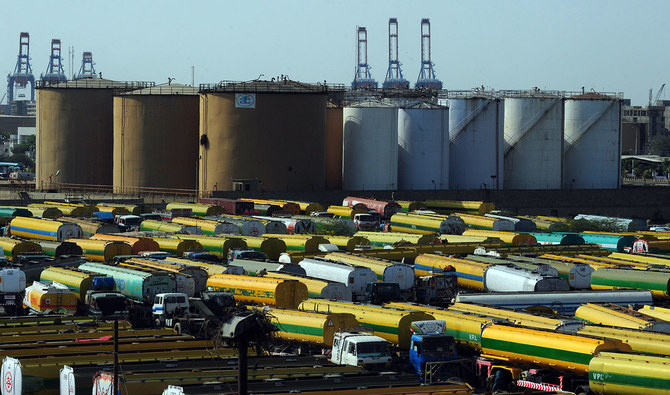
Petrol stocks stood at about 395,000 metric tons on Sept. 22, he said. Cargoes of 56,000 tons at berth and 55,000 tons at outer anchorage in Pakistani waters lifted total availability to roughly 506,000 tons, equal to about 22 days of supply at average daily sales of 22,500 tons. Diesel stocks totaled about 568,000 tons, or around 30 days at average daily consumption of 19,000 tons.
The government planned petrol imports of about 511,000 tons for September against projected demand of 692,000 tons and domestic refinery supply of 262,000 tons, Malik said. No diesel imports were planned because of healthy opening stocks and expected refinery output of about 555,000 tons. Demand, refinery output and import needs are assessed monthly, he said, with the Oil and Gas Regulatory Authority coordinating with refineries, oil marketing companies and the Petroleum Division.
Petrol sales jumped about 18% in July from a year earlier, well above the roughly 5% growth typical in previous years, Malik said. He attributed the surge to summer tourism and advance inventory-building by dealers. Sales fell about 9% in August from July, which he said indicated a return to normal buying. Consumption of both fuels is broadly in line with estimates.
Prices follow a rolling seven-working-day average of Platts free-on-board Arab Gulf quotations, and Ogra can publish daily ex-depot prices without prior approval from the federal government or the prime minister. To curb hoarding and diversion, oil marketing companies have been told to investigate abnormal retail sales, and Ogra field teams can work with provincial law enforcement to pursue suspected violations.
On payments to fuel marketers, the government has paid 53.8 billion rupees of 120.3 billion rupees in price-differential claims, leaving 66.5 billion rupees outstanding. “The disbursement of further 25% of claims, is subject to confirmation of submission of complete claim as per document,” Malik said, adding that an Ogra-appointed auditor has been selected to verify the rest.
Levy Dispute
The petroleum levy is the main point of friction. Malik told the Assembly that collections from fiscal 2022-23 through 2025-26 reached 4.4 trillion rupees, about 227 billion rupees above target. Provisional collection for the last fiscal year was 1.567 trillion rupees against a goal of 1.468 trillion rupees, and the budget estimate for the current year is 1.676 trillion rupees. “The petroleum levy collection is also part of the fiscal targets agreed under the IMF Extended Fund Facility,” he said.
Malik had written to the finance minister in May recommending an annual target of 1 trillion rupees and a rate of 50 rupees a litre because of high global prices, according to the account provided. The government did not adopt that proposal.
Motorists now pay a levy of 80 rupees a litre, a climate levy of 5 rupees and customs duty of 20.56 rupees, taxes of nearly 106 rupees a litre in all.
Planning Minister Ahsan Iqbal said Thursday that the government would not cut the levy immediately under pressure from Jamaat-e-Islami but would consider gradual reductions from the next budget. A committee has been formed, and “feasible proposals and measures will also be considered for a phased reduction in the petroleum levy for the next budget,” he told reporters. Deputy Prime Minister Ishaq Dar, Iqbal and Rana Sanaullah will represent the government, with the party naming three members.
“Pakistan’s current macroeconomic situation, which we have managed with great difficulty, cannot afford a repetition of the mistakes of the past,” Iqbal said. He added: “No one knows what situation may arise tomorrow, how global conditions will unfold, where a drone might fall, and where oil prices might reach as a result.” Iqbal said about 12.7 million people had registered for a relief scheme for low-income households.
Jamaat-e-Islami chief Hafiz Naeemur Rehman said Tuesday, after meeting Prime Minister Shehbaz Sharif, that the party would hold its Islamabad march in mid-November even though the government had asked for another seven to 10 days. He said the two sides agreed more relief was needed but differed on delivery: the party wants the levy abolished, while the government favors phasing it out. Sanaullah said the government provides a 100-rupee-a-litre subsidy to 12.7 million people, a number he expects to reach 20 million. The party has held sit-ins at about 30 locations for weeks.
The International Monetary Fund reached a staff-level agreement with Pakistan this month that would unlock about $1.2 billion. The fund has since raised its inflation forecast for the current fiscal year to 9.9%, above the government’s target.
Pump prices have eased from their peak. Petrol reached 398.96 rupees a litre on Oct. 9 and fell to about 376 rupees by Oct. 28, while diesel rose to about 400 rupees. Petrol started the year at 253.17 rupees.
Copyright © 2021 Independent Pakistan | All rights reserved