By Staff Reporter
ISLAMABAD: Pakistan rose four places to 95th among 139 economies in the World Intellectual Property Organization’s Global Innovation Index 2026, regaining the “overperformer” status the agency reserves for countries that do better than their income level would predict.
The advance from 99th last year is the country’s first improvement since 2022, though it leaves Pakistan behind its 87th, 88th and 91st-place finishes in 2022 through 2024. It also held the overperformer label in 2022 and 2024. WIPO’s country profile puts the statistical confidence interval for this year’s rank between 85 and 100, so the movement is smaller than the headline suggests.
Pakistan ranked 121st on innovation inputs and 72nd on outputs, and both positions improved on last year. The 2025 profile had them at 124th and 75th. The wide gap is what drives the overperformer tag.
“Innovation overperformance shows that innovation does not follow a straight line from income to results,” the report said. “The 2026 overperformers show that economies can generate more innovation than expected for their level of development when they build on focused strengths.”
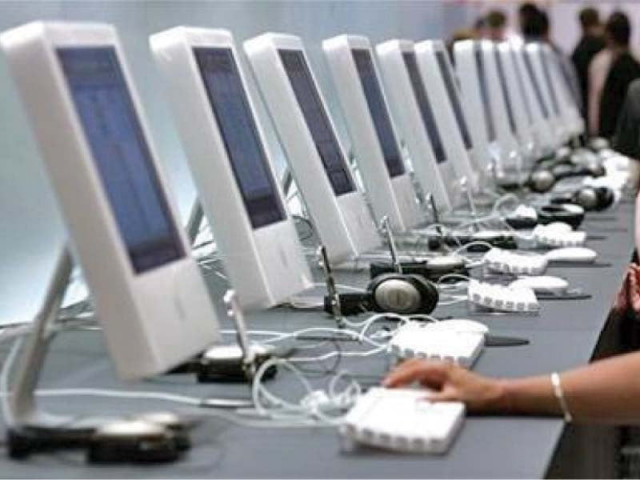
WIPO said Pakistan’s strengths were concentrated in the digital economy, notably mobile app creation, ICT services exports, high-tech imports and software spending. Mobile app creation relative to economic output was its best-ranked indicator, at 10th. The agency said “relatively strong” scientific production and university quality supported the sector.
The weak spots are in the foundations. Pakistan ranks 126th on institutions, 119th on human capital and research, and 107th on infrastructure, against 76th on creative outputs and 83rd on business sophistication. It did not rank among the top innovation clusters in any pillar, and has no cluster among the world’s top 100.
Pakistan placed 15th among 36 lower-middle-income economies and eighth among 11 in central and southern Asia. Neighboring India, at 38th overall, ranked first in both groups. Pakistan’s ranking history since 2020 runs 107th, 99th, 87th, 88th, 91st, 99th and now 95th.
At the top of the table, little changed. Switzerland ranked first for a 16th consecutive year, ahead of Sweden and the US. Its score of 66.7 compares with 63.2 for Sweden and 62.3 for the US. “In a period of major geopolitical and economic turbulence, the most striking feature about the top of the ranking is its stability,” WIPO said.
No new economy entered the top 15 since last year. Europe supplied 14 of the 25 innovation leaders, with the Netherlands rising to seventh and Austria to 18th. Five Asian economies made the top 25: South Korea and Singapore in fourth and fifth, China in 10th, Japan in 12th and Hong Kong in 14th. China remains the only middle-income economy among the leaders.
“The main signal at the innovation frontier this year is continuity, rather than the emergence of any single new entrant,” the report said.
WIPO’s Innovation Tracker pointed to “continued but slower progress across the innovation cycle.” Scientific output, corporate research and development, battery costs and technology adoption all gained, but about three-quarters of indicators stayed below their decade average. Global R&D intensity held near a historic high of close to 2% of GDP.
The agency warned that conditions are getting harder. “Global growth of about 3.4pc in 2025 is expected to ease to around 3pc in 2026, held back by higher energy prices and elevated uncertainty, before recovering modestly in 2027,” it said. AI-related investment remains “the main engine on the upside,” with the largest hyperscalers set to spend more than $1 trillion on AI infrastructure across 2025 and 2026.
“This will be increasingly financed through debt and private credit, meaning a downward revision of expected AI returns could tighten financing conditions well beyond the sector,” WIPO added.
The same energy-price pressure is shaping policy in Islamabad. On Oct. 26, the State Bank of Pakistan raised its benchmark rate by 50 basis points to 12%, effective Oct. 27, with nine of ten Monetary Policy Committee members voting in favor. Governor Jameel Ahmad said one member wanted a larger increase.
The committee called the move “necessary to keep inflation expectations anchored,” and said it would contain second-round effects of the supply shock and bring inflation back to its 5%-7% target range. Headline inflation was 10.3% in September, above the committee’s expectation, with core inflation near 8.4%. The governor said the outlook worsened sharply because of the US-Iran conflict and wider Middle East developments, with oil above $100 a barrel, and cited a rise in domestic wheat prices.
It was the bank’s second increase this year. It raised the rate by 100 basis points to 11.5% in April, the first hike in nearly three years, then held in June, July and September. At the September meeting, the committee said “uncertainty regarding the outlook has increased.”
The external picture is steadier. The committee said reserves held at about $21.5 billion, equal to three months of import cover, and that a staff-level agreement was reached with the International Monetary Fund. It expects real GDP growth of 3.5%-4.5% in the fiscal year through June, and a current-account deficit of 0%-1% of GDP. Remittances reached $10.9 billion in the first quarter, and the full-year outlook was raised.
WIPO said emerging economies, Pakistan among them, could build on their standout strengths to improve overall innovation performance.
Copyright © 2021 Independent Pakistan | All rights reserved