By Staff Reporter
ISLAMABAD: Iran’s foreign minister has praised Pakistan and Qatar for their efforts to end the war with the United States, saying Tehran could reopen the Strait of Hormuz within two days if Washington meets its conditions, as regional powers try to head off renewed fighting after Tuesday’s US midterm elections.
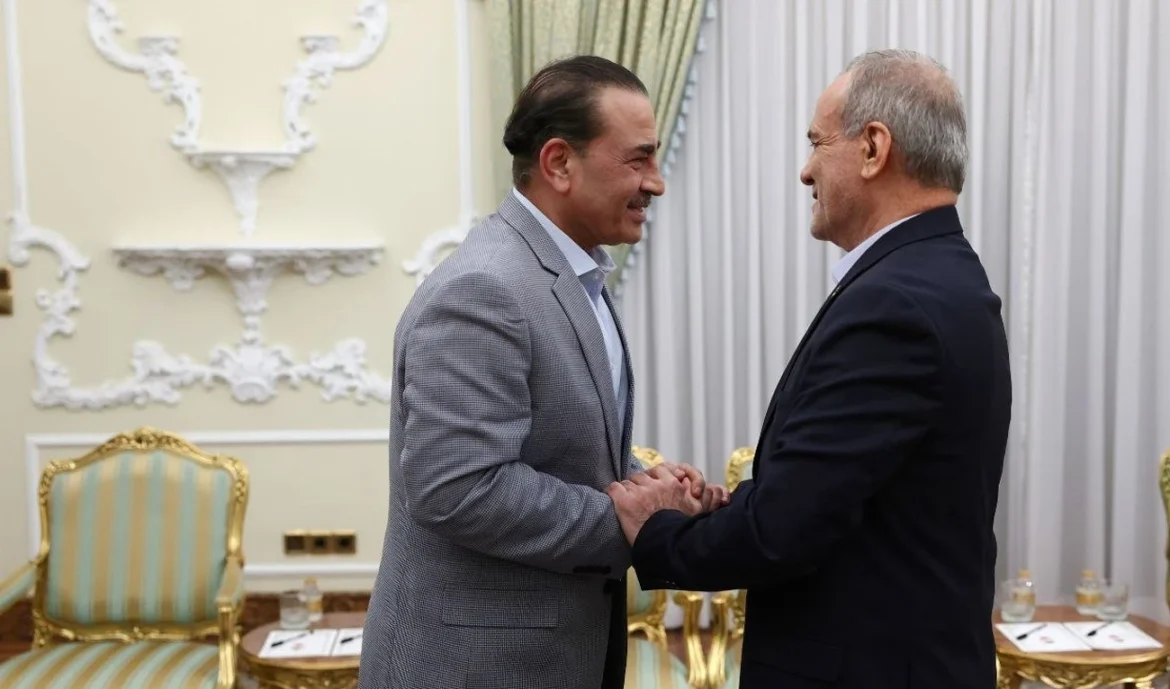
Abbas Araghchi expressed appreciation for the “ongoing efforts and outreach” of Islamabad and Doha, the state news agency IRNA reported. It said he did so in relation to Tehran’s conditions: lifting sanctions, unfreezing blocked assets, reducing the US military presence in the region, and ending the war on all fronts, including Lebanon.
Pakistan’s military chief has travelled to Tehran twice last month for talks on regional peace with Iranian and other regional defence officials. Iranian negotiators were in Doha on Sunday for a third consecutive day of talks with Qatari mediators, an official briefed on the discussions told Reuters. Qatari officials had been in Tehran on Friday before the talks moved to the Qatari capital, and the official said they were being coordinated through regular contact with Washington.
Doha and Islamabad also played key roles in the signing of the memorandum of understanding in June, which later collapsed.
Araghchi told Al Jazeera that talks with Qatari mediators had cut the proposed timeline for reopening Hormuz from five days to two, if the United States accepts Tehran’s conditions. Reopening the strait on Iran’s terms, he said, would pave the way for renewed negotiations with Washington.
The conditions include lifting recently imposed US sanctions, reinstating the oil waivers granted in June, recognising new shipping routes designated by Iran and Oman, and ending the conflict on all fronts. Araghchi also called for the release of frozen Iranian funds, including those held in Qatar.
He said Tehran had studied a letter sent by US vice president JD Vance, which he described as a “positive step”. Mohsen Rezaei, Iran’s top security official, said the tone of the letter had changed completely and was a “very positive sign”. The letter reportedly set out a framework for negotiations rather than peace terms, with direct talks under Mr Vance’s leadership and Iran’s nuclear programme part of the discussions.
The nuclear question remains the main obstacle. Washington has insisted that Iran’s nuclear programme be addressed from the outset, while Tehran says talks should first focus on reopening the strait and restoring security there. Before the war, the waterway carried about a fifth of the world’s oil and liquefied natural gas. Iran has fired on commercial ships there since February, sharply cutting traffic.
Araghchi said Iran’s Hormuz plan was the only proposal currently on the table, although mediators had put forward ideas on the nuclear issue that Tehran was reviewing as part of a second phase of negotiations. Iran, he said, wants recognition of a new shipping route, set up with Oman, and the closure of other routes.
Donald Trump, who has said the US will not launch new attacks before Tuesday’s vote, said on Saturday that Washington could strike Iran’s remaining suspected nuclear sites “in 10 minutes”. Speaking to reporters at his Mar-a-Lago estate in Florida, he said US operations had destroyed much of Iran’s navy, air force, air defences and nuclear infrastructure.
“We still have to take care of, I would say, one or two sites, but we can do that in 10 minutes. So, we have that plan,” he said. He named Pickaxe Mountain, a suspected Iranian nuclear facility, as one target that “you have to take care of”.
Asked whether the US could resume military operations as soon as this week, Mr Trump replied: “Why would you ask such a stupid question? I can’t tell you.” He said talks were “going fine” but described Iran as “not very reliable”, adding: “They make a deal and then they back out.” He also repeated that “Iran will never have a nuclear weapon”, and said he was not in a hurry to strike a deal.
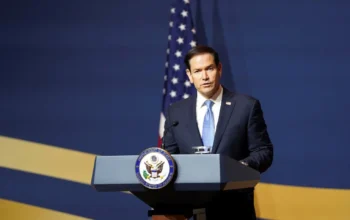
Secretary of state Marco Rubio said on Saturday that Trump had not decided whether to launch new strikes and would prefer a diplomatic solution. “Talks have actually never stopped,” he said.
Iran has said it would respond to any new attack by hitting US and Israeli targets in neighbouring countries. Araghchi said Tehran did not rule out a new war and was prepared for all scenarios, adding that Iran had upgraded its weaponry, tested new armaments and placed its forces at the highest level of readiness, according to IRNA.
Supreme Leader Ayatollah Mojtaba Khamenei issued a statement on Saturday ordering the armed forces to be ready to respond to any attack, and the military later said it was taking steps to improve its readiness.
Brigadier General Yadollah Javani, the Revolutionary Guards’ deputy for political affairs, told Fars news agency that Iran was “fully prepared for any scenario the enemy may devise” and was working on the assumption that the US or Israel could strike at any moment. He warned that any area enemy forces tried to enter, by air or across a border, would become a “killing ground”. Army spokesman Brigadier General Mohammad Akraminia said any renewed US aggression would meet an “immediate, decisive” response on a larger scale than before, and that a new war would not be confined to West Asia, Press TV reported.
Separately on Sunday, Iran’s Foreign Ministry designated Britain’s Royal Navy and Royal Air Force as “terrorist” organisations and the intelligence agency MI6 as a “hostile group”. It said the decision, taken under a resolution of the Supreme National Security Council, was a response to London’s “malicious” actions, in particular its designation of the Islamic Revolutionary Guard Corps as a terrorist organisation under the State Threats Act 2026 on 13 July. The ministry also accused Britain of taking part in the US-Israeli war by providing access to bases and logistical facilities under British jurisdiction.
The move comes weeks after Prime Minister Andy Burnham told MPs that a suspected plot at RAF Fairford was almost certainly directed by Iran’s Revolutionary Guards.
The US and Israel launched attacks on Iran on 28 February, prompting Iranian retaliation across the region.
Copyright © 2021 Independent Pakistan | All rights reserved