By Staff Reporter
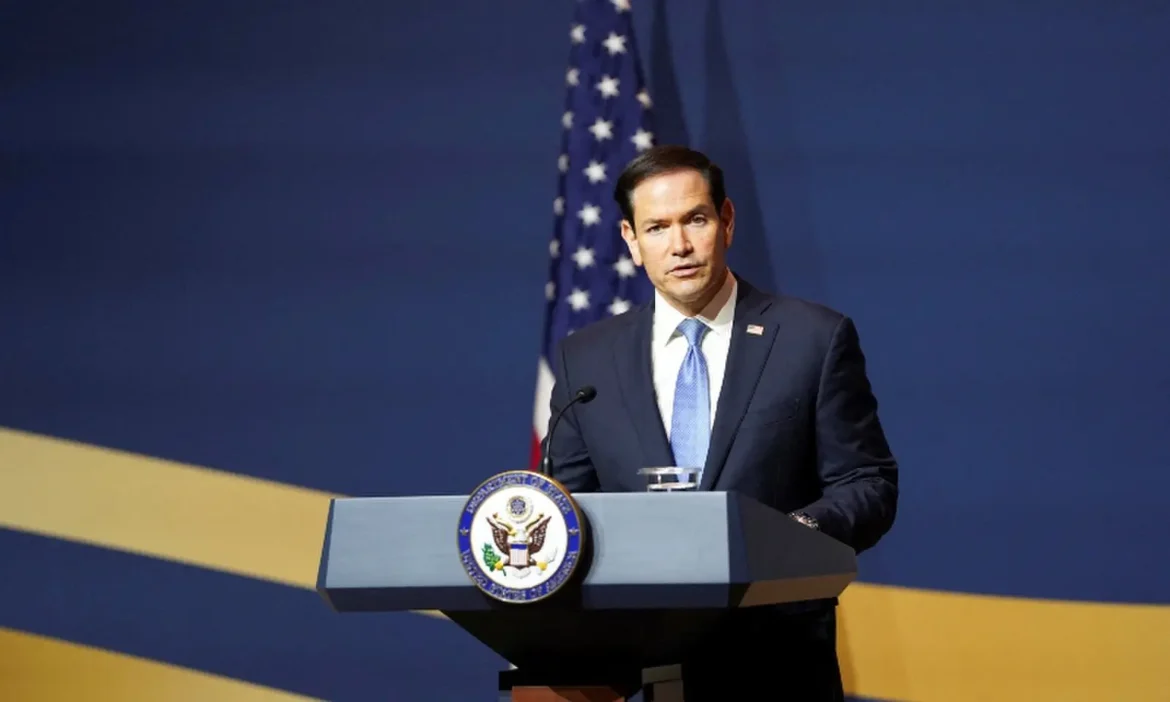
ISLAMABAD: The US has “heard” Pakistan’s complaints that terrorists are launching attacks from Afghan soil and would play a “productive role” in easing tensions if there is one to play, Marco Rubio has said.
The US secretary of state was speaking at a press conference in Atlanta on Saturday, on the sidelines of a G20 foreign ministers’ meeting, when he was asked about the dispute between Islamabad and the Taliban government in Kabul.
“Pakistan is concerned about terrorist attacks that are being sponsored from the territory of Afghanistan. They feel as if the Taliban have not done enough to constrain those attacks, and they have taken action against it,” he said.
“We obviously have heard those concerns on their part. We obviously don’t want them to be targeted for terrorism. So if there’s a productive role for us to play, we would play it.”
Rubio acknowledged that Washington did not “necessarily [have] the closest relationship” with the Afghan Taliban. “We’ve heard the concerns that Pakistan has raised and we’ve seen some of those attacks that they point to,” he added. “We’re against terrorism no matter where it emanates from and who it targets.”
Islamabad has repeatedly urged the Taliban administration to dismantle militant sanctuaries on Afghan soil, particularly those linked to the banned Tehreek-i-Taliban Pakistan (TTP), which it says are used to stage attacks inside Pakistan. The Afghan Taliban have avoided a categorical position on the TTP and other groups, while rejecting the allegation that Afghanistan is a base for attacks on Pakistan.
The remarks follow a period of closer engagement between Washington and Islamabad. In an interview with India Today on 22 October, Rubio said Washington’s growing engagement with Pakistan would not undermine its partnership with India, and that he hoped it would give the US more influence over Islamabad’s decisions. The two countries held the fourth round of their counterterrorism dialogue in Washington in August, pledging to improve border security and disrupt militant networks.
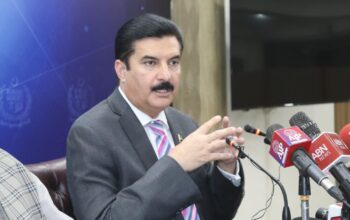
Also on Saturday, Pakistan’s information ministry rebuked the Taliban’s stance on the conflict, accusing the group of a “persistent refusal to address terrorism” emanating from Afghanistan.
The statement was a response to Zabihullah Mujahid, the Taliban spokesperson, who blamed Islamabad’s “wrong policies” for blocking a resolution and insisted Kabul was not the cause of Pakistan’s counterterrorism problems.
The ministry said Mr Mujahid’s remarks exposed the “regime’s deeply misguided approach and unwillingness to confront the root cause of deteriorating relations with Pakistan”.
“The Taliban leadership continues to blame Islamabad’s policies while conveniently ignoring the single most important issue poisoning bilateral relations: its persistent failure to address terrorism emanating from Afghan soil,” it said. It added that shifting blame and offering “hollow assurances” would neither resolve the crisis nor absolve Kabul of its responsibilities.
Islamabad reiterated that the “Taliban regime’s persistent refusal to address terrorism remains the principal obstacle to normal relations”.
The war of words has been running for weeks. On 12 October, Pakistan’s information minister, Attaullah Tarar, claimed that more than 20,000 militants, including about 6,000 TTP members, were in Afghanistan.
Diplomacy has so far produced little. Several rounds of talks last year, brokered by Qatar and Turkey, failed to deliver a workable solution, with Islamabad saying Taliban officials had given no assurances on the key issues. Efforts this year involving China, including talks in Urumqi, also ended without a breakthrough.
Russia, the only country to have formally recognised the Taliban government, has recently renewed its offer to facilitate a settlement if both sides ask for its involvement.
Zamir Kabulov, Moscow’s special envoy for Afghanistan, made the suggestion after the latest Moscow Format consultations on 5 October ended without a joint communiqué. Mr Kabulov told the Russian news agency Tass that the Afghan delegation had objected to Afghanistan being mentioned so often in connection with terrorism. The Pakistani and Taliban delegations disagreed over references to terrorist networks operating from Afghanistan.
Asked about the offer at a weekly briefing, Foreign Office spokesperson Sajjad Haider Khan said talks with Afghanistan could not be unconditional. He rejected suggestions that Islamabad was unwilling to engage with its neighbour, saying it would welcome sincere efforts by friendly countries to help resolve the dispute.
“At present, I am not aware of any separate, formal Russian mediation initiative being under discussion,” he said. The Taliban have not publicly asked for Russian mediation.
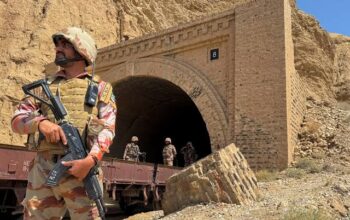
Intermittent skirmishes continue on the border. A terrorist attack on civilians and police officers at Friday prayers in Kohat on 18 September was followed by Pakistani strikes inside Afghanistan on 24 September and 1 October. Pakistan described its September action as calibrated airstrikes in the border region in response to attacks in Khyber Pakhtunkhwa.
The fighting continued in October, with Pakistani security forces, according to security sources, responding to unprovoked fire from the Afghan side along the border in Kurram and at Angoor Adda in Lower South Waziristan.
Copyright © 2021 Independent Pakistan | All rights reserved