By Staff Reporter
ISLAMABAD: Oil refiners will absorb about 15 billion rupees a month to keep petrol 15 rupees a liter cheaper than international prices would dictate, the government said, averting an increase that was due to take effect last Friday.
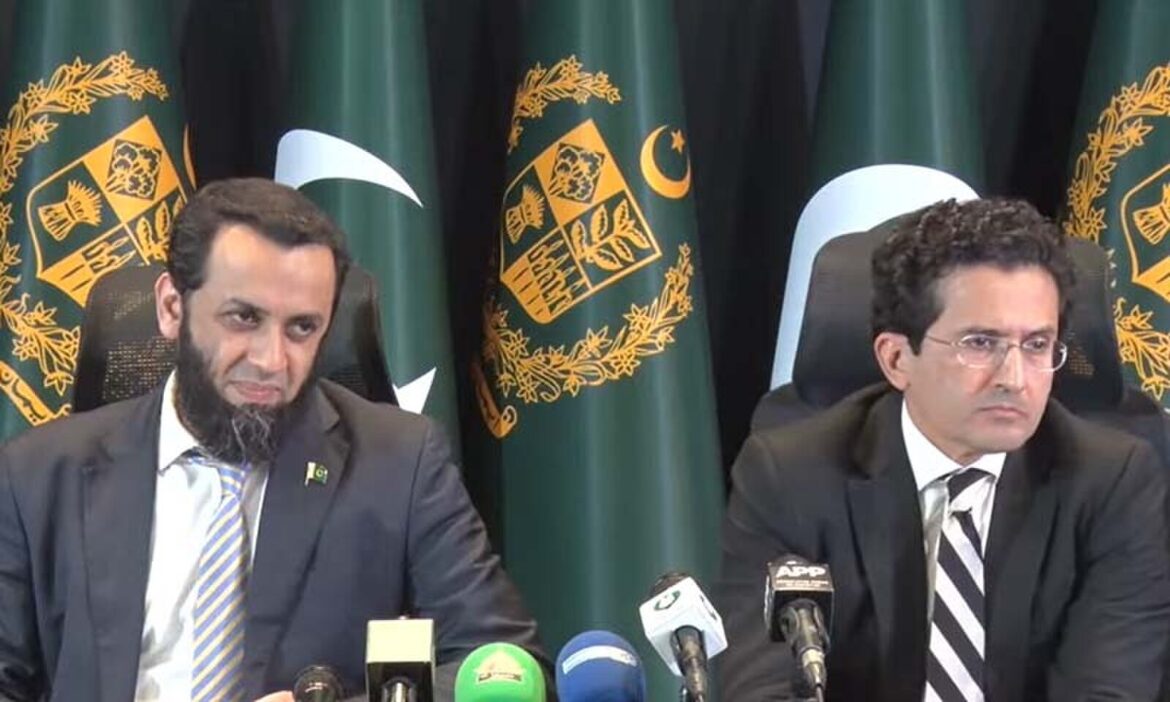
Petroleum Minister Ali Pervaiz Malik and Information Minister Attaullah Tarar announced the arrangement at a press conference in Islamabad on Monday. The move places part of the cost of the US-Israeli war on Iran on domestic refiners, whom Malik said had profited from higher throughput over the past three months.
“I am grateful to all the refineries that saw the public is in difficulty and with the government’s help … increased their throughput,” Malik said. He said the refiners were asked to help during “this difficult time” and that the Rs15 increase due Friday was absorbed with their help.
The two ministers gave somewhat different accounts of how the deal came together. Malik said Prime Minister Shehbaz Sharif sought out the refiners and consulted them on ways to keep petrol as cheap as possible. Tarar said Sharif had directed the refiners to absorb the increase as international prices climbed. Malik said details would be discussed with refiners at a meeting the following day.
The federal cabinet approved a revised petrol pricing mechanism on Oct. 30. Under it, the import price is based on the actual cost of the relevant Pakistan State Oil cargo; if that figure isn’t available for daily pricing, the premium, incidentals and customs duty from the last available cargo are used.
For local refiners, the government has fixed those same components at their March 7, 2026, pre-war levels for 30 days when calculating the ex-refinery price. Refiners must surrender the difference between the import price and the resulting ex-refinery price under the petroleum levy account, and the benefit is passed to consumers as a lower pump price. A separate short-term adjustment feeds a premium differential into prices at $2.950 a barrel per day to smooth movements.
Malik said the premium on petrol imports was about $5 a barrel before the war and has since climbed to $20, with a $20 limit now set. Subsequent PSO tenders showed premiums of about $25 to $30 and higher as regional conditions worsened, he said. About 70% of Pakistan’s petrol comes from the international market and roughly 30% is produced locally, according to the minister, who said any intervention had to avoid making imported petrol commercially unviable, which could lead to shortages.
Malik said international prices are now declining and expressed hope the trend would bring further improvement for consumers. He also said the government would have to step in to protect the public if conditions worsen.
Malik described himself as the “biggest advocate for deregulation” but said the government’s focus for now is public relief. “Have you seen any incident in the last 50 years that has been happening in the last six to eight months?” he said. “What rules-based order do you want to adopt in the middle of this disaster?” He said the government would return to deregulation, refinery upgrades and other changes once the regional crisis ends, and added: “The government doesn’t want to be cruel to anyone.”
Tarar said Pakistan’s macroeconomic indicators have “remained largely stable” despite the war and that the economy hasn’t taken as much of a hit as others. He also pointed to the fuel subsidy scheme announced by Sharif in September, under which motorcycle users who register by SMS get a weekly Rs500 concession on petrol, and owners of 800cc cars get 10 liters every 10 days at Rs100 less per liter. More than 15 million unique users have registered, and about 27 billion rupees has been allocated so far, he said. “This is a unique relief that is not available in the rest of the world,” Tarar said.
Both ministers said there is no fuel shortage. Malik said November’s supply is fully covered, while decisions on December and January are pending and Sharif has directed that any necessary steps be taken. On gas, he said arrangements for November are in place and the government is working on December and January.
Pakistan’s pump prices have been whipsawed since the war began on Feb. 28. Petrol rose from about Rs266 a liter in early March to a peak of Rs458.41 on April 3, while diesel climbed from Rs281 to Rs520.35. Prices have been set daily since July. The government has also brought back austerity steps, including a 9 p.m. market closing requirement and a 50% cut in fuel allocations for official vehicles for three months.
Crude has been equally volatile. Brent was trading around $70 a barrel before the war and surged past $125 in late April as talks between Washington and Tehran stalled and the Strait of Hormuz stayed closed. Prices fell back to pre-war levels in June after the US and Iran signed an interim peace deal, but renewed hostilities in July pushed them to a one-month high. Brent rose above $117 in late October after President Donald Trump rejected an Iranian proposal to reopen the strait.
The relief measures also sit awkwardly with Pakistan’s IMF program. The fund has urged Islamabad to limit petroleum subsidies to those who need them and to phase out costly fuel support schemes. Pakistan collected 1.567 trillion rupees in petroleum levy through June, beating its 1.468 trillion target by 99 billion rupees, which gives the government some fiscal room, though the refiner arrangement is routed through the levy account.
Copyright © 2021 Independent Pakistan | All rights reserved