By Staff Reporter
ISLAMABAD: Pakistan’s top economic policy committee approved about 380 billion rupees in supplementary funding, directing 275 billion rupees to five water projects that have run short of money and roughly 84 billion rupees to the armed forces.
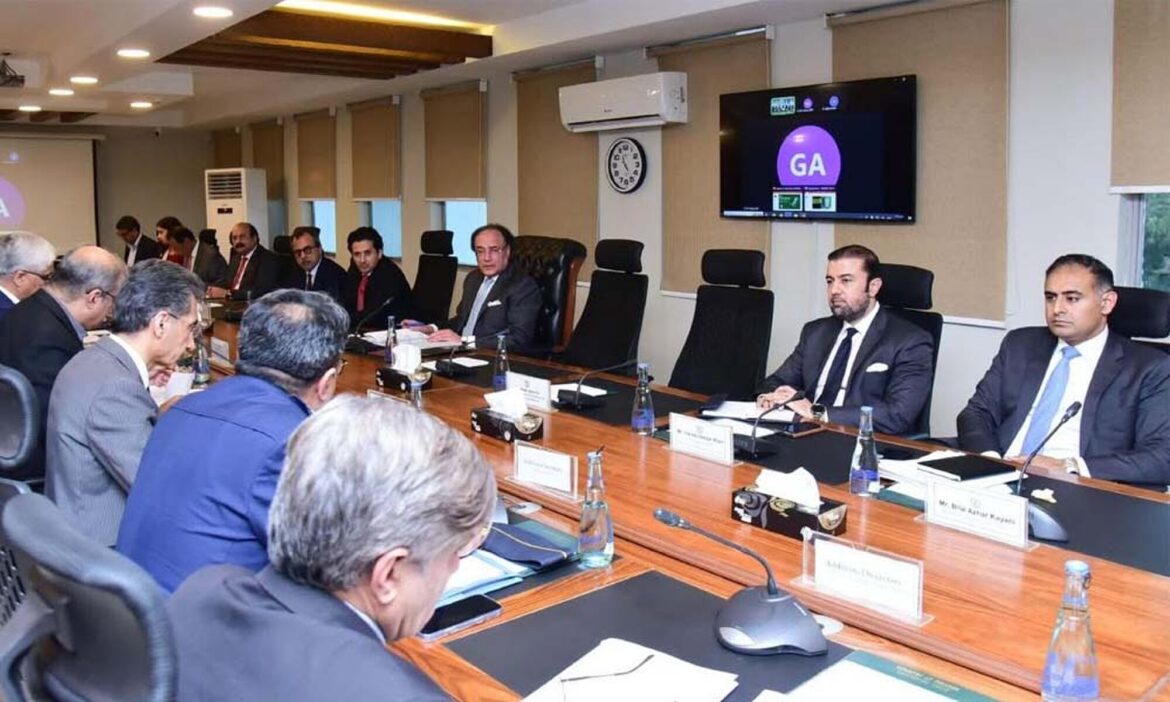
The Economic Coordination Committee, chaired by Finance Minister Muhammad Aurangzeb, cleared the grants on Wednesday at a meeting that worked through 11 agenda items, according to an official statement. The water money will go to the Diamer-Bhasha and Mohmand dams, the Greater Karachi water supply scheme known as K-IV, and the Chashma Right Bank and Kacchi canals. It will be released in stages under the payment plan of the Water and Power Development Authority, or Wapda, which is building the projects.
The government budgeted about 103 billion rupees for the five schemes in the fiscal year through June 2027, so the supplementary grant is more than 2.5 times the original allocation. Wapda Chairman Muhammad Saeed told a parliamentary panel the budgeted funds were insufficient and that his requests for more had been approved by the prime minister and the Finance Ministry.
The projects need far more than that. Wapda told a parliamentary committee in February that Diamer-Bhasha was 21% complete and that more than $3.5 billion in additional funding was needed to finish it. Wapda has said it expects to complete the 4,500-megawatt dam by 2029 and Mohmand by 2027-28. In August, the economic committee approved a grant of nearly 7.8 billion rupees for K-IV. Saeed has told lawmakers that project should be finished by June 2027, provided funds arrive on time.
The Defense Division won approval for three summaries totaling about 84.2 billion rupees. The largest was 54 billion rupees across three heads of the Defense Services project: more than 31 billion rupees for the Special Security Divisions North and South, 11.88 billion rupees for Pakistan Navy projects, and 10 billion rupees for internal security duties and allowances. A further 29.139 billion rupees went to Project Istaqlal, and 1.094 billion rupees to bring a Lineage L-1000 executive jet into the army fleet. The approvals are meant to cover “essential operational requirements,” the statement said, without elaborating on Istaqlal.
The committee also gave 3.71 billion rupees to the Frontier Corps Balochistan (North) for helicopter maintenance, at the request of the Narcotics Control Division.
The statement didn’t say how the grants would be financed. In June the federal government secured about 1.035 trillion rupees in additional funds from the provinces, outside the National Finance Commission formula for sharing tax revenue, to meet strategic needs including water and national security. It was the first time the federal government had counted on such transfers from the provinces. Aurangzeb said at the time that part of the provincial money would support defense spending.
The approvals come weeks after Pakistan and the International Monetary Fund reached a staff-level agreement on the latest review of the lender’s $7 billion program. The deal would release about $1.2 billion, subject to approval by the IMF’s executive board. Pakistan has also reaffirmed a commitment to a primary budget surplus of 2% of gross domestic product in the current fiscal year.
The committee moved 15.625 billion rupees in savings from austerity and fuel conservation measures into the Prime Minister’s Austerity Fund 2026, which it said reinforces fiscal discipline. The fund was set up in March, when US and Israeli strikes on Iran and Tehran’s response pushed up global energy prices. Prime Minister Shehbaz Sharif approved a second round of austerity and fuel conservation steps in September, and the government hadn’t published any savings from the first round. The statement didn’t say what period the 15.625 billion rupees covers.
On energy, the committee allowed Fatima Fertilizer and Agritech, two urea plants on the Sui Northern network in Punjab, to keep receiving gas until Dec. 31, subject to availability. Their operations have depended on committee approvals since October 2018, because the plants no longer receive indigenous gas. The panel approved supplies for the plants from new reservoirs in Mari’s gas field in November 2025. The committee also relaxed exploration and production rules to allow the extension and renewal of 89 petroleum rights, subject to conditions, and approved 1 billion rupees to bring gas to villages within five kilometers of producing fields in the current fiscal year.
On a Commerce Division proposal, the committee approved restrictions on imports of camera-enabled smart glasses and recommended that the provinces and the Islamabad Capital Territory draw up workplace rules for such devices. The statement gave no start date or list of products. The Lahore High Court has been hearing a petition against the unregulated import and sale of the devices, and directed the federal government to send the cabinet a summary on the issue. Punjab has separately banned wearing and selling such glasses for 30 days. The petitioner’s lawyer said Meta Platforms Inc.’s glasses are openly sold in Lahore even though the company doesn’t list Pakistan as a market.
The committee further approved changes to the tiers and bank rate of the Prime Minister’s Youth Business and Agriculture Loan Scheme, which the statement said are meant to widen access to affordable financing. Power Minister Awais Leghari, Petroleum Minister Ali Pervaiz Malik and Minister of State for Finance Bilal Azhar Kiyani attended.
Copyright © 2021 Independent Pakistan | All rights reserved