By Staff Reporter
ISLAMABAD: Pakistan lowered petrol and diesel prices for a third consecutive time on Wednesday, passing on a drop in crude that took Brent below $100 a barrel, while the government tries to contain a campaign against fuel taxes that has run for weeks.
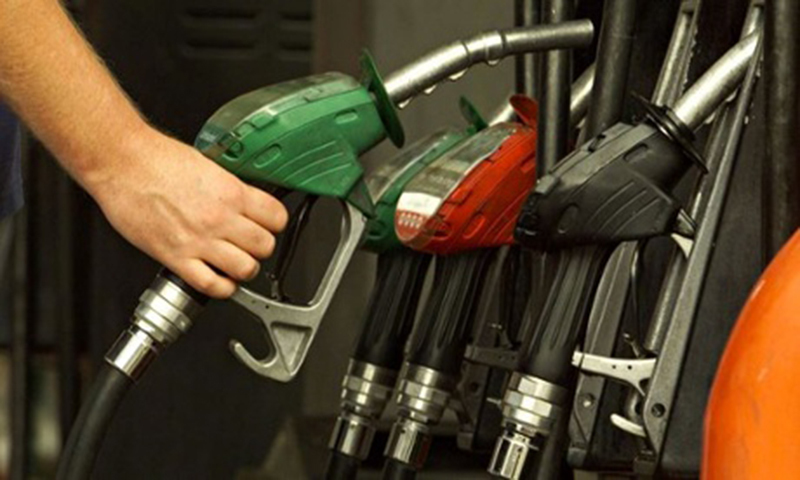
Petrol will fall by Rs7.06 a litre to Rs362.00 from Thursday, and high-speed diesel by Rs3.71 to Rs387.81, according to a notification from the Oil and Gas Regulatory Authority. At the end of October, petrol was selling at Rs377.91 a litre and diesel at Rs402.96, so pump prices have come down by roughly Rs15 to Rs16 a litre in about a week.
The reduction followed a retreat in global markets. Brent futures dropped $4.50, or 4.3%, to $99.07, while West Texas Intermediate fell $4.13, also 4.3%, to $92.02. Trading was volatile as investors waited to see what Washington does next in the US-Israeli war with Iran after President Donald Trump’s Republican Party lost control of Congress in the midterm elections.
The war, which began on Feb. 28, has driven Pakistan’s fuel costs since. Trump said in September that oil prices would not fall until after the midterms and predicted the war would end immediately after the vote, when Brent was back above $100 for the first time since July.
The government has so far left the tax component of pump prices largely alone. It continues to charge Rs114 a litre in taxes and duties on petrol and Rs100 on diesel. Under its IMF agreement, Pakistan is required to maintain an average petroleum levy of Rs80 a litre, which limits how much room Islamabad has to cut.
To get some relief to consumers, the government announced an arrangement on Monday, running for 30 days, under which oil refineries will bear a cumulative Rs15 billion of the petroleum levy. The government said this allows a Rs14.71 reduction in the petrol price at the consumer end. Petroleum Minister Ali Pervaiz Malik told a press conference on Tuesday that officials are working on a similar system for liquefied petroleum gas.
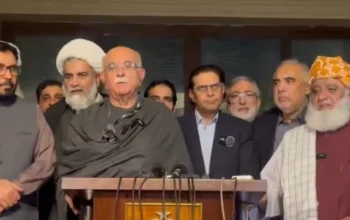
The levy has become a political problem for Prime Minister Shehbaz Sharif’s government. Jamaat-e-Islami, the religio-political party, has been demanding that the levy be abolished and has staged sit-ins across the country. The party and the government are due to hold another round of talks on Thursday, the party said. Its leader, Hafiz Naeem ur Rehman, said on Oct. 27 that a march on Islamabad would go ahead in mid-November, even though Sharif had asked for another seven to 10 days. The government has also moved to amend the law governing the petroleum levy and climate support levy, with a bill due in the National Assembly on Oct. 28.
Wednesday’s cut is a long way from the peaks of the conflict. Diesel reached Rs520.35 a litre on April 3, having started its climb from Rs281 after the war broke out. Petrol topped out the same day at Rs458.41, up from Rs266 in the first week of March.
The government has reintroduced austerity measures in response to the price pressure. Markets are required to close by 9 p.m., and fuel allocations for official vehicles have been cut by 50% for three months. On Sept. 13, Sharif announced a relief scheme for users of motorcycles, auto-rickshaws and vehicles up to 800cc, to “alleviate the burden” of high global oil prices.
Prices have also been adjusted far more often than before. After weekly revisions from early March, the petroleum minister said on July 17 that prices would be set daily because of swings in international markets following renewed hostilities between Iran and the US. The cabinet and the prime minister gave Ogra responsibility for the daily decisions based on international market trends. In April, the federal government also announced targeted relief measures to provide subsidized fuel.
The stakes extend well beyond motorists. Petrol is used mainly in private transport, small vehicles, rickshaws and two-wheelers, so price changes hit the middle and lower-middle classes. Diesel is used mainly in heavy transport, power plants and large generators, so its price affects the public more broadly. The two fuels are also the biggest revenue earners, with monthly sales of about 700,000 to 800,000 tonnes, compared with only 10,000 tonnes of monthly demand for kerosene.
Copyright © 2021 Independent Pakistan | All rights reserved