By Staff Reporter
ISLAMABAD: Pakistan will begin its first offshore oil and gas survey campaign in years when a Turkish seismic vessel arrives in Karachi between Nov. 17 and 20, a bid to find domestic energy resources and reduce a fuel import bill that has swollen since the Middle East conflict began.
The Petroleum Division announced the schedule on Friday after Petroleum Minister Ali Pervaiz Malik met Turkish Petroleum Offshore Company officials and Pakistani agencies to review operational, logistical, maritime and security arrangements. TPOC, a unit of state-owned Turkish Petroleum Corp., is the operator of the vessel.
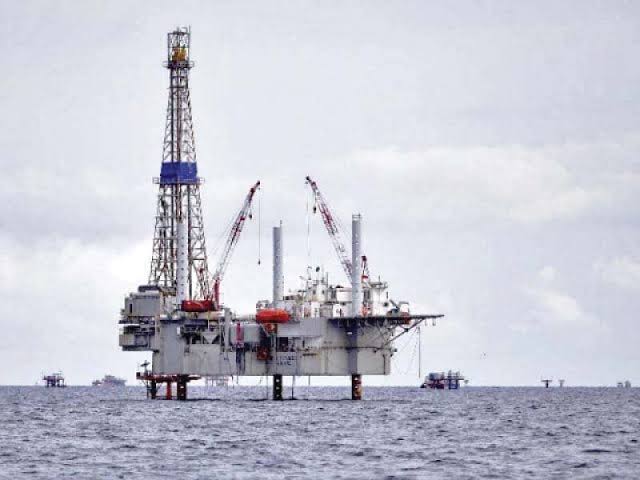
The ship will gather seismic data to map geological structures and identify areas that could hold hydrocarbons. The results may guide future drilling decisions, though they offer no assurance of commercial discoveries. Any find would need further investment and years of development before production could start.
“This is a special moment for Pakistan-Türkiye friendship,” Malik was quoted as saying in the statement. “I will try to personally receive the vessel upon its arrival in Karachi.” He said the government was fully committed to facilitating the exploration and pledged Pakistan’s full support to the Turkish delegation. The Petroleum Division called the arrival the revival of Pakistan’s offshore exploration after nearly two decades.
The urgency is partly financial. Pakistan imports about half its oil. Its petroleum import bill reached $16.86 billion in the fiscal year that ended June 30, which was $1.58 billion above the International Monetary Fund’s estimate. Prime Minister Shehbaz Sharif said in April that the weekly oil bill had climbed to $800 million because of the Middle East conflict. The weekly figure was about $300 million before the fighting erupted in February. The IMF projects the bill at $16.31 billion for the current fiscal year.
The meeting was attended by the secretary and additional secretary of the Petroleum Division, the director general of petroleum concessions and the managing directors of Oil and Gas Development Co., Pakistan Petroleum Ltd. and Government Holdings Private Ltd. Officials from the foreign affairs, maritime affairs, defense and interior ministries, the Board of Investment, the National Hydrographic Office and the Directorate General of Ports and Shipping also took part. TPOC’s project manager said the team had received encouraging support from Pakistani authorities and hoped for a successful outcome. Relevant departments were told to coordinate closely to ensure timely facilitation, according to the statement.
TPOC holds a 25% interest and operatorship in the Eastern Offshore Indus-C block in the Arabian Sea. PPL holds 35%, and OGDCL and Mari Energies hold 20% each. PPL, which has run 2D and 3D surveys over the block, estimates it contains 1.5 trillion to 2 trillion cubic feet of gas. Pakistan’s Economic Coordination Committee approved the transfer of operatorship to TPOC after a farm-out agreement among PPL, OGDCL and Mari Energies. TPAO also holds interests in two other offshore blocks, Deep-C and Deep-F. TPOC has stakes in two onshore blocks as well: 25% of Sukhpur-II and 10% of Ziarat North.
The vessel’s arrival is later than local media had indicated. The News International reported in July that survey vessels were expected between September and October. The Petroleum Division’s statement didn’t address the change.
The campaign follows Pakistan’s first offshore bidding round in 18 years. The government awarded 23 of the 40 blocks offered, covering about 53,500 square kilometers, in the Indus and Makran basins off Sindh and Balochistan. Mari Energies, a venture of Fauji Foundation and the federal government, took stakes in all 23. The government completed the contractual framework for the round in May with the signing of the remaining production sharing agreements. The government said the projects drew initial commitments of about $80 million over three years. Total spending could reach $750 million to $1 billion if the blocks advance to drilling.
The record gives little reason for optimism. Pakistan’s 300,000-square-kilometer offshore zone, which borders Oman, the United Arab Emirates and Iran, has seen just 18 exploratory wells since independence in 1947. Fifteen were drilled in the Indus basin and three in the Makran basin, and none produced commercially viable reserves. The most recent attempt, Kekra-1, was spudded in January 2019 in the Indus G block about 280 kilometers from Karachi. Eni, which operated the well, held 25%, with ExxonMobil, PPL and OGDCL as partners. Drilling was terminated after the target reservoir was found to contain only water. The well was estimated to cost more than $100 million. A basin study by U.S. firm DeGolyer and MacNaughton found significant yet-to-be-found hydrocarbon potential in the offshore basins.
Copyright © 2021 Independent Pakistan | All rights reserved