By Staff Reporter
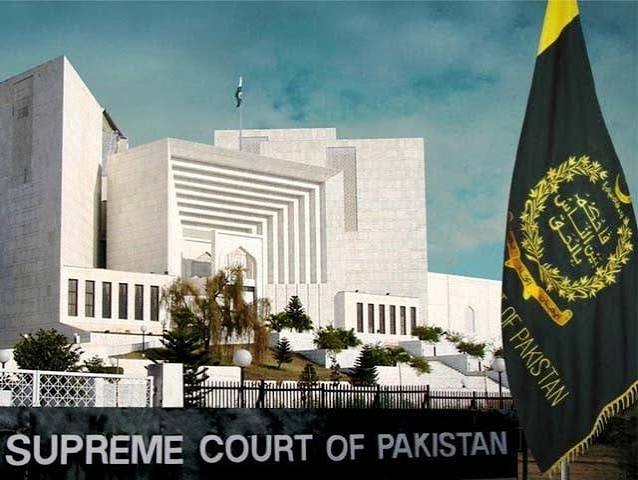
ISLAMABAD: The Supreme Court of Pakistan has acquitted two brothers sentenced to death for blasphemy nearly 20 years ago, ruling that medical evidence of bipolar disorder raised enough doubt about their guilt.
Liaqat Ali and Umar Draz had their convictions under Section 295-C of the Pakistan Penal Code set aside on Saturday by a three-judge bench led by Chief Justice Yahya Afridi. The law carries a mandatory death penalty for blasphemy against the Prophet Muhammad.
The bench, which also included Justices Shakeel Ahmad and Ishtiaq Ibrahim, heard appeals against a Lahore High Court decision of 17 September 2015 that had upheld the sentences.
The brothers were convicted by a sessions judge in Jhang on 27 March 2006. The trial court sentenced each to death and fined them Rs500,000, with five years’ rigorous imprisonment if they failed to pay. They have since spent about two decades in custody.
According to the complaint, Draz began making blasphemous statements, which led to a marital dispute and a divorce on 13 March 2006. The complaint says he affirmed in writing in the divorce papers that he had left Islam.
It says a document written by Ali, containing further blasphemous assertions, was recovered when his brother’s former wife’s dowry items were returned. On 18 March 2006, the complainant and witnesses confronted the brothers, who allegedly acknowledged the contents and said they were willing to repeat them before any forum.
Before the Supreme Court, the brothers’ counsel confined his arguments to mental unsoundness. He said the pair lacked the necessary mens rea, or guilty mind, at the time of the alleged offence.
The court examined three psychiatric assessments. A three-member medical board at the District Headquarters Hospital in Faisalabad found both men mentally sound in 2007. An eight-member Board of Certification reached a different conclusion in 2023, diagnosing “bipolar affective disorder with psychotic symptoms”.
In September 2025, a nine-member board found that both men were suffering from “bipolar disorder current episode manic”. It described a chronic illness, most likely permanent in acute cases, and said the brothers lacked insight and could not understand their acts at the time.
The judges gave greater weight to the later boards, whose unanimous findings came from senior professors of psychiatry. The 2007 board, they noted, had included only one psychiatrist.
In the seven-page judgment written by Justice Ibrahim, the court said the reports established that the appellants suffer from bipolar disorder, which can deprive a person of the ability to understand the nature or lawfulness of their actions during active manic episodes.
The verdict said the expert opinion conclusively showed that the illness is episodic, making it “highly probable” that the brothers were in an active manic episode when the alleged offence took place.
The court also pointed to undisputed evidence that bipolar disorder has a strong genetic component. That both brothers were independently diagnosed with the same condition, it said, “cannot be dismissed as a mere quirk of fate or post-trial coincidence”. The judgement said the shared diagnosis provided “compelling scientific corroboration” that their illness was inherited and predated the alleged offence.
Three members of the Board of Certification appeared before the bench on 6 July and gave what the court called invaluable assistance on how the illness works. In a report to the court, they described bipolar affective disorder as an episodic illness, with symptom-free intervals that vary in length from patient to patient.
The court said the brothers had spent about 20 years behind bars and that the medical opinion raised doubts about their culpability. In those circumstances, it said, the benefit of the doubt could not be withheld.
The bench also expressed the expectation that the executive director of the Punjab Institute of Mental Health in Lahore would ensure that the brothers’ treatment is not discontinued.
Justice Ahmad agreed with the acquittal but added a separate note. He warned that a psychiatric diagnosis alone does not meet the requirements of Section 84 of the Penal Code, which governs the defence of unsoundness of mind.
He distinguished medical insanity from legal insanity. The question, he said, was whether the accused, at the time of the offence, was incapable of knowing the nature of the act or that it was wrong or contrary to law.
Legal accountability, he wrote, must be balanced with humanity, and justice also includes mercy when the law recognises a person’s lack of mental capacity. He said the medical reports, read with the surrounding circumstances, created reasonable doubt, and he referred to Islamic principles of legal capacity and responsibility.
The ruling came barely a month after the same bench, with Justice Ibrahim writing the judgement, upheld the death sentence of Qaiser Ayub, a Christian man convicted of publishing blasphemous material online. His brother, Amoon Ayub, was acquitted for lack of evidence in the same decision on 7 October. Lawyers for the brothers said they would seek a review of the sentence, and advocates described the ruling as a dangerous precedent.
Blasphemy accusations in Pakistan are frequently tied to personal or property disputes. The Supreme Court itself warned in 2014 that many cases stem from such disputes or family vendettas. No death sentence has been carried out under the country’s blasphemy laws to date, though people accused of the offence have been killed by mobs. Asia Bibi, a Christian woman, spent eight years on death row before the Supreme Court acquitted her in 2018.
Copyright © 2021 Independent Pakistan | All rights reserved