By Staff Reporter
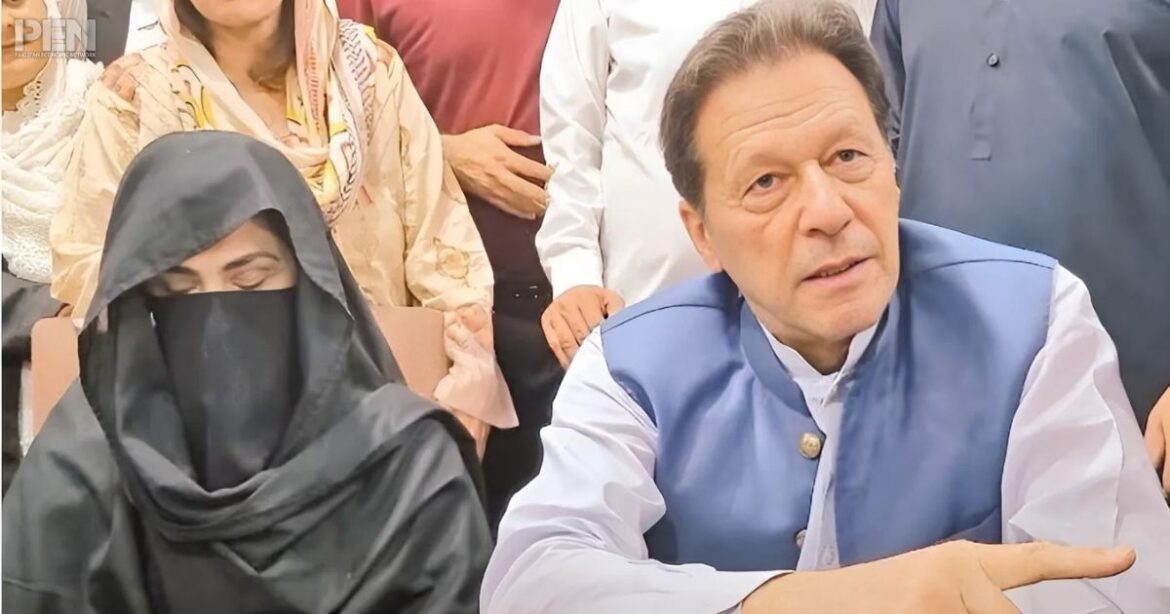
ISLAMABAD: The Islamabad High Court has ordered jail authorities to let Imran Khan’s lawyers see him before the next hearing, putting off for 10 days the appeals that he and his wife, Bushra Bibi, have brought against their convictions in the £190m corruption case.
The Court told the city’s advocate general on Tuesday to arrange a meeting of at least an hour between the jailed former prime minister and his lead counsel, Sardar Latif Khan Khosa. It also allowed a second lawyer, Barrister Salman Safdar, to see both Khan and Bushra Bibi, and ordered that the paper books for the appeals be ready by the next date.
Khan was sentenced to 14 years in prison and his wife to seven by an accountability court on 17 January 2025. Both are held at Adiala jail in Rawalpindi.
Khosa told the bench that he had still not been given access to his client, saying an earlier order allowing him to meet Khan had not been carried out and that he had made his willingness to argue conditional on a consultation. Chief Justice Sardar Muhammad Sarfraz Dogar, who heads the two-judge bench, said arguments should begin regardless. He reminded counsel that on 29 June the court had obtained an undertaking that no adjournment would be sought.
Safdar answered that the undertaking had been given by Khosa, who should explain his own position. He said he was in court to argue the appeals and a separate application seeking permission for Bushra Bibi to receive medical treatment.
The chief justice asked Islamabad Advocate General Naveed Hayat Malik whether Khosa could see Khan within a couple of days. The advocate general said he could. Salman Akram Raja, the PTI’s secretary general and a lawyer, told the court he had received instructions from Khan. Justice Dogar observed that the court’s directions formed part of the judicial record.
Safdar said he had last seen Khan seven months ago and Bushra Bibi 11 months ago. The paper books had not reached him, he said, and the appeals involve about 3,500 pages of documents and testimony from 35 witnesses. A recent jail meeting with the couple had been limited to 40 minutes, which he called too short to go through the cases.
He then described Bushra Bibi’s condition. She had worn sunglasses throughout the meeting, he said, and took them off only when he insisted. Her eyes appeared badly infected and needed a specialist’s attention at once. Khan’s eyesight had improved somewhat, Safdar said, but his blood pressure remained unstable, which put him at risk of a brain haemorrhage. He added that Khan seemed more worried about his wife than about himself.
Citing the statutory grounds on which women can be granted bail, Safdar asked the court to release Bushra Bibi for a fortnight so she could be treated.
The advocate general said she had been given proper medical care. People convicted and sentenced by a court, he argued, cannot claim the same absolute rights as law-abiding citizens.
Justice Dogar said the question of her treatment was before the Federal Constitutional Court (FCC) and that Safdar could raise access to his clients in the proper forum. Safdar told the bench no case concerning Bushra Bibi was pending there. He repeated his request that she be allowed to see a specialist of her own choosing.
Speaking outside the court, Barrister Gohar Ali Khan, the PTI chairman, said his party had tried every court and every forum. “It feels as though court orders in our favour were written in pencil, while those in others’ favour were written in permanent marker,” he said. “What is needed now is for decisions to be written not in pencil or permanent marker, but with the same pen for everyone.”
He urged the court to make sure its orders were carried out, and called on the government to let lawyers meet Khan at once, which he described as the former premier’s fundamental and legal right.
Access to the couple has been a recurring grievance for their legal team. After a meeting on 2 November, Safdar said the two were held in solitary confinement for almost 24 hours a day, with no books, television, family or lawyers. The government denies mistreating Khan and says he has amenities including a walking area, television, exercise equipment and a separate kitchen.
Bushra Bibi’s eyes are a live issue. She had surgery at Al-Shifa Trust Eye Hospital in Rawalpindi on 16 April. In an application filed at the high court last week, Safdar said she told him doctors had diagnosed a mature cataract and that another operation would be needed around 15 November. She asked to be treated by a specialist of her choice at her own expense.
Her bid to have her sentence suspended has already failed. In October the FCC dismissed her appeal, noting that it had been filed 61 days late, and ruled that the main appeal should be decided quickly.
Khan’s own health has been before the courts since February, when a report to the Supreme Court recorded that he had told officials his right eye was working at only 15 per cent. The court ordered that he be given access to his personal physicians and allowed to telephone his sons. On 20 August he was taken to the Pakistan Institute of Medical Sciences in Islamabad and declared medically fit before being returned to Adiala.
The court had signalled it wanted the appeals dealt with quickly. In April Justice Dogar said that once arguments began, the matter could be decided within seven days.
The case turns on the Al-Qadir Trust settlement. Britain’s National Crime Agency sent £190m to Pakistan in 2019, and Khan’s cabinet approved a settlement in December of that year. Investigators say the property tycoon Malik Riaz gave Khan and Bushra Bibi 458 kanals of land in return for legal cover. The National Accountability Bureau alleges the couple also received billions of rupees from the developer for legalising the Rs50bn that Britain returned. The money was paid into a Supreme Court account as part of the settlement. Khan has been in custody since August 2023, and a special court separately sentenced the couple to a combined 17 years in December 2025 in the Toshakhana II case.
Copyright © 2021 Independent Pakistan | All rights reserved