By Staff Reporter
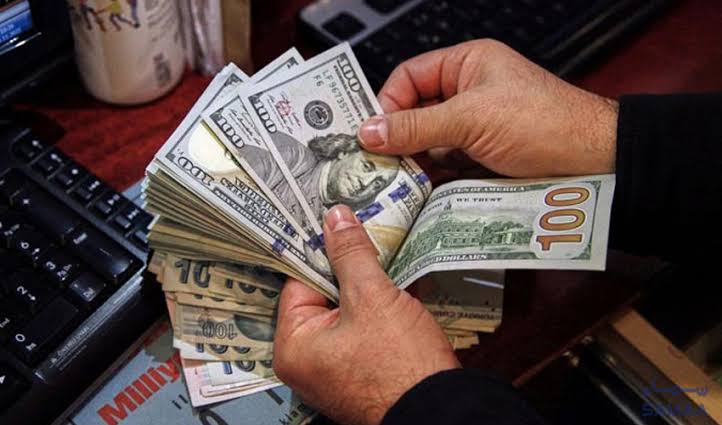
ISLAMABAD: Pakistan repaid about $14.4 billion on external public debt in the fiscal year through June while taking in $16.2 billion in foreign loans, most of it to support the budget, rebuild foreign-exchange reserves and steady the rupee, leaving its overseas debt stock at $98.1 billion.
The Ministry of Economic Affairs, in its annual report on foreign economic assistance released Wednesday, put external public debt at $98.075 billion as of June 30. That is $6.28 billion, or 6.8%, more than the $91.795 billion a year earlier.
Disbursements fell short of what the government had planned. The $16.16 billion received in fiscal 2026 was 81% of the $19.923 billion budgeted, a gap of about 19%. Islamabad also secured new commitments of $8.951 billion during the year.
Debt service totaled $14.436 billion, the ministry said, made up of $11.198 billion in principal and $3.238 billion in interest. That compares with $13.32 billion in the prior year, when principal repayments were $9.729 billion and interest was $3.591 billion. Principal payments rose about 15%, while interest costs fell roughly 10%. Net transfers were $4.417 billion, which the ministry said indicates the debt stock grew over the period.
Of the money that came in, $9.375 billion went to budget and balance-of-payments support, meant to address fiscal imbalances, strengthen reserves and stabilize the exchange rate. Project financing accounted for $3.435 billion, commodity financing for $2.019 billion and programme financing for $1.329 billion.
Within budget support, Naya Pakistan Certificates, debt instruments aimed at overseas Pakistanis, supplied $3.05 billion, or 33%. Time deposits from friendly countries contributed $3 billion, or 32%. Foreign commercial banks and bonds together provided 31%, and the International Monetary Fund 4%.
Multilateral and bilateral development partners hold $59.931 billion of the debt, about 61% of the total. The World Bank disbursed $2.025 billion, equal to 40% of multilateral flows, followed by the Asian Development Bank at $1.772 billion (35%) and the Islamic Development Bank at $1.087 billion (22%). Among bilateral lenders, Saudi Arabia was the largest at $1.013 billion, followed by China at $501 million.
Project money went mainly to energy and power, water, transport and communications, education, and environment and climate resilience. The ministry said continued engagement with partners also supported disaster risk reduction and reconstruction.
Of the $8.951 billion in new commitments, $3.808 billion (42%) was for budget and balance-of-payments support. Projects drew $2.768 billion (31%). Programme financing from the Asian Development Bank and World Bank totaled $1.407 billion (16%), and the International Islamic Trade Finance Corporation provided $967 million (11%) in commodity financing. Federal projects and programmes took $6.809 billion, with $2.142 billion going to provincial ones.
The report lands as Pakistan leans on a mix of official support and market access to cover its external needs. The Finance Ministry’s annual debt review showed the government returned to international capital markets after a four-year gap, with a $750 million Eurobond in April and a 1.75 billion yuan Panda bond in May. Total public debt rose 7.7% to 86.72 trillion rupees, and a government adviser said external debt fell to 21.5% of gross domestic product, a nine-year low.
In April, the United Arab Emirates withdrew $3.5 billion in support, and Saudi Arabia filled the gap with a $3 billion deposit. Riyadh also agreed to extend its existing $5 billion deposit for a longer term. This month, Pakistan secured assurances from China and Kuwait to roll over $4.3 billion in loans, bringing expected relief from the three countries to $7.3 billion.
Staff reached an agreement in October on the fourth review of Pakistan’s $7 billion Extended Fund Facility and the third review of a $1.4 billion climate-resilience arrangement, with the deal still subject to board approval. Pakistan expects to receive about $1.21 billion in December, which would take total disbursements under the two programs to about $5.7 billion. The fund said Pakistan kept the economy stable despite higher energy costs and supply disruptions, and estimated growth at about 3.6% for fiscal 2026. It also urged the government to phase out fuel subsidies, allow more exchange-rate flexibility and target a primary surplus of 2% of GDP in the 2026-27 budget.
The State Bank of Pakistan held $21.56 billion in the week ended Oct. 30, with total liquid reserves at $26.86 billion and the rupee near 276.7 per dollar. A year earlier, central bank holdings were about $14.5 billion.
An official told reporters external debt servicing in fiscal 2027 is set at $21.5 billion, including about $3.5 billion in interest, though only about $7 billion is expected to be actual repayment.
Copyright © 2021 Independent Pakistan | All rights reserved