By Staff Reporter
PESHAWAR: Pakistani police have arrested a former Afghan army soldier they accuse of training a suicide bomber and helping to plan attacks inside the country, in a case officials say shows Afghan territory is being used to stage militant violence.
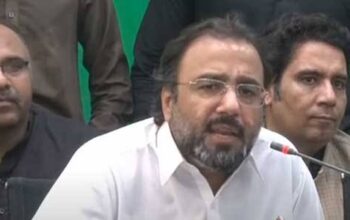
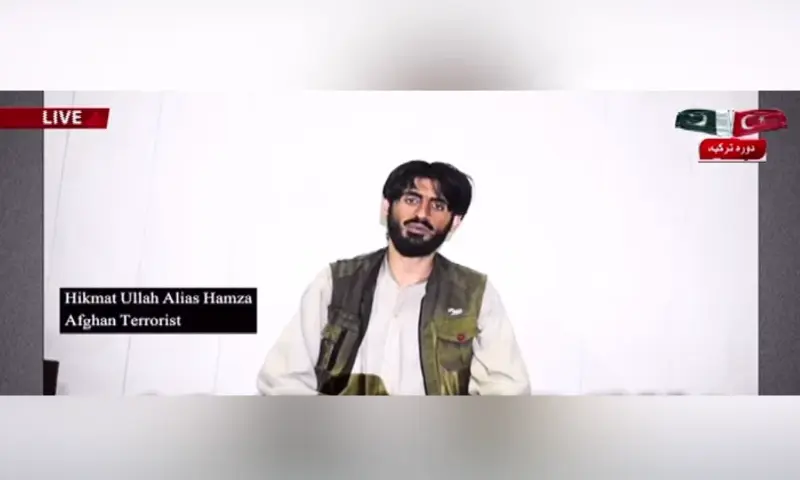
Hikmatullah, alias Hamza, son of Noor Mohammad, was seized in the Tirah Valley of Khyber district on 7 November in a joint operation by police and security forces, Abbas Ahsan, additional inspector general of police for the 12 designated districts of Khyber Pakhtunkhwa, told a press conference in Peshawar on Wednesday.
“The arrest was made through human intelligence, electronic surveillance and other intelligence resources,” Ahsan said. He described the suspect as a native of Afghanistan’s Paktia province, from the Chamkani area and the village of Mangiyar.
According to the police account, Hikmatullah served in the former Afghan National Army, where he received three months of military training and three months of commando instruction. After the force was dissolved, Ahsan said, he put those skills to use in a number of madrassas, resumed training and built contacts to facilitate attacks in Pakistan.
“He also prepared a suicide bomber,” Ahsan said, naming the recruit as Akrama, whom the suspect is alleged to have trained at the Khalid bin Waleed madrassa near Jalalabad. Police also said the man had links to the former Gul Bahadur group and had worked as a security guard for one of its commanders, Mansoor.
Interrogation had produced the identities of facilitators in both Pakistan and Afghanistan, the places where he trained and the locations where attacks were planned, the police chief said. Information on local facilitators inside Pakistan had also emerged from his statement, he added, and officials described the material as important and sensitive.
Officials played a video statement attributed to the detainee. In it, Hamza said he had studied with a religious scholar for a year before beginning to teach at a madrassa, and that he had met Akrama in Jalalabad and prepared him for a suicide attack. “I was injured during the Taliban’s rule in Afghanistan,” he said, adding that he was being treated well in Pakistan. The recording was released by the authorities, and the claims made in it, from a man in custody, could not be independently verified.
Mahmood Jan Babar, the information secretary of the Area Development Secretariat, who appeared alongside Ahsan, said the case reflected Pakistan’s long-standing complaint that Afghan soil was being used against it. He said Islamabad had repeatedly shared credible evidence with the Afghan authorities.
“Pakistan has always presented its case before the world. Today, we have achieved success with the arrest of an Afghan terrorist who was planning attacks in Pakistan,” Babar said. He said the detainee was not an isolated case and that such networks were still operating. “These people take advantage of the cover of darkness and enter Pakistan to carry out attacks, but they do not realise that the sons of Pakistan are waiting for them,” he said.
The briefing came on a day of fresh bloodshed in the province. Gunmen ambushed police returning from an operation against illegal gold mining in Gumbat, in Kohat district, killing 10 officers, while 18 militants died in the fighting that followed. The Pakistani Taliban later claimed responsibility for a series of attacks across the country, including the one on the convoy.
Violence of this kind has climbed steadily. Data from the Armed Conflict Location & Event Data project (ACLED) shows attacks in Pakistan rising almost fourfold, from 658 in 2022 to 2,425 in 2025. Two security reports presented to the federal cabinet in October found that terrorist incidents in Khyber Pakhtunkhwa had risen by 195 percent between March 2024 and September 2026. They also found that 73 per cent of attacks in the province this year had targeted police and security personnel, with drones and improvised explosive devices an increasing menace.
Islamabad accuses the Afghan Taliban authorities of allowing the banned Tehreek-e-Taliban Pakistan (TTP) to operate from Afghan territory, a charge Kabul denies. A United Nations Security Council monitoring report published in February backed Pakistan’s concerns, saying TTP attacks originating in Afghanistan had increased and that the group enjoyed greater liberty and support from the de facto authorities. It said Al Qaeda continued to train and support the TTP, which had acquired advanced equipment including night-vision devices and drones.
The dispute has hardened into open confrontation. Pakistan’s defence minister declared “open war” after border fighting in late February, and the latest round of clashes began after a complex suicide attack on 18 September that killed 31 people in the north-west. Taliban and Pakistani forces have exchanged fire repeatedly since, including on 19 and 27 October. On 5 November the Pakistani military said it had foiled a TTP infiltration attempt in Kurram district, and that Afghan forces opened fire when troops moved to stop the crossing, drawing a retaliatory strike on their posts.
Trade between the two countries has been suspended since October 2025, and a Pakistani official said on 7 November that the crossings would stay shut until Islamabad’s security concerns were addressed.
Copyright © 2021 Independent Pakistan | All rights reserved