By Staff
ISLAMABAD: Pakistan and Turkmenistan agreed to convene the steering committee of the long-stalled TAPI gas pipeline, seeking to keep the roughly $10 billion project alive while the Afghan border it must cross remains shut to trade.
Turkmenistan’s Foreign Minister Rashid Meredov said the two sides settled on the meeting after talks with Deputy Prime Minister and Foreign Minister Ishaq Dar at the sixth session of the Pakistan–Turkmenistan Joint Intergovernmental Commission in Islamabad on Tuesday. Meredov was in the capital for the 30th Economic Cooperation Organisation ministerial, held Nov. 15-16, and Pakistan takes over the group’s chairmanship for 2026-27.
Dar said both governments recognised “the importance of political engagement among the participating countries on the technical and commercial aspects of the project.” No date was given for the committee meeting.
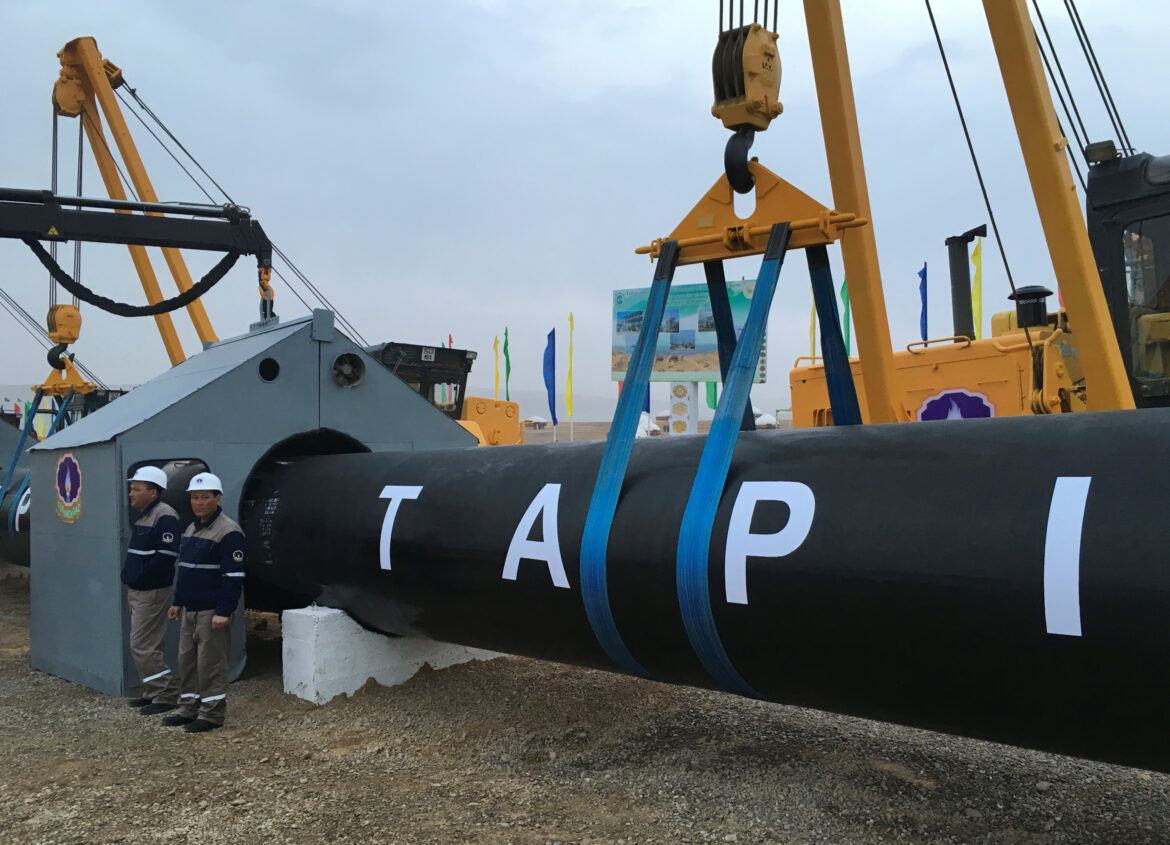
The Turkmenistan-Afghanistan-Pakistan-India line would run about 1,800 kilometres (1,100 miles) and carry 33 billion cubic metres of gas a year from Turkmenistan’s Galkynysh field, the world’s second-largest, to Fazilka in India. It would pass through Herat and Kandahar in Afghanistan and Quetta and Multan in Pakistan. The free-flow phase is estimated at $5 billion to $6 billion, with compressor stations adding at least $1.9 billion. Pakistan’s foreign office puts the overall cost near $10 billion. It says disagreements over pricing and delivery points, along with security risks in Afghanistan, have held up the project for years. Pakistan and Turkmenistan signed a joint implementation plan in June 2023.
The part of the pipeline that exists is on the Turkmen side. Construction of the 153-kilometre Serhetabat-to-Herat section began in September 2024. Satellite images from Nov. 7 show the line reaching a construction zone about 22 kilometres west of Herat’s industrial district. Herat’s governor said in August the section would be operating within two months. But no timetable has been announced for extending the line farther south, so the first working stretch may serve Herat rather than Pakistan or India.
Getting to Pakistan means crossing Kandahar, and relations between Islamabad and Kabul are at a low. Trade between the two has been suspended since October 2025, following border clashes and airstrikes, and Pakistan has said it will stay suspended until the attacks stop. Commerce ministry documents cited by local media show exports fell by $1.3 billion over 13 months, as Afghanistan shifted much of its trade toward Iran and Central Asia. The remarks released by both sides on Tuesday did not say how the pipeline would clear that obstacle.
The commission’s agenda was broader and, for now, more practical. Pakistan’s trade with Turkmenistan was about $15 million in the first nine months of 2026, down 56% from a year earlier, according to Turkmen Trade Minister Dortguly Suleymanov, who blamed lower textile exports. Trade topped $36 million in 2025, nearly 23% below 2024.
Commerce Minister Jam Kamal Khan used a separate meeting with Suleymanov to propose air freight. “Jam Kamal Khan proposed exploring direct flights between Islamabad and Ashgabat, along with chartered cargo services for perishable agricultural and food products,” the commerce ministry said. Khan argued that rising freight costs and disruptions to traditional routes have raised the value of regional links, and that the short distance between the two capitals favours air cargo for goods with a short shelf life. Suleymanov said the idea could be taken up with aviation authorities. The ministers also discussed alternative overland corridors, including for Pakistani marble, easier business visas, and the expanding Central Asian operations of Pakistan’s National Logistics Corporation.
On the ground side, Dar said the two governments will work to “advance work on a bilateral transit trade framework and explore commercially viable transport links.” Meredov said talks covered links between the ports of Chabahar and Gwadar and railway routes through Afghanistan. “Particular attention was paid to the rail viability of routes, tariffs and border procedures,” he said. The ministers also discussed a proposed Turkmenistan-Afghanistan-Pakistan power transmission line and a fibre-optic link, and said both need further assessment of their technical and commercial viability.
The two sides signed the protocol of the commission’s sixth session, a cooperation programme for their foreign ministries covering 2026-2030, and a memorandum of understanding on tourism. Pakistan’s Foreign Office said the instruments reflect “shared commitment” to institutional cooperation and people-to-people ties.
Dar also reaffirmed Pakistan’s backing for Ashgabat’s diplomatic stance. “Pakistan respects Turkmenistan’s policy of permanent neutrality and values our constructive cooperation in regional and international forums,” he said. Meredov said he stressed “the central role of dialogue and diplomacy, respect for international law and adherence to the principles of the United Nations Charter.” He added that Turkmenistan plans a state visit to Islamabad next year.
Copyright © 2021 Independent Pakistan | All rights reserved