By Staff Reporter
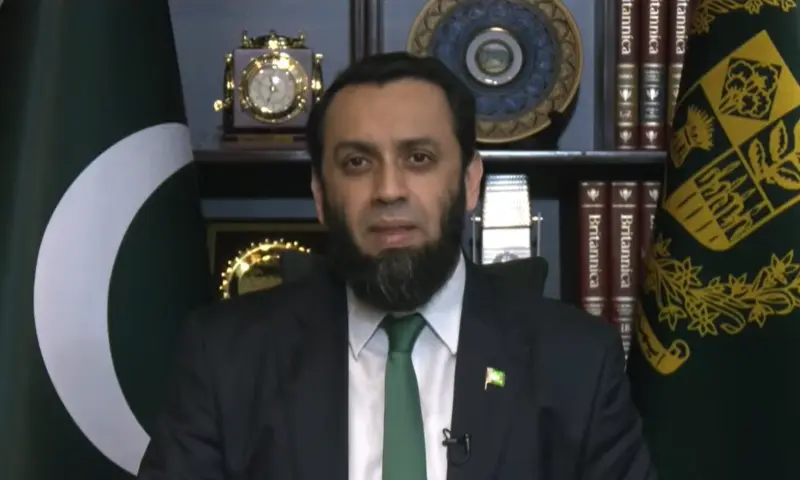
ISLAMABAD: Information Minister Attaullah Tarar insisted on Tuesday that a referendum on creating new provinces was “legal and constitutional”, hours after the chairman of coalition partner PPP denounced the idea as an “unconstitutional move”.
Tarar said no political party should have reservations about taking the question to the public. In televised remarks, he accused the Pakistan Peoples Party (PPP) of a “double standard”, arguing that it could not “enjoy the perks” of power while also doing opposition.
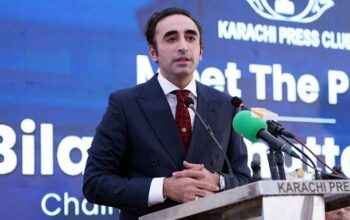
His intervention came after a hard-hitting speech by Bilawal Bhutto-Zardari at the Karachi Press Club. The PPP chairman warned that if Sindh were divided by force, questions would be asked about the “blood spilt on Karachi’s streets”. Bhutto-Zardari rejected the referendum proposal itself, saying: “It is not about a referendum, it is about intent.” He also complained that the matter had not been discussed in parliament or the federal cabinet. He said neither he nor the president had been consulted.
Tarar said the argument was part of a wider debate on “good governance” that could not be shut down.
“And this debate is raging among the masses. Will you silence the people? Will you stop them from talking about improving governance? This debate will happen in Parliament and outside it,” he said.
“Democratic and political processes demand that this debate be done by the people … What is the problem with going to the public? You and I are not going to decide what the people want. They are the ones who will decide.”
Tarar said the public appointed its representatives, not the other way round. “The people are the final decision-makers and good governance is the charter of every political party”.
Pressed on the use of referendums in Pakistan’s past, he asked: “Will you deprive the people of their rights just because referendums were previously used in a non-democratic manner?”
He also urged the PPP to negotiate. “Look, we are part of the same government. Come and sit down [with us] so we can make decision for the betterment of the people and the country. [Let] this decision be based on public opinion. And a referendum is an excellent way of gauging public opinion, so what’s the harm?”
On Sindh, the minister said: “If the people of Pakistan and Sindh want more provinces, they should be created; otherwise, they should not.” He said smaller administrative units should be viewed through the lens of development.
The row traces back to Interior Minister Mohsin Naqvi, who has spent months arguing that the country’s governance “system” has “collapsed” and needs a “reset”. He first publicly advocated new provinces or administrative units on 31 July, at the Pakistan Economic Summit in Islamabad. Last Thursday he floated a referendum, saying it could settle the dispute once and for all.
The PPP has been consistent in its opposition. Bhutto-Zardari, Sindh Chief Minister Murad Ali Shah and other senior party figures have repeatedly said that dividing Sindh is neither legally nor politically acceptable. In September, the Sindh Assembly adopted a resolution rejecting any attempt to split the province or create new administrative units. Bhutto-Zardari said the assembly had stated its position “not once, but ten times”.
President Asif Ali Zardari met Prime Minister Shehbaz Sharif at the weekend. Official sources said the two agreed to “strictly adhere to constitutional provisions” governing the creation of new provinces or administrative units, with any referendum also requiring parliamentary approval.
Article 48(6) of the Constitution allows a matter of national importance to be put to the public by referendum, but only after approval by a joint sitting of parliament. Dawn said in an editorial that a referendum would not clear the constitutional hurdle, however resoundingly it was passed.
Pakistan has more than 240 million people, divided between Punjab, Sindh, Khyber Pakhtunkhwa and Balochistan. Creating new provinces would require constitutional amendments and broad political agreement over representation and the distribution of federal revenues. Defence Minister Khawaja Asif has argued that the country could have as many as 12 provinces if the exercise were based on administrative rather than ethnic, linguistic or political lines.
Bhutto-Zardari, however, said on Tuesday that his party would stand against any such measure.
Copyright © 2021 Independent Pakistan | All rights reserved