By Staff Reporter
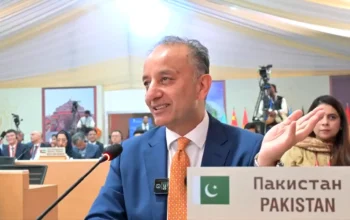
ISLAMABAD: Prime Minister Shehbaz Sharif has pledged “unwavering solidarity” with Saudi Arabia after Houthi rebels fired three ballistic missiles at Riyadh, two days after striking the capital’s tallest skyscraper.
Sharif described the attacks as “acts of reckless aggression” in a post on X on Saturday, adding that the targeting of civilian infrastructure and economic facilities was totally unacceptable and threatened regional peace and stability.
“Pakistan stands in unwavering solidarity with our brotherly Kingdom of Saudi Arabia and its people,” he said. “We fully support the Kingdom’s right to defend its sovereignty and territorial integrity and to protect its citizens and residents.”
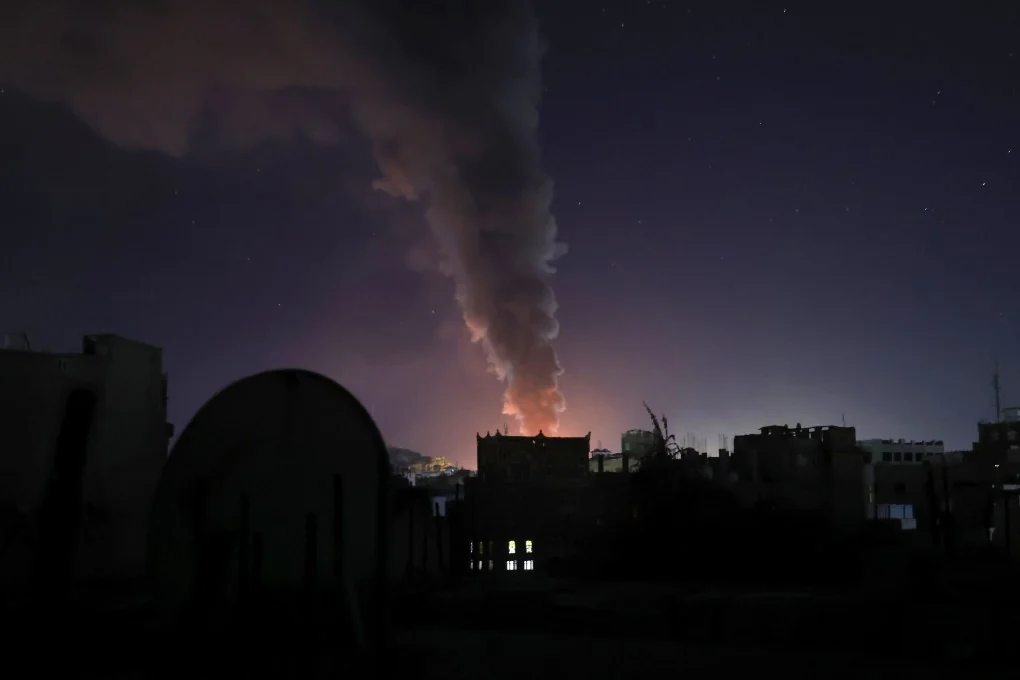
The Saudi-led coalition said its air defences intercepted and destroyed all three missiles early on Saturday. A Reuters witness in Riyadh saw a projectile streak across the sky, trailing smoke, moments before a loud bang. Explosions were heard in the city, residents received alerts on their phones, and the alerts were later lifted. It was the third day running that Saudi Arabia issued, then quickly lifted, alerts for the capital. Hours later, the coalition said it had shot down another Houthi drone fired towards the south of the kingdom.
The Houthis said on X that they were striking targets across Saudi Arabia, including Riyadh. Civil Defence also issued early-warning alerts in Al-Sulayyil, south of the capital, and in Najran, near the Yemeni border.
On Thursday a Houthi attack damaged several floors of the Public Investment Fund tower, headquarters of the Saudi sovereign wealth fund and the tallest building in Riyadh, along with neighbouring buildings in the King Abdullah Financial District. Mr Sharif’s statement was issued in response to that strike.
The violence has intensified sharply since Friday. Saudi air defences destroyed five drones and three ballistic missiles that day, including two missiles aimed at the southern region of Jazan. Civil defence authorities issued eight public emergency alerts in the 24 hours from 7.30am on Friday.
The coalition also struck Houthi targets and missile capabilities in Sanaa, Saada and Taiz, as well as facilities at the Red Sea port of Hodeidah. It said it had destroyed seven military targets in Sanaa, including six workshops used to build launcher structures for ballistic missiles and drones, and hit a major supply depot. Yemen’s internationally recognised government defended the Hodeidah strikes, accusing the Houthis of using the port to receive smuggled Iranian weapons.
The Houthis responded with threats against Saudi Red Sea ports and warned airlines to avoid Saudi airspace. They said the kingdom’s airspace was “unsafe” and threatened Jeddah and other Red Sea ports. They also threatened Riyadh’s financial centre and a power station at Al-Shuqaiq in the south-west. The group claimed attacks on a power station and a port in southern Saudi Arabia.
Riyadh’s Foreign Ministry condemned the targeting of civilian and economic sites and reaffirmed the kingdom’s right to take whatever measures are needed to protect its sovereignty, citizens and residents. The UN said it was following the escalation “with concern” and warned that continued fighting could endanger vital aid supply routes in Yemen.
For Islamabad the attacks carry obligations as well as sympathy. Pakistan and Saudi Arabia signed a bilateral defence agreement in September last year. It was widened on 7 August to include Turkey in the Makkah Joint Defence Agreement. Both treat an attack on one signatory as an attack on all.
Pakistan has already warned the Houthis against attacking the kingdom. The defence minister, Khawaja Asif, said in September that “there should be no ambiguity” that the pact was a joint defence agreement. In early October, after an emergency meeting in Riyadh, Pakistan, Saudi Arabia and Turkey agreed to provide designated forces and capabilities, including rapid deployment of forces in the kingdom.
“We will continue to support all efforts for lasting peace and stability in the region,” Sharif said.
On the ground in Yemen, the government says its forces are pressing their own offensive. Army spokesman Majed al-Nazili said on Friday that 193 Houthi leaders and fighters had been killed or wounded, and 81 vehicles and items of equipment destroyed or damaged, in 854 attacks on several fronts under the “Dawn of Yemen” operation. He said these included 31 air strikes, 687 artillery strikes, 91 drone attacks and 45 rocket-launcher strikes. The figures could not be independently verified.
Government forces launched the operation on 5 October to retake Houthi-held areas. The army reported 144 Houthis killed or wounded on Thursday and 142 on Wednesday, with fighting continuing on the Al-Jawf, Marib, Taiz and southern fronts.
Yemen has been in conflict since the Houthis seized Sanaa and several provinces in September 2014. A Saudi-led coalition intervened in March 2015 to back the internationally recognised government. The war reached a stalemate in 2022 but reignited in July. The Houthis now hold Yemen’s Red Sea coast, and the Saudi-backed forces have been pushed back to defend their temporary capital, Aden.
The renewed fighting has deepened Yemen’s humanitarian crisis and caused severe disruption in Saudi Arabia, and it is unfolding alongside the US-led war against Iran.
Copyright © 2021 Independent Pakistan | All rights reserved