By Staff Reporter
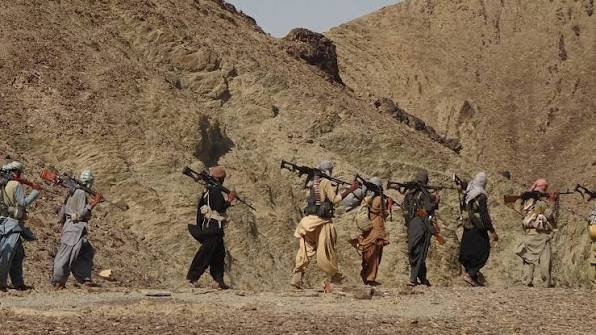
ISLAMABAD: Militant groups in Balochistan are kept going by a loose web of outside support that helps them regroup and rebuild under pressure from security forces, according to a new study.
The research, published this month in the Journal of International Law & Human Rights, is titled “The Role of External Forces in Exacerbating Security Challenges and Undermining Development in Balochistan”. It was carried out by Dr Hafiz Najeeb Ullah and Dr Adnan Mehr, visiting lecturers at the Department of History and Pakistan Studies at International Islamic University Islamabad.
They interviewed 16 people working in security, counterterrorism, politics, governance, development, media, border management and the China-Pakistan Economic Corridor (CPEC). From those conversations they identified six linked ways in which outside facilitation is believed to sustain militancy: money and material help, cross-border sanctuary and movement, logistical and organisational backing, propaganda, diaspora and transnational networks, and the “internationalisation” of violence through attacks on CPEC and other strategic interests.
The paper appears while the violence it describes continues. On 13 November, Pakistan’s military said it had killed 74 “terrorists” in raids in areas along the Afghan border, 31 of them in Balochistan since 3 November. The figures have not been independently verified.
Separatist groups have made their own claims. The banned Balochistan Liberation Army said it had killed six military personnel in four drone operations in Mastung and Kalat between 5 and 14 November. On 20 November, another terrorist group the Baloch Republican Guards said they had struck a checkpoint construction site in Naseerabad and a military camp in Kachhi.
Security forces, however, gave a separate account of events in Kachhi, saying they had killed three attackers after a commercial truck was set alight at the Dhadar bypass on 18 November.
Local reports also said more than 30 armed men seized a mining site near Nokundi in Chagai district, taking hostages who were said to include three former Frontier Corps personnel, a former Sindh Rangers member and a geologist. No official confirmation could be found.
The study’s central argument is that access to resources beyond Balochistan makes militant groups tougher and harder to dismantle. Outside help can keep money flowing, communications running and people moving, and it can help a group recover from losses.
The researchers do not describe a foreign puppet-master directing individual attacks. They describe a scattered set of actors, each contributing a different kind of help without any single command structure. That fragmentation, they say, makes it hard for investigators to draw a straight line from an external backer to a particular incident.
A security-sector participant said money, safe spaces and communication channels are what keep armed groups going, and that containment becomes far harder when they can draw on support from outside their home ground. Money stood out in particular, described as a flexible resource that can fund many functions at once. For counterterrorism, the authors conclude, stopping the people who carry out attacks is not enough, and the networks that enable them need attention too.
Balochistan shares long, rugged and poorly monitored borders with Afghanistan and Iran. Interviewees pointed to difficult terrain, informal routes and limited monitoring as gaps that criminal and armed networks can exploit to move around, find refuge and stay in contact across the line.
The authors take care not to cast ordinary border life as suspect. Families, traders and communities on both sides have been connected for generations, and crossing the border is part of making a living. The real distinction, they say, is between that everyday movement and organised networks exploiting informal routes.
They also separate three things that are easily blurred: formal state sponsorship, help from non-state transnational networks, and permissive conditions that let armed groups operate across borders without any neighbouring government being involved. The distinction matters because claims about cross-border militancy have strained relations between Pakistan and Iran before. The authors call for closer coordination with neighbouring countries and better monitoring of illegal networks, without choking off legitimate trade and social ties.
The study also identifies information as a front. Interviewees described how social media, diaspora communications, selective images, short videos, emotional appeals and rumours can turn a local incident into a political storm within hours. One media professional said how quickly this can happen, and singled out young people as especially exposed when official information arrives late or leaves obvious questions unanswered.
According to the researchers, such narratives can win militant groups political visibility, justify violence, attract sympathy, support recruitment and cast development projects as something imposed from outside. Silence and slow responses leave a vacuum, they argue, and blanket denials make matters worse. They recommend timely, evidence-based communication delivered by credible voices.
Here too the authors draw a line. Participants were confident that propaganda exists and travels through transnational networks, but far less sure who is behind any particular campaign. The researchers warn against assuming that every critical post or politically charged message is foreign interference, saying attribution requires source tracing and corroborating evidence.
Balochistan touches Afghanistan and Iran, gives Pakistan access to the Arabian Sea through Gwadar and sits at the heart of CPEC, which makes its stability a question of regional connectivity and Chinese investment as well as domestic security.
Interviewees said attacks on development projects can shake investor confidence, raise security costs, delay construction, disrupt business and strain Pakistan’s diplomatic and economic relationships. China’s stake gives such attacks an international dimension, the researchers note, and militants can exploit the symbolic weight of large projects to reach a global audience. A strike on strategic infrastructure can therefore cause political and economic damage far out of proportion to the physical harm.
The mining sector has been a target this year. In April, gunmen stormed a copper and gold project site in Chagai district, killing at least 10 people, among them a Turkish national, according to Dawn.
The study says the economic toll goes well beyond the immediate damage. Persistent insecurity raises protection costs, restricts the movement of workers and contractors, complicates access to sites and unsettles investors. Mining, transport, energy and ports, which depend on long-term planning, feel this most. Smaller projects are especially vulnerable because they often cannot absorb extra security costs the way large strategic ventures can. A single disruption can ripple through contractors, transporters, service providers, labourers and the households around them. The researchers conclude that externally facilitated violence can cost the economy far more than it costs to sustain.
A CPEC-linked participant spoke of the real benefits of better roads, jobs and business opportunities, but insisted that local people must see tangible gains. The study agrees that protecting infrastructure should not become an obstacle to development, and says security arrangements should be designed so that projects can proceed with meaningful community involvement.
Although it leans heavily on external factors, the study does not wave away Balochistan’s own problems. Political marginalisation, unequal distribution of resources, unemployment and uneven development remain genuine concerns. Yet the authors argue that grievances alone do not explain why organised violence persists. Militant networks, they suggest, can seize on existing frustrations, present them as proof of deliberate exclusion and use them to discredit peaceful politics.
An academic interviewee challenged the idea that joblessness automatically breeds militancy, saying it becomes a security problem when organised networks exploit it for recruitment. A political participant said credible representation and genuine consultation shrink the space in which militant narratives can grow. The researchers believe better governance, wider political participation and visible local benefits from development can weaken that appeal. But they caution that development spending alone cannot dismantle networks that supply armed groups with financing, logistics, mobility and organisational support.
The study recommends a comprehensive strategy combining financial monitoring, stronger border coordination, intelligence cooperation, protection of strategic infrastructure and effective public communication. Security institutions, it says, should aim not only to prevent individual attacks but to disrupt the wider systems that let militant groups survive and rebuild. At the same time, governance and development policy must address legitimate grievances through inclusive politics, fair resource distribution and real community participation.
The authors are open about their limits. The study is qualitative and rests on 16 participants, and perceptions shared in interviews cannot independently prove foreign sponsorship. They call for future work using financial records, legal evidence, border assessments and network analysis to build a firmer picture of external facilitation.
Their overall conclusion is that neither military force nor development projects alone can resolve Balochistan’s crisis. Counterterrorism must break up organised violent networks, they say, but lasting stability also depends on stronger institutions, credible governance and real economic opportunity for local communities. Protecting the province’s future, including CPEC and Gwadar, means tackling both the networks that sustain violence and the local vulnerabilities that give militant narratives their traction.
Copyright © 2021 Independent Pakistan | All rights reserved