By Staff Reporter
ISLAMABAD: Pakistan launched a smartphone app that lets shoppers scan a medicine pack to check whether it’s genuine and what it should cost, the government’s latest push against counterfeit drugs, with Prime Minister Shehbaz Sharif saying it would help restore public confidence in the health-care system.
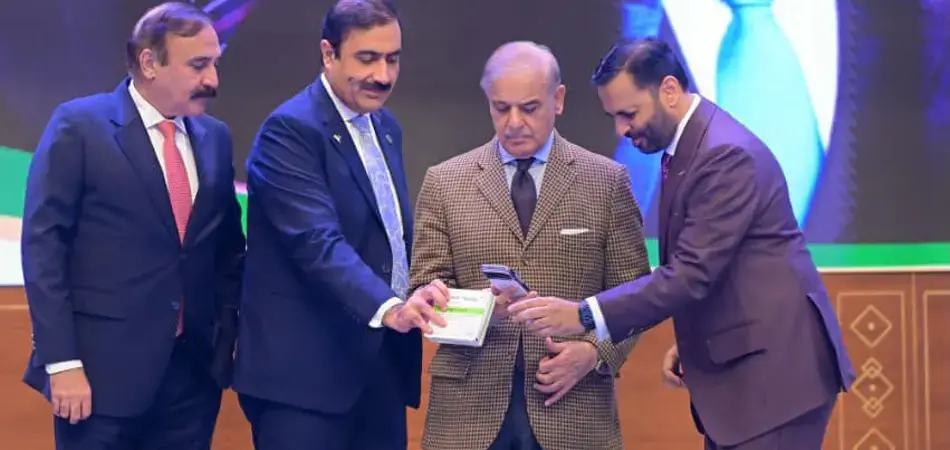
Sharif scanned a pack at Thursday’s launch in Islamabad of Mehfooz Dawa, which means “safe medicine” in Urdu. The app reads a two-dimensional barcode printed on the packaging and retrieves product information. Health Minister Mustafa Kamal told parliament last month that shoppers will also be able to check the expiry date at the pharmacy counter.
“I believe the app you have developed is an excellent intervention,” Sharif said. “It provides three important pieces of information: whether a medicine is authentic or counterfeit, its official price, and whether it is available or not.” He called the launch “a major milestone.”
The prime minister tied the effort to a 2011-12 tragedy at the Punjab Institute of Cardiology in Lahore, which happened while he was the province’s chief minister. More than 120 patients died, and investigators linked the deaths to a contaminated batch of heart medicine. Sharif said the regulator at the time had maintained the medicine was genuine, but international testing showed that what patients received was a drug meant to treat malaria. He urged officials to focus on “learning from the past and preparing ourselves.”
Sharif directed Kamal’s ministry to work with the information-technology and information ministries to raise public awareness of the app.
Affordability was the harder question, and the prime minister raised it himself. “To make medicines affordable for the common man, their prices should be in line with what ordinary people can afford,” he said, calling access to medicines a “huge challenge” for millions of Pakistanis. He urged officials to work with drugmakers and provincial governments to bring costs down, and said health and education should be equally available to every citizen. He announced no price cuts or subsidies at the ceremony.
The app sits on top of a national system for tracking medicines through the supply chain. The federal cabinet approved the nationwide track-and-trace system on June 2, with the drug regulator overseeing the rollout. The regulator has since made 2D barcodes and serialization mandatory for locally made and imported pharmaceutical products. A health ministry spokesman, Sajid Shah, said the system became operational on Oct. 9, and that about 800 pharmaceutical companies and more than 90,000 medicines are registered with the regulator. The system is meant to help regulators trace products and recall them when quality problems arise.
The health ministry and the regulator began work on barcodes in 2015, according to Dawn. A 2017 regulator notification already required drugmakers to put 2D barcodes on secondary packaging.
The app’s usefulness will depend on how many manufacturers put scannable codes on their products and how many customers have smartphones. The launch remarks gave no figure for how many products shoppers can already scan, or how the app determines availability. Local media have noted that a pack without a 2D barcode shouldn’t automatically be treated as counterfeit.
A scan matches a code against a record. It can’t detect contamination or a wrong dose, which still requires laboratory testing, and getting suspect products off shelves depends on inspections and recalls. The regulator has issued alerts about products sold in packaging that falsely named a licensed manufacturer.
The World Health Organization estimates that at least one in 10 medicines in low- and middle-income countries is substandard or falsified. Falsified products deliberately misrepresent what they contain or where they come from, while substandard medicines fail to meet quality specifications. The WHO says falsified drugs are often sold online or through informal markets, where enforcement is harder.
Copyright © 2021 Independent Pakistan | All rights reserved