The government is going on a small public spending spree, probably in an effort to blunt the edge of deepening economic hardship in addition to building much-needed infrastructure. By Muhammad Ali.
ISLAMABAD: At a time when inflation is roaring at a 50-year high and further inflationary measures are unavoidable, the authorities are astir to unlock public spending in some of the remotest areas of the country, probably with a view to helping ease the circumstances of those worst hit by economic hardship.
With the Finance Ministry locked in a round of threadbare negotiations with the International Monetary Fund (IMF) to achieve economic stabilisation, the Planning Commission cleared 10 development projects worth PKR 87.1 billion the other day, including the Gwadar Safe City Project (Phase-1) at an estimated cost of approximately PKR 5 billion.
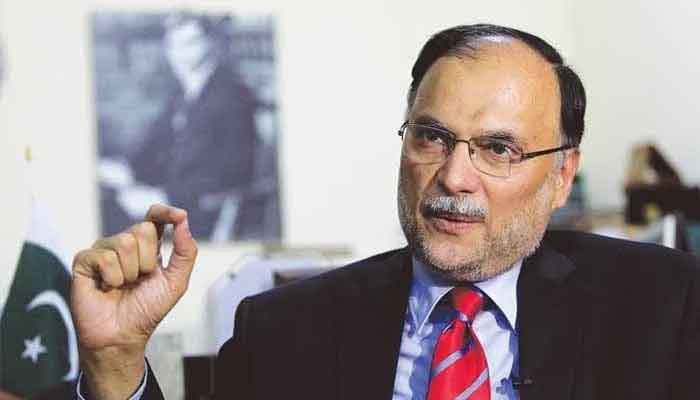
The development came at a meeting of the Central Development Working Party (CDWP) of the Planning Commission under the chairmanship of Minister for Planning and Deputy Chairman Planning Commission Ahsan Iqbal.
Sponsored by the government of Balochistan, the Gwadar Safe City Project envisages to provide better security for the residents of Gwadar particularly at the identified strategic locations and also help the law enforcement agencies in detecting crime and investigating crime by collecting evidence.
Gwadar is relatively an unsafe city, with many Western governments advising their Citizens against travelling to the city. The current infrastructure is insufficient to cater the security needs of Gwadar city.
The Gwadar safe city project has been developed to help all government stakeholders including city administration, Gwadar police and other Law Enforcement Agencies (LEAs) to mitigate the security and communication challenges.
The CDWP also approved a project Strengthening Institutions for Refugee’s Administration SIRA at the cost of just over PKR 2 billion.
The Ministry of States and Frontier Regions is mandated to deal with the issues related to Afghan refugees. An attached department of the Ministry of SAFRON, the Chief Commissionerate for Afghan Refugees (CCAR) is the operational arm to manage Afghan Refugees.
The CCAR and its Provincial Afghan Commissionerate’s offices are responsible for advising the government on policy matters and implementing the policies of the Ministry of SAFRON on Afghan Refugees’ issues.
It is estimated that nearly three million Afghan Refugees are living in Pakistan. These include 1.44 million Afghans with Proof of Registration Cards (POR) for their identity; approximately 840,000 Afghan Citizen Card holders; and an estimated 700,000 undocumented Afghan living in Pakistan.
The Ministry of SAFRON with the technical assistance of the National Database & Registration Authority (NADRA) has registered these Afghan Refugees. The Government of Pakistan has allowed UNHCR to conduct refugee status determination (RSD).
Individuals recognised as refugees at the outcome of the UNHCR’s RSD process and members of their family are issued with UNHCR Refugee Identity cards, known as Proof of Registration (PoR) cards.
The CDWP also approved the establishment of National Forensic Science Laboratory at the cost of PKR 1.98 billion. The Ministry of Interior is the sponsoring agency of the project. The laboratory will be established in the ICT.
The forum has recommended the reconstruction of Turbat-Mand Road from M-8 till Iranian Border-Radeeq at the cost of PKR 20.99 billion to the Executive Committee of the National Economic Council (ECNE).
The revised Project envisages completion of 410-meter long and 8.2-meter wide two lane Niheng Bridge at Rodbun, District Kech, Baluchistan Province. The start point of the project shoots from the existing Nehang Bridge, the South side embankment of which has been washed away due to floods.
The forum also recommended the construction of Panjgur-Gichak-Awaran Road, District Awaran at the cost of PKR 29.64 billion to the ECNE. The revised project envisages, construction of 228-kilometer long and 7.3-meter wide (3.65-meter wide each) asphaltic carriageway, starts from Panjgur – Gichak -Awaran, District Panjgur & Awaran, in the Southern Baluchistan Region.
The project road will connect Gichak with Panjgur, as well as with Karachi via Bela-Hoshab Road.
The forum also recommenced 26 MW Shagharthang Hydropower Project, Skardu at the cost of 17.97 billion to the ECNE. The Ministry of Kashmir Affairs and Gilgit-Baltistan is the sponsoring agency of the project.
The main objective of the project is to exploit the potential of hydropower available in the middle stretch of Kachura Lungma to generate 26 MW output, which will augment power to the existing electricity network of the area to resolve power shortage to the consumers of load centers in Skardu valley.
The forum also cleared the reconstruction of Mangopir at the cost of PKR 3.20 billion; completion of Niheng Bridge at Rodbun, District Kech at the cost of PKR 673.69 million; construction of the 26-MW Shagharthang hydropower project at the cost of PKR 17.97 billion; strengthening Institution for Refugee’s Administration (SIRA) at the cost of around PKR 2 billion; and development of Ziarat Town at the cost of PKR 5.56 billion.
Copyright © 2021 Independent Pakistan | All rights reserved