By Staff Reporter
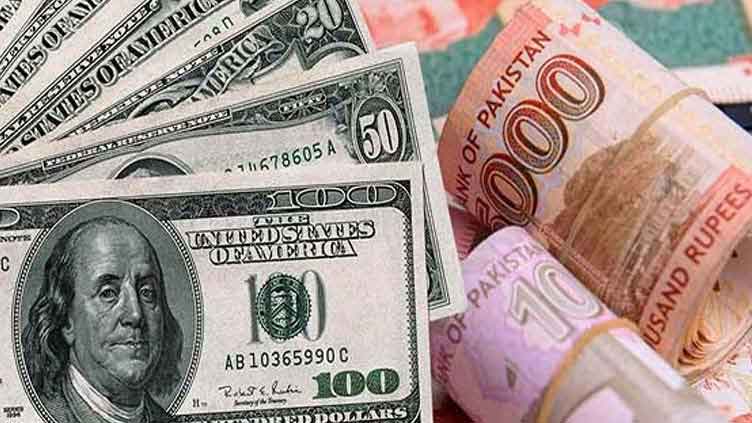
KARACHI: The central bank said on Wednesday it would allow banks to buy dollars from the interbank market to settle card-based cross-border transactions with international payment schemes, a move that could ease pressure on the open currency market.
The State Bank of Pakistan (SBP) had previously allowed banks to buy dollars from exchange companies for such payments, which include Visa and MasterCard transactions.
“In view of the representations received from stakeholders, it has been decided to allow authorized dealers (banks) to purchase USD from interbank for settlement of card-bases cross border transactions with IPSs,” the central bank said.
The new facility will be available for two months until July 31, unless otherwise notified, the SBP said in a circular.
The central bank move followed the International Monetary Fund’s (IMF) demand that Pakistan fixes its currency market before resuming a $6.5 billion bailout programme, likely reducing the exchange rate gap between the official and kerb markets.
The government had imposed import restrictions to save reserves that, as of May 19, totaled just $4.2 billion, or barely enough for one month’s worth of imports. The currency exchanges run dry when imports are funded on the open market and the demand for credit and debit card payments is satisfied by money changers.
As a result, the rupee suffered in the kerb market, falling to 316 to the dollar, although the local currency has remained largely stable in the interbank market over the past few months.
The price of a dollar on Wednesday in the interbank market was 285.47 rupees, but it sold for 25.53 rupees higher in the open market. The price of the dollar in the kerb market was 311 rupees.
“Now that the SBP will provide dollars to the interbank market, official rates will be used to settle credit card transactions. It will lessen pressure from the open market,” said Tahir Abbas, the head of research at Arif Hbib Limited.
After authorities relaxed their control over the rupee in January to help secure the stalled IMF loan, the rupee has fallen more than 20 percent this year. Since then, the rupee has stabilised on the interbank market, but a discrepancy between the official rate and the rate offered by money changers has grown to about 9 percent.
“It is a positive step for the consumers as there is a big gap between interbank and open market rates,” said Fahad Rauf, the head of research at Ismail Iqbal Securities.
The SBP made the right decision at the appropriate moment, according to the general secretary of the Exchange Companies Association of Pakistan Zafar Paracha, which will cause the open market currency rate to drop by 20 to 25 rupees. He said the reduction in the official and kerb market rates will also increase remittance inflows.
Any notable differential in rates between the official and kerb markets promotes transactions outside of the official banking system, Pracha added.
Copyright © 2021 Independent Pakistan | All rights reserved