By Staff Reporter
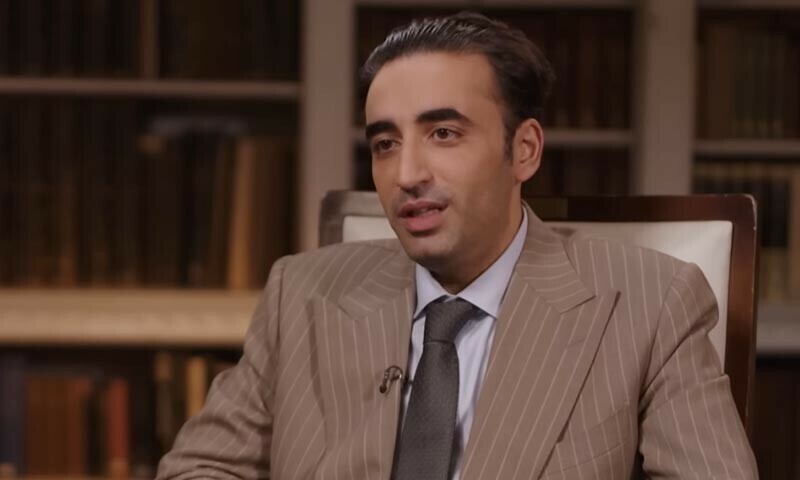
ISLAMABAD: Bilawal Bhutto-Zardari, whose Pakistan Peoples Party sits in the federal coalition, has challenged government ministers to find the “courage” to listen to him, insisting his warning against dividing Sindh was the “truth” and that he would not retreat from it.
Speaking on Wednesday on a private television channel, Bhutto-Zardari stood by a speech in Karachi the day before. There he had warned that any forced attempt to carve up the province would lead to bloodshed on the city’s streets.
Pressed on why a member of the ruling coalition was attacking it, he turned the point around. “These are not reasons to discount what I am saying,” he said. “You may disagree with my suggestions, but at least listen. You should have the courage to listen to the truth.”
“Because I am a stakeholder, I am saying: come to your senses,” the former foreign minister added.
The row traces back to late July, when Interior Minister Mohsin Naqvi said the existing system had failed and needed a “reset” that included new administrative units. The Sindh Assembly passed a resolution on September 4 rejecting any attempt to divide the province. Naqvi has since backed a referendum on the question, which Bhutto-Zardari opposes.
The PPP chairman said he was speaking in the context of the US-Iran war, which has pushed up energy costs and strained economies around the world. “Elites do not have the idea of what kind of difficulties Pakistanis are facing,” he said, adding that politicians must set aside party interests and think about how to “fix the system”.
He argued that if someone was proposing a reset, he had every right to say what shape it should take. He did not name Naqvi at first, but the target was clear. He asked whether “only the PCB chairman” had the right to say how and why the system had collapsed, a reference to Naqvi’s second job as head of the Pakistan Cricket Board.
“If a reset has to happen, then has the PCB been given the responsibility that you have all powers to decide how the system will be reset, whether provinces should be divided?” he said. “Should I go home quietly? This is not possible.”
Bhutto-Zardari said no prime minister, federal minister or other political stakeholder had told him or President Asif Ali Zardari that they wanted new provinces created. He said the debate had not been brought to parliament, and that the government had chosen to hold it in front of businessmen. “It was decided on their own that this debate would be held through touts,” he said.
He also said Pakistan had not become so weak a society that it would accept “one-sided debates”.
On Sindh, he rejected the suggestion that his warning amounted to a threat, saying his party did not engage in violence. He pointed to the province’s history, particularly from the 1980s. “Was what I said outside of a historical context or precedent?” he asked. “This wasn’t organic; it was orchestrated to create division in Sindh’s politics.”
“And this risk is still present today, which is why I was warning that if Sindh is divided forcefully, I would not do such things but there will be a reaction,” he said. He said that while he would not want it, law and order would deteriorate so far that it would be hard to put out the “fire”.
Turning to the wider picture, he asked how many fronts the government wanted to fight at once, with India as an adversary, a near-war situation with Afghanistan and a campaign against terrorism.
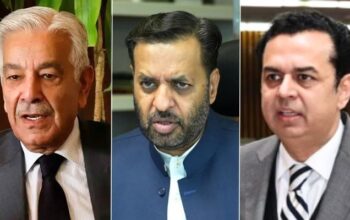
“The government has been deciding that we will fight the PTI; now the new decision is that they will also fight JUI, and it seems that after my truth, they have also decided they must fight me too,” he said. “If you are going to fight everyone, and fight everyone internally as well, then who will lead Pakistan and its people out of this economic crisis?”
He called the government’s handling of Maulana Fazlur Rehman, the JUI-F chief, “completely frivolous, irresponsible conduct”. “If he criticises, the reaction is to demolish the house, arrest his son and pressure his party workers,” he said.
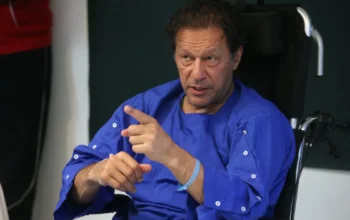
In his Karachi speech, he had also described Imran Khan as a political prisoner and called for the reserved seats to be returned to the PTI. He said the system had not collapsed but been “made to collapse”, and acknowledged his own part in it.
Bhutto-Zardari said the ministers’ reaction was “yet another proof that Pakistan’s politicians do not have the courage to hear the truth”. “If you or they do not have enough courage or patience to listen to me, then what about the people of Pakistan who have no access to the prime minister, his ministers, or the National Assembly?” he asked.
He said he had spoken too much the day before, which was “now hard to digest”. Asked whether the PPP was taking the path of resistance, he declined to describe it that way. He said he had given his voters’ perspective and had not called for protests.
“I suggested to everyone that a political reset is needed, a democratic reset is needed, so that instead of politicians grabbing each other’s collars, fighting each other, we all join hands to pull the public out of this hardship,” he said.
Copyright © 2021 Independent Pakistan | All rights reserved