By Staff Reporter
ISLAMABAD: Senior leaders of the ruling coalition have taken steps to ease tensions over controversial canal projects on the Indus River, engaging in dialogue to bridge differences, though sharp criticism from middle-tier leaders underscores the deep divisions within the government.
The Pakistan Peoples Party (PPP) and the Pakistan Muslim League-Nawaz (PML-N), partners in the coalition government, have clashed over the construction of new canals, a project that has fueled protests across Sindh province and exposed provincial rivalries. While initial anger has subsided, recent communications between senior figures suggest a softening of stances that could lead to a resolution.
The government’s plan to construct six canals diverting water from the Indus River to irrigate Punjab’s Cholistan desert—a project opposed by its coalition partner PPP—has deepened mistrust between Islamabad and Sindh province. The PPP, which governs Sindh, argues the Rs211.4 billion initiative violates a 1991 water-sharing accord and risks exacerbating water shortages in the agrarian region.
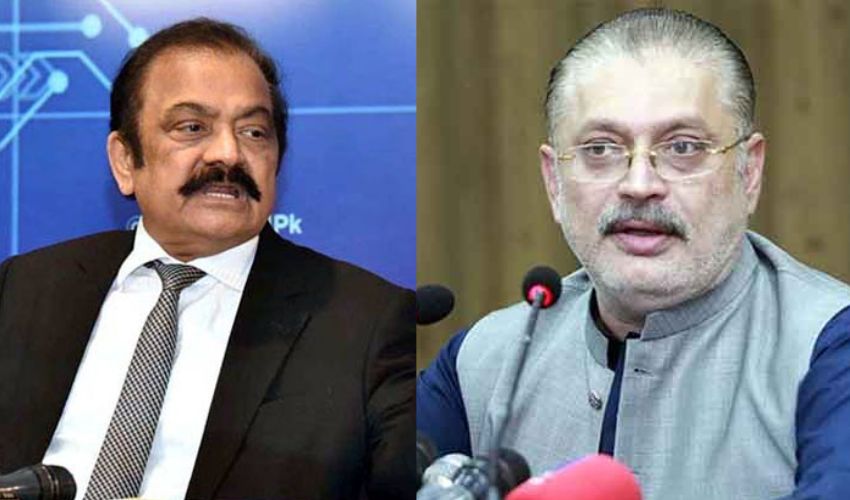
On Monday, Rana Sanaullah, an adviser to Prime Minister Shehbaz Sharif, and Sharjeel Memon, a senior minister from Sindh, held their second phone conversation in as many days. Both leaders reaffirmed their commitment to resolving the dispute through dialogue, signaling a thaw in previously strained relations.
The phone talks came days after PPP chairman Bilawal Bhutto Zardari warned his party would exit the coalition if the federal government ignored Sindh’s objections. The PPP’s withdrawal would destabilize the PML-N-led alliance, which holds a slim majority in parliament.
Speaking to a private news channel later that evening, Sanaullah emphasized the government’s dedication to consensus and equitable water distribution.
“Under the [1991] Water Accord, no province’s water can be diverted to another, nor is it being done,” he said. “The distribution of water is an administrative and technical issue, and it will be resolved on administrative and technical grounds. Let me be very clear that no province will be deprived of its rights, provincial concerns will be addressed, and the process of consultation will be further expanded.”
The Sindh government has yet to respond directly to Sanaullah’s remarks.
However, Information Minister Sharjeel Memon issued a separate statement addressing ongoing protests by nationalist parties, which have blocked roads and highways across the province in opposition to the canal project.
“The political parties have a constitutional right to peaceful protest on the issue of the canal,” Memon said. “Demonstrations, rallies, processions — whatever form a party chooses to protest in — they should inform the government and hold their protests in open spaces or areas where the public does not face inconvenience.”
Despite these efforts, friction persists among middle-ranking leaders.
Punjab Information Minister Azma Bokhari fired the first salvo, criticizing PPP Chairman Bilawal Bhutto-Zardari for his “harsh” remarks.
She defended Punjab’s agricultural policies, noting a Rs100 billion farmer support package, Rs5,000 per acre payments, and a Rs25 billion wheat program, alongside the distribution of Kisan Cards, tractors, and super seeders.
“It is unfortunate that no one has spoken about the condition of Sindh’s farmers. Neither was a wheat price fixed nor were Kisan Cards issued. In contrast, the Punjab government has taken multiple steps for the welfare of farmers,” Bokhari said.
Hours later, senior PPP leader Saeed Ghani hit back, accusing the PML-N of deliberately trying to undermine his party.
Speaking to the media in Karachi, Ghani vowed that the PPP would not yield on the canal issue. “It seems PML-N wants to harm the PPP. They must remove any notion from their minds that we will accept the canal projects through negotiations. We categorically reject them,” he said.
Ghani also clarified the decision-making framework, noting that under Pakistan’s parliamentary system, the prime minister lacks unilateral authority over water distribution, which is governed by agreements like the 1991 Water Accord.
Addressing criticism of President Asif Ali Zardari, the co-chairman of PPP, Ghani said, “President Zardari publicly opposed the canal projects in the joint session of parliament. Opposition parties are beating drums over something no one actually heard,” dismissing claims of Zardari’s alleged support for the projects in a closed-door meeting.
Copyright © 2021 Independent Pakistan | All rights reserved