The celebrated Pakistani-American economist advocates a political grand bargain to help turn around Pakistan’s economy.
By Ahmer Kureishi
ISLAMABAD: Stop gap measures aside, Pakistan cannot puts its economy in order without first plugging runaway elite capture, says Pakistani-American economist Atif Rehman Mian, the first person of Pakistani origin to rank among the top 25 young economists of the world.
A Professor of Economics, Public Policy, and Finance at Princeton University and the Director of the Julis-Rabinowitz Centre for Public Policy and Finance at the Princeton School of Public and International Affairs, Mian believes Pakistan needs a political grand bargain – “that common space that every functioning society needs”.
“There has to be some minimum set of rules that everyone – the main parties, and the ‘establishment’ will legitimately agree on”, said a tweet the other day from Mian, a 2021 Guggenheim Fellow and elected Fellow of the Econometric Society for the same year.
“It is hard to see [for them] what that minimum core will be”, he said in the Twitter thread, “because they are too eager to pull the carpet from underneath [each other’s feet]”.
To have any chance of success, that political bargain must have at least two components: A political compact to stop using the religion card, and a strategy to stem the runaway elite capture that is playing havoc with the country’s economy.
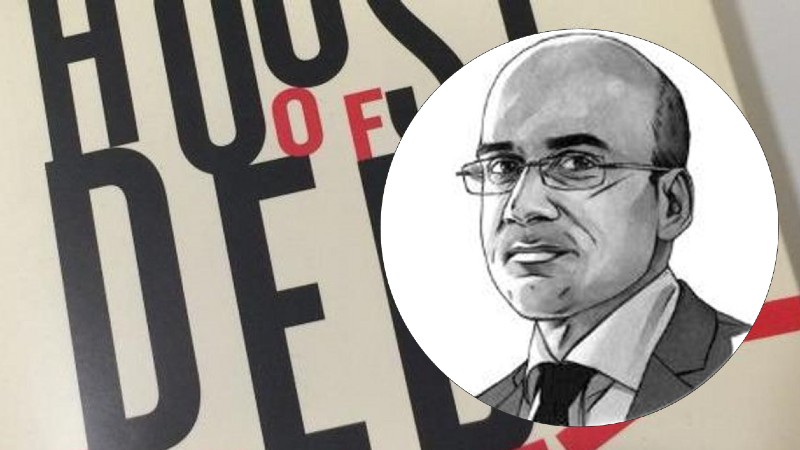
The author of the critically acclaimed book House of Debt, Atif Mian was named by former by Prime Minister Imran Khan in September 2018 as a member of an Economic Advisory Council formed. However, right wing outcry over Mian’s faith gave Khan cold feet and he cut the brilliant economist lose a week later.
Mian’s work focuses on the connections between finance and the macro economy. In 2014, the International Monetary Fund (IMF) identified him as one of twenty-five young economists who it expects will shape the world’s thinking about the global economy in the future.
In his long Twitter thread on Pakistan’s current economic situation, Mian touches upon all the problem riddling the country’s economy, and holds all sides of the political equation equally responsible for the quagmire the country is in right now.
But identifies elite capture as a major stumbling block in the way of domestic productivity, which he considers key to economic wellbeing.
“[The] elite capture of economy is particularly pernicious and unproductive in the case of Pakistan”, says Mian. “Pakistan stands out in how poorly its median citizen fares on basic needs such as education and health, even when compared to countries with similar income per capita”.
He goes on to note how the powerful are flush with revenues from “unproductive, rent-seeking sectors like real estate and sugar”, and emphasises that must change.
In addition, he strongly advocates for taxation and incentive structure to favour productive activities over unproductive ones – and for the economy to open up to women.
A report released by the World Economic Forum (WEF) last week rated Pakistan the second-worst country in terms of gender parity, following the neighbouring Afghanistan where the Taliban rose to power last August and have since totally shutdown women from all walks of life including education.
Looking at World Bank from 2021, Pakistan’s urban female labour force participation has stagnated at around 10 percent for over 20 years now. This is well below rates for countries with similar income levels. The trend holds for women with high levels of education as only a small fraction of women with a university degree in Pakistan have jobs.
Low female labour force participation represents a major loss of economic productivity. As well, it has important implications for women’s empowerment: Working women are more likely to play a role in household decision making compared with nonworking women.
It is not that Pakistani women lack motivation to work. They are hampered by a variety of reasons – including outmoded social norms and barriers to physical mobility. These include social, cultural, and religious barriers to women’s mobility outside their hoes; concerns about safety and crime; and the quality of available transport services.
Copyright © 2021 Independent Pakistan | All rights reserved