By Staff Reporter
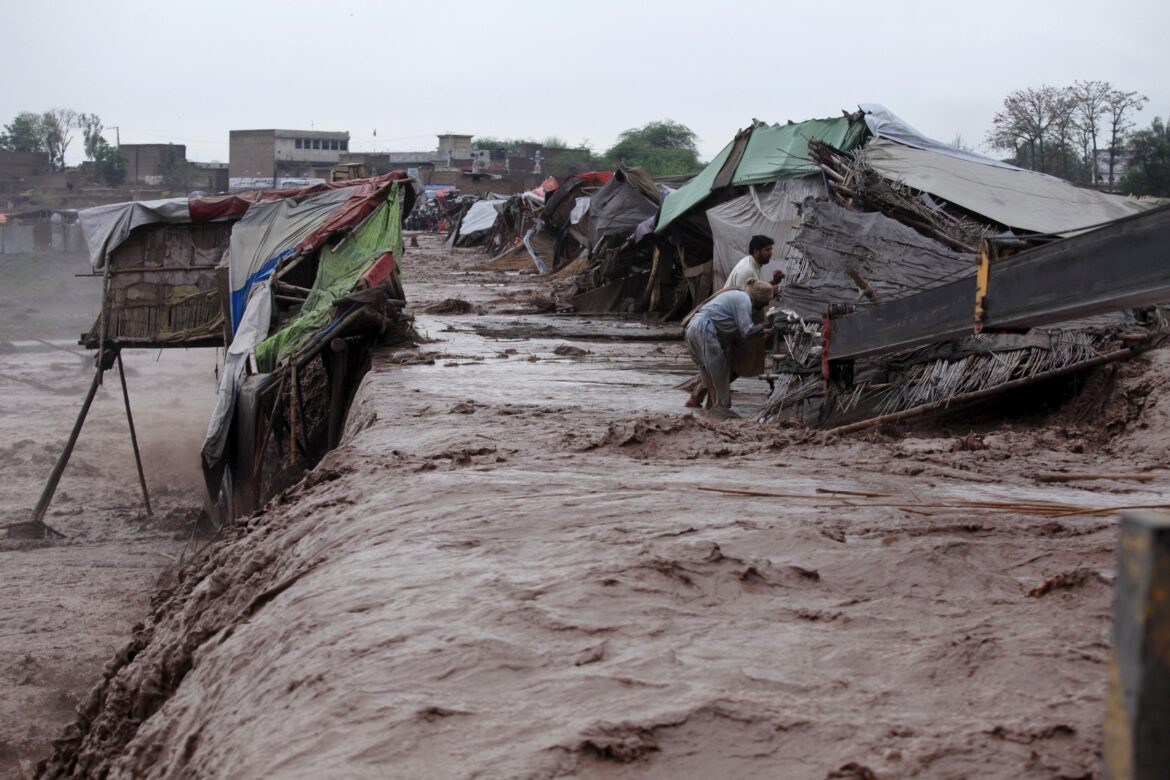
ISLAMABAD: Water levels at two of Pakistan’s largest dams have surged dramatically over the past fortnight, as authorities battle a monsoon season that has already claimed 122 lives and left hundreds injured across the country.
The Tarbela dam, Pakistan’s principal reservoir on the River Indus, has risen almost 33 feet in just over two weeks, according to figures released by the Water and Power Development Authority (Wapda). The reservoir stood at 1,504.31 feet on 16 July; by 31 July it had reached 1,537 feet, leaving it a mere 13 feet short of its maximum conservation level of 1,550 feet.
The Mangla dam on the River Jhelum has seen a comparable rise, climbing from 1,173.20 feet to 1,195.55 feet over the same period. Its ceiling stands at 1,242 feet. Chashma Lake, meanwhile, edged up from 646.80 feet to 648.50 feet, close to its total capacity of 649 feet.
Wapda officials said the sharp increases stemmed chiefly from torrential downpours in the dams’ catchment areas, though meltwater from mountain snow has also played a part in swelling Tarbela’s reserves.
Daily inflow and outflow figures underline the scale of water now moving through the system. At Tarbela, 241,000 cusecs flowed in on 31 July against 184,300 cusecs released. Mangla recorded inflows of 45,100 cusecs and outflows of just 7,400 cusecs, while Marala on the Chenab saw 80,600 cusecs enter and 66,500 cusecs discharged.
The River Indus is expected to hold at a medium flood level at Sukkur, the Met Office’s Flood Forecasting Division said, while flows at Guddu barrage should ease from medium to low over the coming 24 hours. The Jhelum, Ravi and Sutlej rivers remain below low flood level for now, though the Chenab is forecast to swing between low and medium levels at Marala, Khanki and Qadirabad — and could briefly touch high flood level at Marala.
Forecasters have also flagged a heightened risk of flash flooding in the hill torrents around Dera Ghazi Khan and in streams across Khyber Pakhtunkhwa and northern Balochistan. Nullahs feeding the Jhelum, Chenab and Ravi — including the Dora, Dotta, Bhimber and Bein watercourses — are expected to see medium to high flows.
Cities on alert as rains persist
Urban flooding is anticipated in a swathe of towns and cities including Rawalpindi, Gujranwala, Sialkot, Lahore, Faisalabad and Sahiwal, the Flood Forecasting Division warned. Further south, prolonged waterlogging and ponding are expected across much of Sindh, among them Hyderabad, Sanghar, Tharparkar and Umerkot.
In Punjab, the Provincial Disaster Management Authority recorded rainfall of up to 75mm in Attock and 67mm in Sialkot over a single 24-hour period, with Lahore receiving 46mm and Sargodha 44mm. A PDMA spokesperson said the province’s response teams had managed to clear standing water quickly through advance planning and prompt deployment of drainage machinery, sparing residents the worst of the disruption. The current spell of monsoon rain is expected to persist until 5 August.
PDMA director general Saif Anwar Jappa described the situation at Kalabagh and Chashma on the Indus as a low flood level. He put water storage at 85 per cent of capacity at Tarbela, 54 per cent at Mangla, and lower figures of 46, 40 and 37 per cent at the Thein, Pong and Bhakra dams respectively.
Rising toll from building collapses
Punjab alone has recorded 45 deaths and 279 injuries in rain-related incidents this monsoon season, the PDMA said. The majority — 33 — were caused by the collapse of mud-built or dilapidated structures, with six people drowning, four killed by electrocution and two struck by lightning.
Mr Jappa said the injured were receiving the best available medical care and that families of the deceased would be compensated under the provincial government’s existing policy. He appealed to the public to keep children away from rain drains, low-lying ground, rivers and canals, and to alert the authorities immediately if an emergency arose. PDMA’s control room is monitoring the situation continuously, he added.
Nationally, the toll has climbed further still. The National Disaster Management Authority said on Friday that 122 people have died in rain-related incidents since 26 June, with Khyber Pakhtunkhwa the worst affected at 55 deaths, followed by Punjab with 46. Azad Jammu and Kashmir has recorded 10 deaths, Balochistan eight, Sindh two, and Gilgit-Baltistan one.
The federal Emergency Response Committee, chaired by Planning Minister Ahsan Iqbal, has urged government departments to remain on high alert as forecasters predict a fresh spell of heavy rain between 29 July and 5 August. The NDMA told the committee that rainfall was expected across the country’s northern and central regions, with isolated showers also likely over southeastern Sindh.
“The participants reiterated the importance of maintaining close coordination among all stakeholders to ensure a timely and effective response to any emerging situation,” the NDMA said, adding that it continues to coordinate humanitarian relief operations with national and international partners in the worst-hit areas.
House collapses, electrocutions, flash floods and drownings remain the leading causes of death from the rains, according to the authority’s most recent situation report.
A pattern of worsening extremes
The floods form part of a broader pattern that has made Pakistan one of the countries considered most exposed to climate change, with the nation experiencing increasingly volatile weather in recent years — from more frequent heatwaves and droughts to punishing monsoon downpours.
Last year’s monsoon season brought above-average rainfall and flooding that killed more than 1,000 people and inflicted widespread damage on homes, roads, farmland and infrastructure, with Punjab again among the provinces hit hardest.
The scale of this year’s damage remains far below the catastrophe of 2022, when record monsoon rains combined with glacial melt to trigger floods that killed more than 1,700 people, affected upwards of 33 million, and caused an estimated $30 billion in economic losses — one of the worst natural disasters in the country’s history.
Copyright © 2021 Independent Pakistan | All rights reserved