By Staff Reporter
ISLAMABAD: Traders in the northern Gilgit-Baltistan region suspended a two-month protest near the Chinese border on Wednesday after the government agreed to significant tax exemptions for the region’s residents, ending a standoff that had crippled trade through the vital Khunjerab Pass.
The demonstration, launched in late July at the Sost dry port, involved importers, exporters, small traders, customs agents, and members of the Gilgit-Baltistan Chamber of Commerce and Industry. Protesters demanded tax relief, arguing that the semi-autonomous region, historically a “non-tariff” area, should be exempt from sales and income taxes. The sit-in halted commerce and restricted movement across the Khunjerab Pass, a critical link for Pakistan-China trade.
In response, Prime Minister Shehbaz Sharif formed a committee on Aug. 17, led by Energy Minister Sardar Awais Leghari, to negotiate a resolution. After weeks of talks, the government introduced a new tax framework, prompting traders to end their protest.
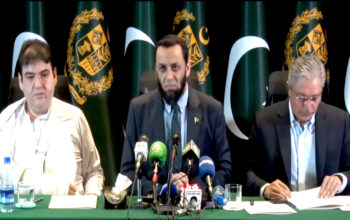
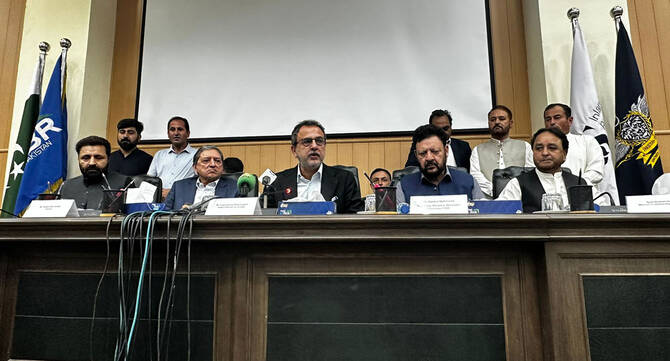
At a news conference in Islamabad, Federal Bureau of Revenue Chairman Rashid Mahmood Langrial, joined by Leghari, Gilgit-Baltistan Chief Minister Hajji Gulbar Khan, and Senator Saleem Mandviwalla, outlined the agreement. Previously, duties and consumption taxes were collected from Gilgit-Baltistan traders at the Sost port, Langrial said.
“While there is no consumption tax for [Gilgit-Baltistan], we did not have a mechanism to ensure that the exemption is offered only to the local population,” he told reporters. “Under the new mechanism, sales tax, income tax, and federal excise duty will no more be collected at the border, but custom duty and regulatory duty will still be collected.”
Under the agreement, tax exemptions apply only to firms registered with the Gilgit-Baltistan government, capped at Rs4 billion annually. The regional government will oversee implementation and compliance.
Ashafaq Ahmad, chairman of the Gilgit-Baltistan Chamber of Commerce and Industry and a protest leader, praised the deal. “We are thankful to the government for granting us tax exemptions and hope the written agreement will be implemented,” he said. Ahmad called for traders to resume cross-border activities at Sost starting Thursday, expressing hope that the relief would revive commerce and strengthen regional trade ties.
Faizullah Faraq, spokesperson for the Gilgit-Baltistan chief minister, said the agreement would affect trade worth over Rs100 billion annually through the Sost dry port. He noted that last year, the government collected roughly Rs16 billion in taxes at the border.
Senator Mandviwalla, speaking at the news conference, said the prolonged protest had raised concerns in both Pakistan and China. Bilateral trade, valued at approximately $20 billion annually, is heavily skewed in Beijing’s favor. Commerce ministry officials told a parliamentary panel this week that Pakistan’s imports from China hit $20.8 billion in 2020-21, compared with exports of $3.1 billion. For the 2024-25 fiscal year, imports were $17 billion, while exports stood at $2.7 billion, according to the National Assembly Standing Committee on Commerce.
The committee voiced alarm over Pakistan’s growing trade deficit with China, urging value-added exports and institutional reforms to address the imbalance.
Copyright © 2021 Independent Pakistan | All rights reserved