By Staff Reporter
ISLAMABAD: The International Monetary Fund repeated its call for Pakistan to phase out a fuel subsidy program that has drawn more than 15 million registrants, saying any future support should oil prices rise again must be limited, timebound and accommodated within the current fiscal year’s budget.
An IMF spokesperson, in comments to media on Saturday, said the fuel support scheme should be wound down “given its broad targeting,” citing the Oct. 7 staff-level agreement that is now awaiting approval from the Fund’s Executive Board. Should oil prices “surprise on the upside,” the spokesperson said, any new assistance should be targeted through established social assistance programs and kept within the FY27 budget envelope. Pakistan’s fiscal year runs through June 2027.
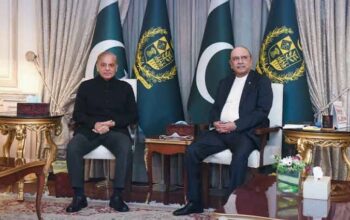
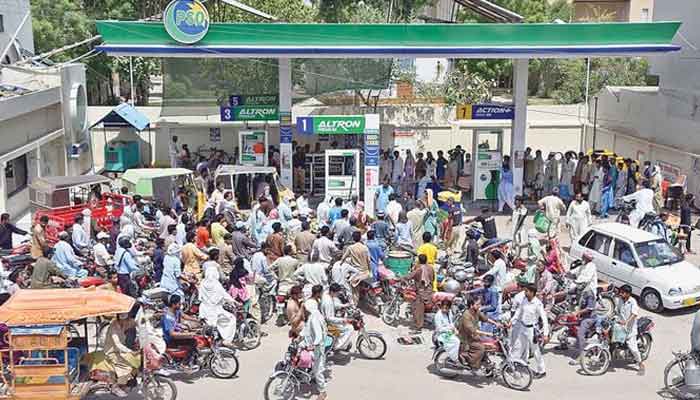
Prime Minister Shehbaz Sharif’s government launched the scheme in September to shield lower-income motorists from fuel costs driven higher by the war that began in February, when the US and Israel attacked Iran. Motorcycle and rickshaw users receive a weekly petrol token worth 500 rupees ($1.80). Owners of cars with engines up to 800cc get a discount of 100 rupees ($0.36) a liter on up to 10 liters every 10 days.
Uptake has been large. The Prime Minister’s Office said Nov. 5 that more than 28.6 billion rupees ($103.4 million) had been paid out through Nov. 4, with 15.5 million people registered. Officials told Sharif that about 63.2 million tokens had been issued and 59.4 million redeemed. Petroleum Minister Ali Pervaiz Malik said in September the program would cost 25 billion to 30 billion rupees a month.
The IMF’s objection is not new. When the two sides announced the staff-level agreement last month, mission chief Iva Petrova said the scheme should be phased out promptly because of its high cost and broad targeting. The government reaffirmed its commitment to the program the following day, and its statement did not address the IMF recommendation or say whether an end date was planned. The Express Tribune reported that officials had said the scheme would continue for three months despite the Fund’s objections.
Under the $7 billion Extended Fund Facility, Pakistan’s authorities have committed to let domestic fuel prices align with international rates while cushioning the most vulnerable, the spokesperson said. Islamabad is trying to move from stabilization toward growth under the program.
The pressure on pump prices has eased recently. Petrol reached a record 458.41 rupees a liter on April 3. Local media reported daily cuts through November that took the price from 377.91 rupees on Nov. 1 to 335 rupees for Nov. 12, with another reduction of 2 rupees announced Friday. Oil fell about 2% on Tuesday as easing geopolitical tensions reduced fears of Middle East supply disruptions. Brent was near $103 a barrel in early November, according to local reports.
The IMF still sees risk. “The war in the Middle East remains a significant headwind for Pakistan, given its reliance on oil and gas imports from the Gulf countries,” the spokesperson said. Iran’s blockade of the Strait of Hormuz has disrupted global shipping and threatened growth prospects for developing economies. Higher oil prices have already fed into inflation, the spokesperson said. Consumer prices rose 9.6% in October from a year earlier, down from 10.3% in September, according to the Pakistan Bureau of Statistics. “Sustained volatility could weigh on the economic outlook,” the official said.
Islamabad’s priorities, the spokesperson said, should stay on macroeconomic stability and reforms to strengthen public finances, improve competition, raise productivity, and bolster the social safety net and human capital. The spokesperson also called for changes at state-owned enterprises and better public services and energy-sector viability.
The staff-level agreement followed talks in Karachi and Islamabad. The mission ran from Sept. 23 to Oct. 7 and covered about $1.2 billion in two tranches. On board approval, Pakistan would receive about $1 billion under the EFF and $210 million under the Resilience and Sustainability Facility, bringing total disbursements to roughly $5.7 billion.
The board meeting on the EFF and RSF review, together with the 2026 Article IV consultation, is expected in December, subject to the fulfillment of program requirements, the spokesperson said. The official did not specify what those requirements are.
Copyright © 2021 Independent Pakistan | All rights reserved