By Staff Reporter
KARACHI: Pakistan’s efforts to overhaul its economy under a $7 billion bailout from the International Monetary Fund have delivered tangible gains, stabilising growth and restoring investor confidence after years of turmoil, a senior IMF official said.
The comments from IMF Communications Director Julie Kozack come ahead of a crucial staff visit to Islamabad next week, where officials will scrutinise the country’s compliance with program targets and discuss budget plans for the coming fiscal year. The review could unlock about $1.2 billion in fresh funding, providing a lifeline as Pakistan navigates persistent fiscal pressures and energy-sector challenges.
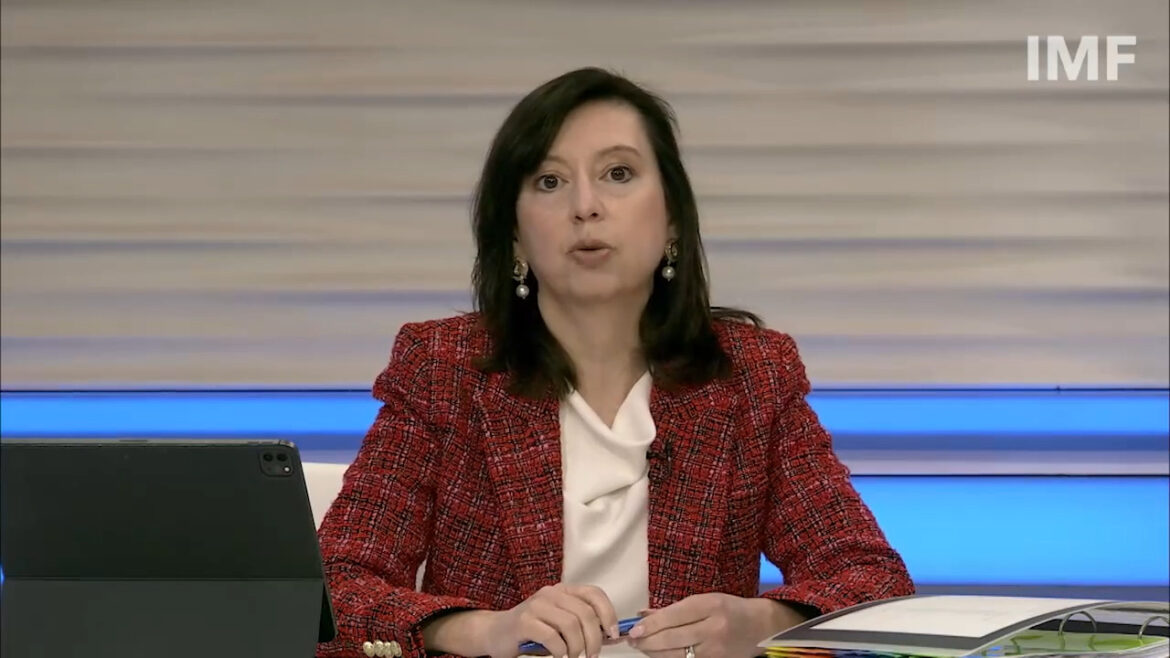
“Pakistan’s policy efforts under the EFF have helped stabilize the economy and rebuild confidence,” Kozack told reporters at a briefing in Washington on Thursday. She highlighted strong fiscal performance, noting that the country achieved a primary surplus of 1.3% of gross domestic product in fiscal 2025, aligning with program goals. Headline inflation has remained relatively contained, Kozack added, while Pakistan recorded its first current account surplus in 14 years during the same period. Those improvements stem from a year of stringent reforms, including tax hikes, subsidy reductions and a tighter monetary stance, which helped avert a potential default amid soaring prices and depleted foreign reserves in 2023.
An IMF team, led by mission chief Iva Petrova, is set to arrive in Pakistan on Feb. 25 for talks running through March 11. The discussions will cover the third review under the Extended Fund Facility — a longer-term loan aimed at addressing deep-rooted balance-of-payments issues — and the second review under the $1.1 billion Resilience and Sustainability Facility, which focuses on climate vulnerabilities following devastating floods in recent years. The program seeks to rebuild external buffers and enhance resilience to shocks, Kozack said.
Performance through the end of December 2025 has largely met expectations, though officials acknowledge a revenue shortfall that they expect to narrow after a favorable ruling from the Federal Constitutional Court on a super tax.
Kozack also pointed to the IMF’s recently published Governance and Corruption Diagnostic Assessment report, which outlines reform proposals such as simplifying tax policy, ensuring fair public procurement and boosting transparency in asset declarations. In response, Pakistani authorities have prepared a 15-point action plan, including identifying the top 10 federal agencies most vulnerable to corruption and macro-critical risks. The plan, detailed in a 240-page document, calls for reducing backlogs in economic disputes by developing performance metrics for courts and judges, with an initial report on administrative tribunals and special courts handling economic matters due in the second year.
It also includes a legislative review of the Anti-Money Laundering Act of 2010 to clarify ambiguities, such as whether a predicate offense conviction is needed for money-laundering prosecutions, with amendments slated for parliamentary approval by June 2027.Further steps involve establishing a joint working group to refine definitions, processes and investigative powers under the law. The National Accountability Bureau will lead a national corruption risk assessment, coordinated through a new task force under the AML/CFT Authority, incorporating inputs from agencies like the Federal Investigation Agency, Auditor General of Pakistan and Federal Board of Revenue. This group will finalize a centralized framework for evaluating corruption risks across organizations.
State Bank of Pakistan Governor Jameel Ahmad has echoed the upbeat assessment, projecting economic growth of about 4.75% for the fiscal year ending in June, with inflation — which hit a peak above 38% in May 2023 — dropping sharply thanks to rate increases and fiscal tightening. Still, analysts warn that the upcoming talks may not be straightforward. Shankar Talreja, head of research at Karachi-based Topline Securities Ltd., described the review as likely “smooth sailing” but flagged potential IMF scrutiny over a Rs336 billion revenue shortfall — missing an indicative target — and a recent decision to cut electricity tariffs by about Rs4 per unit for export-oriented industries, which could strain finances without prior consultation.
Muhammad Waqas Ghani, head of research at JS Global Capital Ltd., anticipated a “tough” negotiation, with the IMF expected to push hard on energy reforms and resolving circular debt before approving the next tranche. The IMF’s executive board last approved $1.2 billion for Pakistan in December after the second EFF review, underscoring the program’s role in anchoring reforms.
Copyright © 2021 Independent Pakistan | All rights reserved