By Staff Reporter
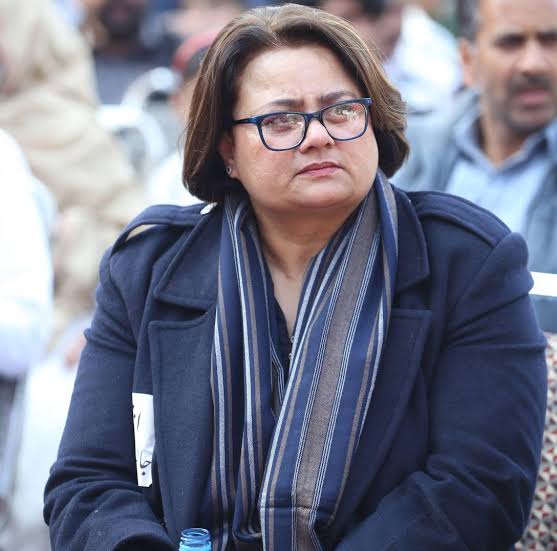
LAHORE: For one day last week, Tahira Habib Jalib ran a food stall in the Karim Block market here, selling home-cooked meals she had prepared herself. She made 2,800 rupees, or about $10. Then the city took the cart away.
Jalib, 61, is the eldest daughter of Habib Jalib, the poet whose verses against military rule made him one of Pakistan’s most enduring symbols of dissent. She has spent much of the past decade finding new ways to support her household — first at a public call office, then driving for Careem and Uber until the price of fuel made that untenable. Selling food seemed like the next option. It lasted a single afternoon.
“I am struggling to earn a living myself instead of asking anyone for help,” Jalib said in an interview with Independent Urdu, describing the succession of jobs she has taken on. She said she had asked Lahore’s deputy commissioner in June for a spot in the Chief Minister’s Model Cart Bazaar, a government program meant to give small vendors a legal place to work, but received no response. So she set up on her own, buying equipment on credit. Officials shut her down within a day.
“All the equipment is now lying at home, which was bought on credit,” she said. “We are sitting at home without anything to spend.”
Jalib plan to sell food near Model Town Market was initially praised by municipal staff for trying to earn a living — before other officials arrived and told her to pack up. She was asked to pay 5,000 rupees to keep operating. She said an earlier application to join the Model Cart Market scheme was turned down without explanation. After she posted about the episode online, Sindh’s culture minister, Syed Zulfiqar Ali Shah, reached out and said he would raise the matter with Punjab officials, as did the province’s governor, Sardar Saleem Haider Khan, according to her account.
Jalib’s predicament sits inside a much larger campaign. Punjab’s government, the country’s most populous province, has spent months clearing what it calls illegal street-level construction from Lahore and other cities, deploying a newly created enforcement body, the Punjab Enforcement and Regulatory Authority, to dismantle food carts and makeshift stalls. Traders across the province have staged protests against the agency’s tactics.
Haris Ali, a spokesperson for Lahore’s deputy commissioner, defended the removal when reached for comment, saying the office maintains “zero tolerance for encroachments” and cannot permit vendors to occupy public space outside designated areas. He said Jalib’s application for a spot in the Model Cart Bazaar remains under review and that she would eventually be granted a legal, reserved location. “Because setting up a dhaba or cart is not allowed everywhere, a place has been reserved for it in every commercial area,” he said.
Jalib was unmoved by the explanation. Invoking a phrase Punjab Chief Minister Maryam Nawaz has used repeatedly in describing her commitment to women’s issues, Jalib asked: “The chief minister claims that ‘women are my red line,’ so why am I being prevented from working as a woman?”
The dispute has drawn attention well beyond a single market stall, in part because of who Jalib’s father was. Habib Jalib spent much of his career in open confrontation with Pakistan’s powerful military governments, jailed repeatedly under General Ayub Khan and General Zia-ul-Haq for poetry that gave voice, as his contemporary Faiz Ahmad Faiz once put it, to the “poet of the masses.” He died in 1993, having turned down the patronage that might have eased his family’s finances, and the state later honoured him posthumously — recognition that did little to offset what his family gave up along the way. His widow’s government stipend, drawn from a fund set aside for the families of Punjabi poets, was cut off in 2014, days before her death, and has not been restored.
Jalib has said publicly that she does not want charity and has instead cycled through a string of jobs to support her household, which includes her sisters and their children. She briefly ran a driving school. She has said she does not feel shame in the work, framing it as consistent with the principles her father lived by.
For now, her food cart sits at home, along with equipment she bought on credit and has not been able to use. Punjab’s government has said a legal spot for her is coming. Since June, it has not arrived.
Copyright © 2021 Independent Pakistan | All rights reserved