By Staff Reporter
ISLAMABAD: Iran’s Foreign Ministry on Wednesday welcomed Pakistan’s mediation efforts to end the Middle East war but offered no direct comment on a last-minute extension of the cease-fire announced hours earlier by President Donald Trump, even as a second round of US-Iran talks in the Pakistani capital appeared to be unraveling before it began.
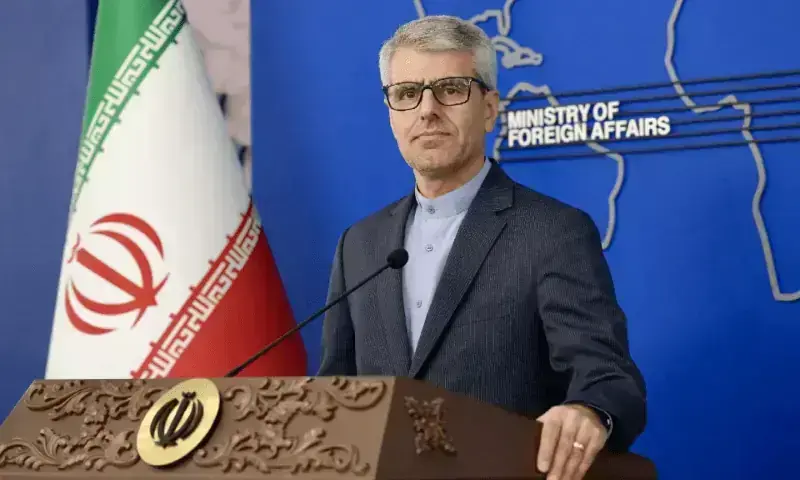
In a carefully worded statement, Foreign Ministry spokesman Esmaeil Baqaei expressed gratitude for what he called Pakistan’s “gracious efforts and mediation attempts to end the imposed war and establish peace in the region.” He stressed, however, that Tehran was “taking the necessary measures to safeguard Iran’s national interests and security,” according to the ministry’s account of his remarks to reporters.
Baqaei added that Iran’s armed forces “stood ready to comprehensively and decisively defend the nation’s integrity against any threat or hostility.” He reiterated that Iran had not started the conflict, which erupted Feb. 28 with US and Israeli strikes on Iranian targets, and that all of Tehran’s actions had been taken in legitimate selfdefence. “Diplomacy is a tool to secure national interests and security,” Baqaei said when asked about the possibility of a second round of direct talks with the United States. “Whenever we conclude that the necessary and logical groundwork is in place to use this tool for realising national interests and consolidating the Iranian nation’s achievements in frustrating enemies from achieving their sinister goals, we will take action.”
He said Iran would “use every opportunity and capacity to hold aggressors accountable, secure Iran’s rights — including delivering justice for perpetrators and instigators of war crimes — and demand compensation.” The statement came as Trump, in a post on his Truth Social platform early on Wednesday, announced he was extending the cease-fire that had been brokered by Pakistan and took effect April 8. The original deadline had been set for April 21 at 8 p.m. Eastern time; Trump had said Monday it would run until “Wednesday evening Washington time” but ultimately chose to prolong it. “Based on the fact that the Government of Iran is seriously fractured, not unexpectedly so and, upon the request of Field Marshal Asim Munir, and Prime Minister Shehbaz Sharif, of Pakistan, we have been asked to hold our Attack on the Country of Iran until such time as their leaders and representatives can come up with a unified proposal,” Trump wrote.
He said he had directed the US military to “continue the Blockade and, in all other respects, remain ready and able,” while extending the truce. The extension came as the first round of historic direct negotiations between Washington and Tehran — held in Islamabad on April 11 and 12 under Pakistani mediation — ended without agreement but also without collapse. Pakistan, initially described as a facilitator, has since been acknowledged by both the White House and Iran as the “sole mediator.”
Yet the diplomatic track appeared to hit fresh turbulence on Wednesday. The White House confirmed that a US delegation led by Vice President JD Vance would not travel to Islamabad as planned. Iran has yet to confirm whether its negotiators will attend. The delay left Islamabad’s high-security Red Zone under continued lockdown, with major roads sealed, government offices operating remotely and many schools conducting classes online for a fourth consecutive day.
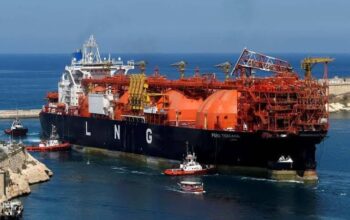
At the heart of the impasse are several core disputes. Iran has denounced the ongoing US naval blockade of its ports and the interdiction of Iranian-linked vessels — including the firing on and seizure of one cargo ship Saturday and the boarding of a large oil tanker Tuesday — as violations of the ceasefire’s spirit. Tehran has also kept the Strait of Hormuz largely closed to non-Iranian shipping, a move that has contributed to a global energy crisis.
On Wednesday, Iran’s semi-official Tasnim news agency reported that Revolutionary Guard forces had seized two vessels for maritime violations and escorted them to Iranian shores — the first such action since the war began. Britain’s maritime security agency, UKMTO, separately reported that at least three container ships had been hit by gunfire in the Strait of Hormuz. Washington, for its part, is pressing for long-term commitments on Iran’s nuclear program, including limits on uranium enrichment and stronger safeguards against weaponisation.
The uncertainty in Islamabad was compounded by continued high-level security operations. Police reported conducting checks on 546 individuals, 248 households, 326 motorcycles, 123 vehicles and 29 hotels, detaining 30 people for further questioning. Entry and exit points to the capital remained under special monitoring. Residents of the Pakistani capital, accustomed to periodic lockdowns during past terrorist threats, political protests and high-profile visits, described a growing sense of fatigue. Markets were subdued, public transport limited and small businesses reported sharp drops in customers.
“We have to live here; the Red Zone has been shut down,” said Zainab Ali Uthmankhail, a 27-year-old office worker, in comments reported by Agence France-Presse. “Children cannot go to school, and shops are closed from time to time. Personally, I do find it very annoying. My time is wasted. Transport fares have increased. But I am happy that we are doing something positive.” Muhammad Ahsan, 35, who runs a small jewelry kiosk, was more blunt about the economic pain. “The impact of the lockdown is that we are not seeing any customers here in the market,” he said. “The government does not know what one day of their lockdown does to our households. Our stoves do not run, we do not find food.”
But some residents expressed pride in Pakistan’s elevated diplomatic role. “We are giving a small sacrifice to reduce the size of the larger sacrifice,” said Syed Umar Hasnain Shah, a young doctor. “So we will continue to sacrifice.” Pakistani authorities have yet to announce a new date for the postponed talks, even as both sides appeared to dig in.
Copyright © 2021 Independent Pakistan | All rights reserved