By Staff Reporter
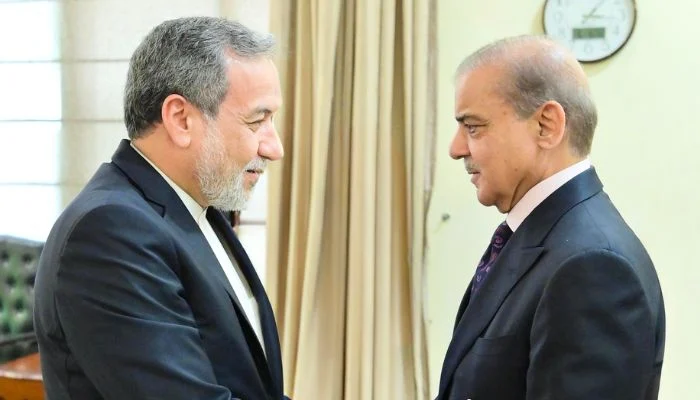
ISLAMABAD: Iran’s Foreign Minister Abbas Araghchi thanked the government and people of Pakistan on Monday for their expressions of solidarity as his country faces continued military pressure from the United States and Israel.
In a post written in Urdu on the social media platform X, Araghchi extended “heartfelt gratitude” for Pakistan’s “strong expression of solidarity and support with the people and government of the Islamic Republic of Iran in the face of the aggression by America and the Zionist regime.” “On this blessed, divine, and spiritual day and hour,” he wrote, adding that Iran was standing with “steadfastness and perseverance in defence of its sovereignty and territorial integrity, with complete reliance on Allah Almighty.”
The message came hours after explosions were reported in the Iranian capital. An AFP journalist described blasts in central Tehran as air defense systems activated, following Israel large-scale overnight strikes. Targets were not immediately clear. The conflict erupted on Feb. 28 when U.S. and Israeli strikes targeted Iran, including an operation that resulted in the assassination of Supreme Leader Ayatollah Ali Khamenei. Iran responded with retaliatory attacks on U.S. assets and military bases in Gulf countries.
Pakistan has sought to play a stabilizing role, with its Foreign Office describing the country as a “bridge builder” during the hostilities. Deputy Prime Minister Ishaq Dar revealed that Islamabad invoked a “Strategic Mutual Defence Agreement” signed with Riyadh last year to help deter more severe Iranian strikes against Saudi Arabia.
Prime Minister Shehbaz Sharif and Dar, who also holds the foreign minister portfolio, have engaged in intensive telephone diplomacy since the war began, urging de-escalation among regional parties. Sharif traveled to Saudi Arabia on March 12 for a restricted meeting with Crown Prince Mohammed bin Salman to discuss the unfolding crisis. At the United Nations Security Council, Pakistan has attempted to maintain balance. It condemned the initial “unwarranted attacks” against Iran, voiced solidarity with Gulf states and called for an immediate return to negotiations.
Last week, Islamabad backed a Bahrain-led resolution condemning Iran’s retaliatory strikes, which passed the council. Pakistan also voted in favor of a Russian-drafted resolution addressing the military escalation, though it was vetoed by the United States. Following the initial strikes, Dar held a call with Araghchi to review the situation in Iran and the broader region. Pakistan has also reaffirmed its position that Iran’s nuclear issue should be resolved through peaceful diplomatic means. In a Security Council briefing on the 1737 Committee, Pakistan’s Permanent Representative Asim Iftikhar Ahmad emphasized dialogue and respect for the parties’ rights and obligations.
On the Senate floor earlier this month, Dar said Pakistan had offered to facilitate indirect talks between Tehran and Washington to end the violence. He noted that Iran had indicated it would not build nuclear weapons, while the U.S. was demanding the full dismantling of Tehran’s nuclear program. Dar said he conveyed Iran’s position to U.S. Secretary of State Marco Rubio, affirming Pakistan’s support for Iran’s right to peaceful nuclear energy while stressing that Islamabad would not be drawn into a wider regional conflict.
The fighting, now in its third week, has disrupted global energy markets and raised fears over key shipping routes. President Trump on Sunday called on nations dependent on Gulf oil to help secure the Strait of Hormuz, through which about 20 percent of the world’s energy passes. However, key allies such as Japan and Australia indicated they would not dispatch naval vessels to escort ships through the waterway. The developments underscore Pakistan’s challenging position, seeking to support Iran while protecting ties with Gulf partners and avoiding entanglement in direct confrontation.
Copyright © 2021 Independent Pakistan | All rights reserved