By Staff Reporter
ISLAMABAD: An Islamabad court on Friday temporarily lifted a ban on two YouTube channels operated by journalists Matiullah Jan and Asad Ali Toor, who had challenged a judicial order blocking 27 channels for allegedly spreading “fake, misleading, and defamatory” content against the government and armed forces.
The ruling marks a rare pushback against a sweeping crackdown that has fueled a national debate over freedom of expression in Pakistan, where critics see deepening government censorship eroding constitutional rights.
The initial order, issued earlier this week by a judicial magistrate, targeted a mix of channels run by journalists, political commentators, and social media influencers both in Pakistan and abroad. Among those affected were accounts linked to the Pakistan Tehreek-e-Insaf (PTI) party, as well as prominent voices like Matiullah Jan, Ahmad Noorani, and Asad Ali Toor.
The government alleged these channels crossed legal lines, disseminating content that undermined state institutions, a charge that swiftly drew condemnation from legal and digital rights advocates.
The ban ignited fierce criticism this week. The Forum for Digital Rights and Democracy (FDRD) and the Supreme Court Bar Association (SCBA) enounced the decision, calling it a “blatant violation” of fundamental rights and an assault on press freedom. The Human Rights Commission of Pakistan (HRCP) weighed in with alarm. “The wholesale blocking of entire channels, rather than addressing specific instances of unlawful or hateful speech in accordance with due process, conflates dissent with criminal activity.”
On Friday, Additional District and Sessions Judge Muhammad Afzal Majoka heard revision petitions from Jan and Toor, issuing a one-page written order for each that suspended the ban for the two journalists. The court found that the petitioners were not given prior notice before their channels were blocked, a move it said violated Article 10-A of the Constitution, which guarantees the right to a fair trial.
“Hence, instant revision petition is admitted for regular hearing,” the order read. The judge also summoned a response from the National Cyber Crime Investigation Agency (NCCIA) for the next hearing on July 21.
Jan took to X to confirm the development. “As a result, a request is now being made to the YouTube administration to halt the process of closing these channels.” Toor, in his own post, hailed the suspension as “a big victory” and thanked the legal team that argued his case.
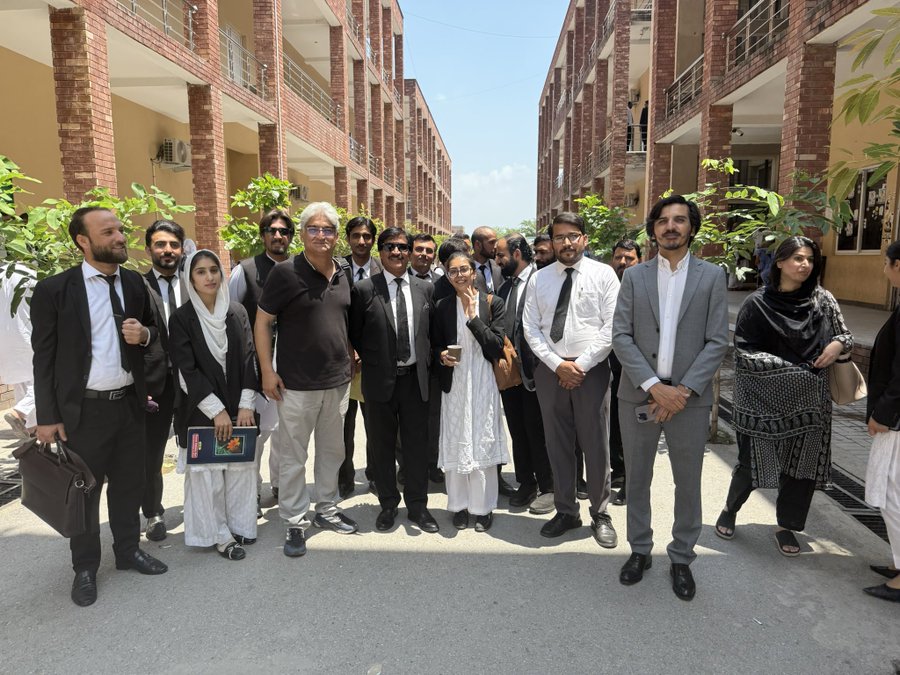
Their counsel, human rights lawyer Imaan Zainab Mazari-Hazir, clarified that the ruling applied only to Jan and Toor. “The others can ideally get the same order if they apply for revisions,” she told reporters.
“Our submission is that the order has no legal basis. It was a one-sided decision without giving [the] defence a chance to be heard,” Reuters quoted Mazari as saying. She added that the magistrate’s court lacked jurisdiction over the matter.
The decision lands amid growing unease over the state of free speech in Pakistan. With traditional media outlets like newspapers and television increasingly constrained, YouTube and other social media platforms have emerged as vital spaces for dissent and public debate.
Digital rights advocates warn that the ban on 27 channels, only two of which have now been granted a reprieve, signals a broader effort to silence critical voices. “What is jarring is the complete lack of legal process,” Activist Usama Khilji said last week.
The HRCP, in its statement, framed the stakes in stark terms: “The constitutional right to freedom of expression is fundamental not only for individual liberty but also for ensuring government accountability, fostering debate and enabling the public to access a diversity of viewpoints.” The group called for “precise and proportionate” responses to hate speech rather than blanket bans, a plea that resonates as Pakistan navigates the tension between security concerns and democratic freedoms.
Copyright © 2021 Independent Pakistan | All rights reserved