By Staff Reporter
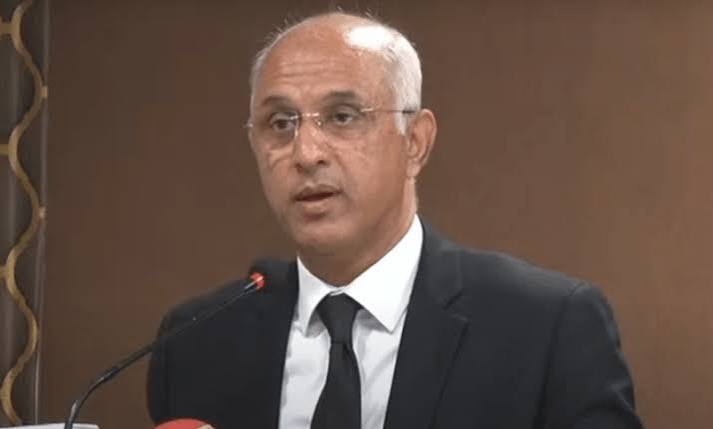
LAHORE: A senior Lahore High Court judge has resigned, telling the president that constitutional amendments have given the executive growing control over the country’s courts.
Justice Mohsin Akhtar Kayani, who was due to retire in February 2032, sent his resignation to President Asif Ali Zardari on Wednesday. He cited health problems following recent surgery, as well as “reasons of conscience”.
In a letter posed on social media, Justice Kayani wrote that the 26th and 27th constitutional amendments “have compromised the independence and institutional integrity of the high courts”. He said he had watched the executive extend its reach over judicial institutions, including the appointment and transfer of judges, and that such interference had “seriously eroded” public confidence in the fairness of the judicial process.
He also raised the position of the ordinary litigant, whom he called the principal stakeholder in the justice system and whose suffering, he said, “continues to deepen”. Those seeking justice had too often been neglected, he wrote, while other actors had become the beneficiaries of a system meant to serve them.
“In these circumstances, my conscience does not permit me to continue on the bench,” he said, describing the decision as painful. He said he would return to legal practice to protect people’s rights and promote legal awareness.
The judge said he had disposed of more than 23,000 cases and described his years of judicial service as among the most meaningful of his life. He closed the letter by thanking his teachers, fellow judges and family for their guidance and support, including during the deliberations that led to his decision.
Justice Kayani is the fourth judge of Pakistan’s superior judiciary to resign since the amendments were passed. Supreme Court justices Mansoor Ali Shah and Athar Minallah quit on 13 November 2025, hours after Mr Zardari signed the 27th amendment into law. Justice Shah called it a “grave assault” on the constitution. Lahore High Court judge Shams Mehmood Mirza resigned two days later.
The 26th amendment, passed in October 2024, changed how Pakistan’s chief justice is chosen, drawing the appointee from a panel of the three most senior Supreme Court judges for a fixed three-year term. It also reshaped the Judicial Commission of Pakistan, which appoints Supreme Court judges.
The 27th amendment created a Federal Constitutional Court that took over some of the Supreme Court’s powers. It also made the army chief Chief of Defence Forces. The government said the new court would cut case backlogs and speed up decisions; critics said it would weaken the Supreme Court. The amendment also rewrote Article 200, removing the need for a judge’s consent before being transferred between high courts.
That change reached Justice Kayani in April. The Judicial Commission, chaired by Chief Justice Yahya Afridi, approved his move from the Islamabad High Court to the Lahore High Court, along with the transfers of Justice Babar Sattar to the Peshawar High Court and Justice Saman Rafat Imtiaz to the Sindh High Court. It was the first time the 27th Amendment had been applied directly to the High Courts. Reports said nine members backed Justice Kayani’s transfer. The government notified it on 29 April, and the Lahore High Court Bar Association challenged the transfers in the Supreme Court.
Justice Kayani had been the Islamabad High Court’s senior puisne judge and was expected to become its chief justice. The transfer dropped him to 12th place on the Lahore court’s seniority list.
His clash with the executive over judicial postings began earlier. In February 2025, Justice Sardar Muhammad Sarfraz Dogar was moved from the Lahore High Court to head the Islamabad court, along with judges from the Sindh and Balochistan high courts. Justice Kayani was among five Islamabad judges who objected, questioning the legitimacy of the elevation. They stayed away from Justice Dogar’s swearing-in a week later, although they had been formally invited.
The Supreme Court’s constitutional bench upheld the transfers. Justice Kayani and other senior judges then went back to the Supreme Court to challenge the administrative powers exercised by Justice Dogar, alleging that the chief justice’s office had become a “monocracy” in which judges could be left off the roster at will.
Justice Kayani had earlier signed a letter to the Supreme Judicial Council in March 2024, one of six Islamabad judges who accused the country’s intelligence apparatus of interfering in judicial affairs. The letter alleged attempts to pressure judges through the abduction and torture of their relatives and secret surveillance inside their homes.
His resignation came days after a reshuffle at the Lahore High Court. The new roster gave him a single bench at the Rawalpindi registry, which meant a return to the twin cities he had served from the Islamabad court. Despite his seniority, he had not been placed on any division bench.
Justice Kayani, who comes from Islamabad, studied at FG College for Men and took his law degree at the University of the Punjab in 1994. He later earned degrees in political science, law and Pakistan studies, along with a postgraduate diploma in human rights from Peshawar University. He enrolled as a district court advocate in 1995 and as a high court advocate in 1997. He was admitted to practise before the Supreme Court in 2009 and joined the Islamabad High Court bench on 23 December 2015. He had also served as president of the Islamabad High Court Bar Association.
The Lahore High Court’s website says he presided over significant cases on enforced disappearances and proposed strict penalties for the crime.
Copyright © 2021 Independent Pakistan | All rights reserved