By Staff Reporter
QUETTA: A methane gas explosion collapsed a coal mine in southwestern Pakistan on Sunday, killing four workers and injuring five others, the latest in a string of fatal accidents that has drawn attention to weak safety enforcement in the country’s coal-mining sector.
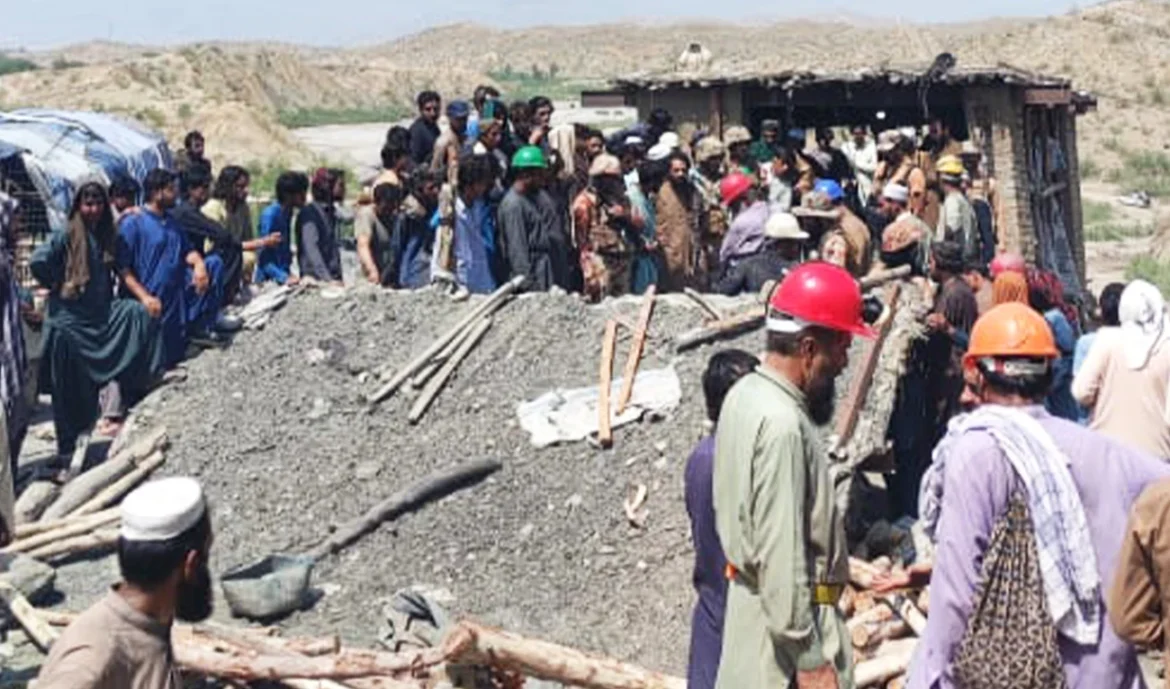
The blast occurred in Shahrag, a mining town in Balochistan’s Harnai district about 168 kilometers from the provincial capital, Quetta. Six miners were working roughly 800 feet underground in a mine operated by the state-run Pakistan Mineral Development Corp. when the explosion triggered a collapse, according to Muhammad Atif, chief mine inspector at the provincial mining department.
Rescue crews worked for hours to reach the men, Atif said. Two miners with severe burns were transferred to Quetta for advanced treatment, while the remaining injured were treated at the scene. State broadcaster Radio Pakistan reported that the Pakistan Army carried out the rescue operation and brought five trapped miners out alive.
At Quetta’s Civil Hospital, four patients from the Shahrag blast were admitted to the trauma center, according to Dr. Hadi Kakar, the hospital’s medical superintendent. Two arrived in critical condition, with burns covering 80% and 90% of their bodies, and remained under close observation. The other two sustained minor injuries and were discharged following initial treatment, Kakar said.
The deceased were residents of Swat district in northwestern Khyber Pakhtunkhwa province, Atif said, and their bodies were being returned to their home villages for burial. The provincial mining department has formally requested an inquiry into the cause of the collapse, he added.
Recurring Hazard
Sunday’s accident is the latest in a series of deadly incidents in Balochistan’s coal belt, where operators and labor groups have long pointed to lax enforcement of safety rules, insufficient ventilation, and unchecked methane accumulation as recurring hazards.
In July, at least 32 miners — most from Shangla district — were killed in one of Pakistan’s deadliest coal-mining disasters, when a methane explosion collapsed a mine in Sorange, near Quetta. Families of the victims later declined to accept compensation payments of 400,000 rupees each, though the report reviewed did not specify their reasons. Balochistan Chief Minister Mir Sarfraz Bugti subsequently ordered stricter enforcement of safety protocols across the province’s mining operations.
Last month, three miners — including two Afghan nationals, according to one report — died after inhaling methane gas in a separate incident in Balochistan’s Mastung district.
Industry Under Pressure
The province is home to roughly 3,000 coal mines operated by 196 mining companies, according to Umar Hayat, general secretary of the National Labour Federation’s Balochistan chapter. Only 17 government inspectors are tasked with monitoring safety compliance across those operations — a ratio Hayat has called “grossly inadequate.”
Following the July disaster, the labor federation called for broader reforms to mine-safety oversight in the province. Balochistan’s coal reserves remain a significant source of employment and revenue for the resource-rich but economically underdeveloped region, even as accident rates continue to draw criticism from labor advocates and miners’ families.
Copyright © 2021 Independent Pakistan | All rights reserved