By Staff Reporter
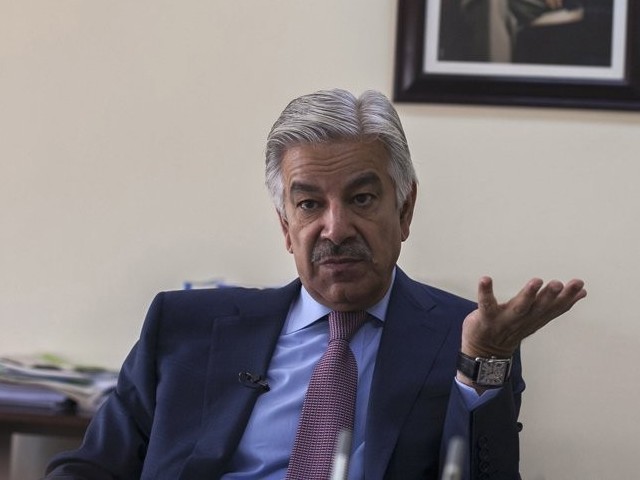
ISLAMABAD: Defence minister Khawaja Asif on Friday forcefully disavowed comments by a government spokesman suggesting that Pakistani troops deployed to a new international force in Gaza would help disarm Hamas, highlighting tensions within the government over a prospective, and politically fraught, commitment.
Asif condemned the remarks by Danyal Chaudhry, the federal parliamentary secretary for information and broadcasting, as not only unauthorised but fundamentally at odds with Pakistan’s position. “I will say God forbid on all these three remarks; what kind of statement has he given?” Mr. Asif said in an interview on local television channel. “Nothing from this is our target or suits us.”
The episode underscores the delicate balancing act facing Prime Minister Shehbaz Sharif’s government as it weighs participation in the International Stabilisation Force, a centrepiece of the United States-brokered Gaza peace agreement finalised earlier this month. Composed primarily of troops from Muslim-majority countries, the force is tasked with maintaining internal security, securing border crossings, assisting with humanitarian relief and reconstruction under a transitional Palestinian authority, and, critically, disarming Hamas
Chaudhry, in a Tuesday interview on a local television channel, had outlined an expansive mandate for any Pakistani contingent. “Pakistan and the other countries that will be chosen will make sure there is no extremism or violence … or that there is no cross-border attack,” he said. “Pakistan will enforce that.” He added that the security of Pakistani soldiers would be the “utmost priority,” and pledged that the troops would “fulfil our duty and protect Muslim brothers and make sure there are no cross-border violations or terrorism.”
Pressed on whether the mission would entail disarming Hamas, Chaudhry replied without hesitation: “Yes absolutely, if [Hamas] will be disarmed, only then the other force will be able to carry on. Things will only move forward after disarmament.”
Asif, speaking a few days later, made clear that Chaudhry had spoken out of turn, and on whose authority remained an open question. “I have no information about this,” he said. “I am frankly speaking that if we are saying such things on a personal level on any TV [channel] then it is inappropriate.”
Pakistan, he emphasised, would adhere strictly to whatever collective decision emerged from government deliberations. “Pakistan would follow whatever collective decision is taken for the force.”
He also questioned “on whose behalf the federal parliamentary secretary was speaking in terms of enforcing peace.” If the force’s role truly matched Chaudhry’s depiction, Asif said, he would not support it. “I won’t be in favour then,” he added. “There has been no discussion like this.”
The minister acknowledged the perils of any deployment amid Israel’s ongoing bombardment of Gaza, agreeing that sending troops into such an environment “would cause a complicated situation.” Behind closed doors, however, the momentum appears to be building toward involvement. Officials familiar with the deliberations, who spoke on condition of anonymity, described discussions within the government and military establishment as being at an “advanced stage.” The internal tone, they said, suggested that Islamabad was inclined to take part.
Pakistan helped shape the contours of the ISF through its inclusion in an original eight-country peace proposal put forward by Muslim-majority states in late 2024, a framework that evolved into the current American-led plan. Officials in Islamabad argue that opting out now would undermine the country’s credibility. Proponents also cite Pakistan’s unparalleled experience in peacekeeping.
As one of the largest contributors to United Nations missions, it has dispatched more than 200,000 personnel to over 40 operations across Africa, Asia and the Middle East. “This experience not only equips Pakistani forces to manage volatile post-conflict environments but also lends credibility and legitimacy to the ISF,” one official said. Geopolitics adds another layer of incentive. Relations between Islamabad and Washington have warmed steadily since President Trump’s return to the White House, easing strains from the Afghanistan withdrawal and counterterrorism disputes. Joining a US-backed endeavor, officials contend, could accelerate this rapprochement, unlocking economic aid, defence assistance and greater sway in regional affairs.
Yet significant hurdles remain. There is no agreed legal framework for the deployment, with Pakistani officials expressing a strong preference for a United Nations mandate. “Ideally, we would like this deployment to take place under a UN mandate,” one said.
Gaza’s volatility persists, and at home, public sympathy for Palestinians runs deep, a sentiment that could frame any Pakistani role as a capitulation to Israeli or American interests, or even a betrayal of Palestinian resistance. “It’s a difficult but defining choice,” another official acknowledged
Copyright © 2021 Independent Pakistan | All rights reserved