

By Staff Reporter
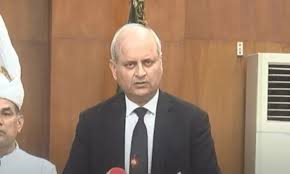
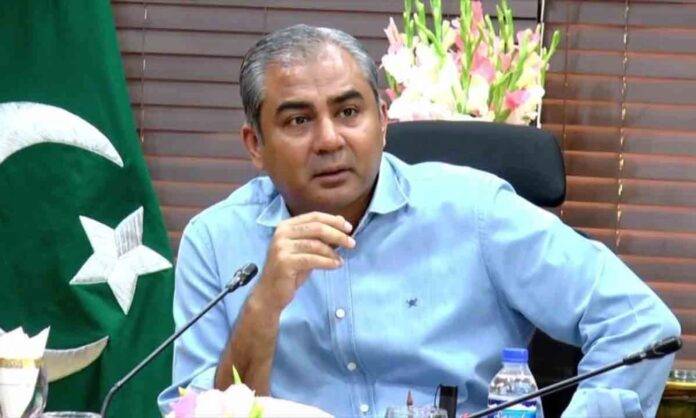
LAHORE: Interior Minister Mohsin Naqvi has told business leaders in Lahore that the country’s system is about to be reset, renewing a call that has opened a rift within the governing coalition.
Speaking at a Lahore Chamber of Commerce and Industry ceremony on Friday to congratulate its newly elected office-bearers, Naqvi said some departments and institutions had become obstacles to government performance and asked traders and industrialists to help him change that.
“As far as federal institutions are concerned, we do receive your complaints from time to time. It seems that some departments and institutions have become hurdles in the way of our performance,” he said. “At this time, this country’s system needs to be reset, and we cannot do that until we have your support.”
He declined to elaborate. “I will not speak more on this, and I don’t want to go into detail,” he said, adding that he hoped things would improve once the system was reset.
The remarks echo his appearance at the Pakistan Economic Summit in July, when he said the governance system had collapsed and called for new administrative units or provinces. Naqvi, widely considered the military establishment’s frontman in the current political setup, argued that structural reform was needed to improve governance, deliver justice and create opportunities for young people.
Much of Friday’s speech turned to Iran, where Naqvi said he had travelled frequently over the past three to four months in an effort to mediate between Tehran and Washington. The conflict has engulfed the region since 28 February, when the United States and Israel attacked Iran.
Those who had not been to Iran, he said, might assume a country at war and under sanctions for 30 to 40 years would be devastated. People who travelled with him had returned astonished at its self-reliance, he said.
“They have a construction industry, an automobile industry – name anything and they manufacture it in their own country,” he said. “If Iranians can manufacture and do everything themselves, why can’t we?”
He said exports were the answer to Pakistan’s economic troubles, and that “every dollar is important” to him, whether the target was $170bn or $9bn. But he also urged the chamber to prepare a “Made in Pakistan” proposal for Islamabad, arguing that the country should cut imports through local production.
While Pakistan would continue to rely on oil imports, he said, it also bought other goods worth more than $40bn a year, a bill he believed could be halved to $20bn. “If we set targets of $10bn and $5bn and start working towards them, God willing, we can make significant progress in three to four years,” he said.
He also told the chamber the government was weighing a business passport to ease the visa difficulties faced by Pakistani traders abroad, according to local reports. “Wherever you need me, I am available to you 24 hours a day,” he said. “As long as I am sitting in this seat, I am here for you.”
A divisive proposal
The provinces debate began on 30 July. The next day, the director general of the military’s media wing, Inter-Services Public Relations, Lt Gen Ahmed Sharif Chaudhry, appeared to lend support, saying an administrative reset, if required, should be carried out to ensure good governance.
The Pakistan Peoples Party (PPP) reacted strongly. Sindh’s chief minister, Murad Ali Shah, rejected Mr Naqvi’s assessment that the system had collapsed, called the proposal outdated and warned that no bloodshed would be allowed over new provinces. On 3 September the Sindh Assembly passed a resolution rejecting any division of the province, describing it as a “historic, civilisational and constitutional entity” and declaring that “Sindh is one and shall remain one”.
In August the Muttahida Qaumi Movement–Pakistan (MQM-P), part of the federal coalition but in opposition in Sindh, backed new provinces and called for a national dialogue. The PPP says administrative reform and the division of Sindh are separate questions.
Naqvi has not backed down. On 5 September he said he would keep supporting new provinces whether or not he remained in office, and that the public, not politicians or governments, should decide after being told the “pros and cons”. He also said he had not meant the “collapse” remark to target any political party, and that a reset did not mean breaking the system.
The constitutional route is unclear. Article 48(6) allows a matter of national importance to be put to a referendum after a joint sitting of Parliament approves it, but a referendum would not itself create a province. Any change to boundaries would still have to follow the constitutional process.
Barrister Gohar Ali Khan, chairman of Pakistan Tehreek-e-Insaf, warned on 7 September that dividing Sindh or any other province without its people’s consent would weaken the federation, and called for a commission and wide deliberation. Defence Minister Khawaja Asif said Sindh was entitled to its own position but that any decision must come through consensus. He suggested Islamabad could be a starting point for restructuring. The prime minister’s adviser, Rana Sanaullah, said the question should go to the relevant forums and be settled by consensus among parties.
President Asif Ali Zardari met Mr Naqvi in Lahore in August, days after the first remarks, though no statement was issued. PPP chairman Bilawal Bhutto-Zardari later said the matter belonged in the National Assembly and suggested Mr Naqvi spend less time at business forums and more in parliament. The party has also urged Prime Minister Shehbaz Sharif to restrain his ministers.
The parliamentary affairs minister, Tariq Fazal Chaudhry, has said parliament will debate new provinces in October, and that Islamabad would get a new governance model rather than provincial status.