By Staff Reporter
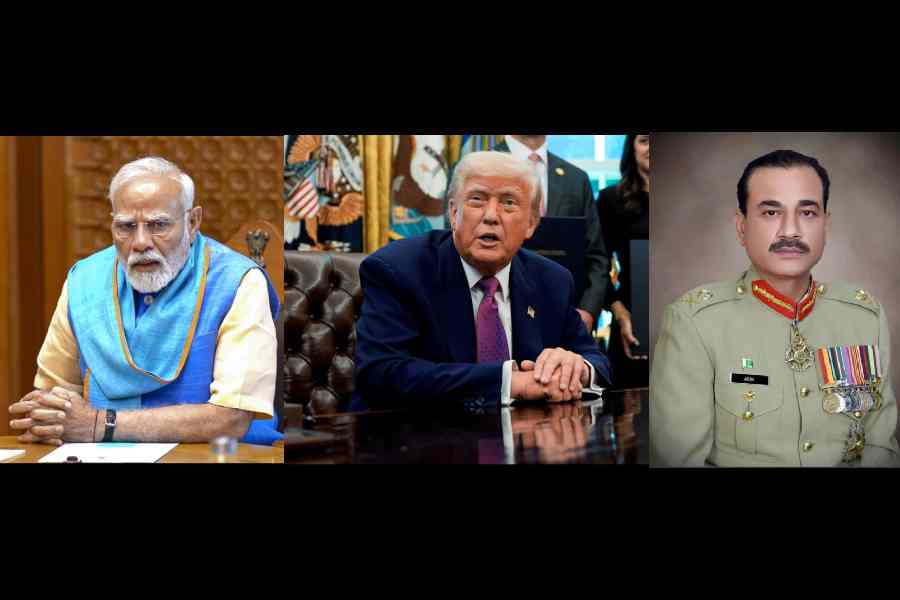
ISLAMABAD: Indian Prime Minister Narendra Modi declined a June meeting with US President Donald Trump, wary of a potential encounter with Pakistan’s army chief, Field Marshal Asim Munir, who was also visiting Washington then, Bloomberg reported.
The American wire service, citing officials in New Delhi, said Modi was concerned that Trump might arrange a meeting between him and Munir if they were both at the White House simultaneously. While India was comfortable with Trump meeting Pakistan’s civilian leadership, hosting Munir was seen as a setback to New Delhi’s narrative, the report added.
This happened weeks after India and Pakistan agreed to a May ceasefire, ending a four-day clash. Modi and Trump were increasingly at odds, especially after Trump claimed he stopped a nuclear war between the rivals with a US-mediated ceasefire. India denied US involvement, asserting the ceasefire was negotiated directly between the two South Asian nations. Pakistan praised Trump’s “constructive and result-oriented role” in the ceasefire, further inflaming tensions.
The friction peaked during a 35-minute phone call on June 17, held after Trump left the Group of Seven summit in Canada early, missing an in-person meeting with Modi. During the call, Modi stressed that India and Pakistan had directly discussed the ceasefire at Pakistan’s request, following the Indian attack. “India does not and will never accept mediation,” Modi told Trump, according to an Indian readout, which noted that the US president “listened carefully.”
According to Indian Foreign Secretary Vikram Misri, Modi used the conversation to set the record straight. “PM Modi told President Trump clearly that during this period, there was no talk at any stage on subjects like India-US trade deal or US mediation between India and Pakistan,” Misri said. “Talks for ceasing military action happened directly between India and Pakistan through existing military channels, and on the insistence of Pakistan. Prime Minister Modi emphasised that India has not accepted mediation in the past and will never do.”
Bloomberg reported that “tensions came to a head” during this exchange, with Trump repeatedly claiming credit for the India-Pakistan ceasefire, a narrative India has consistently rebutted.
Modi’s aides had discovered that Trump planned to host a lunch for Munir the following day at the White House, raising concerns in New Delhi. “Modi felt like he needed to set the record straight in the call,” the report cited officials in New Delhi. “While India had no problem if Trump met Pakistan’s civilian leaders, hosting Munir was seen as giving legitimacy to a military that Modi’s government accuses of supporting militant groups.”
Wary that Trump might orchestrate a meeting between Modi and Munir, the Indian leader declined an invitation to stop by the White House on his return from Canada, opting instead for a planned visit to Croatia. “Once Trump began publicly attacking India, it was clear the episode marked a turning point in the broader relationship,” the Bloomberg report added.
President Trump imposed an additional 25 percent tariff on Indian goods, in retaliation of New Delhi’s continued imports of Russian oil after trade talks hit a deadlock. The move, which will raise duties on some Indian exports to as high as 50 percent when it takes effect in three weeks, marks a significant rupture in US-India relations, already strained by diplomatic disagreements and clashing narratives over regional conflicts. Trump has tied the additional tariffs to India’s continued imports of Russian oil.
The new import tax threatens to hit India’s economy hard, with the US being its largest trading partner. New Delhi shipped goods worth $87.4 billion to the US in 2024, and the tariff hike, among the highest levied on any US trading partner, could disrupt this vital economic lifeline.
Bloomberg said Washington was pushing for greater access to India’s agricultural and dairy markets, a demand that Modi resisted to protect his powerful voting bloc. Speaking at a conference in New Delhi a day ago, Modi said his country will not compromise the interests of its farmers, its dairy sector, and its fishermen. “I know I will have to pay a personal price for this, but I am ready for it.”
The US-India partnership has long been a cornerstone of strategic cooperation, with successive US administrations viewing India, the world’s most populous nation and fifth-largest economy, as a key ally against China’s growing influence in Asia. Trump himself highlighted a “special bond” with Modi during the Indian leader’s visit to Washington in February, calling him a “much tougher negotiator” than he was. But recent events have tested this alliance.
