By Staff Reporter
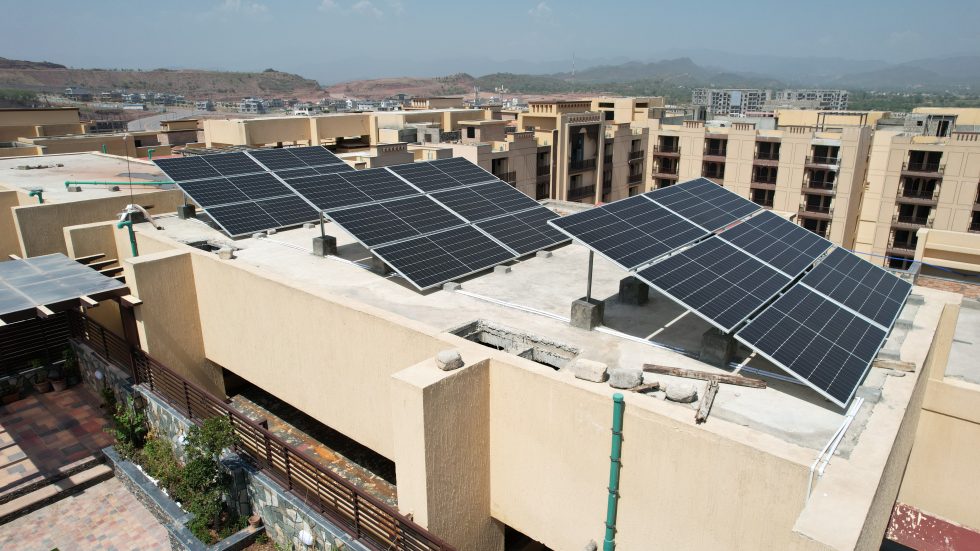
ISLAMABAD: The National Electric Power Regulatory Authority withdrew on Tuesday the licensing requirement and associated fee for rooftop solar systems up to 25 kilowatts, reversing a policy that had triggered widespread criticism of the government for imposing what critics called a “tax on sunlight.”
The decision, issued in a formal notification, eliminates both the need for a Nepra license and the one-time charge of 1,000 rupees per kilowatt for residential and other small-scale prosumers installing distributed generation below that threshold. Systems larger than 25 kilowatts will still face the fee. The regulator said the change is effective retroactively from Feb. 9, 2026.
The move came just two days after the Power Division, under intense public pressure, directed Nepra to scrap the requirements. In a notification issued within hours of a brief public statement by one of its own members, Nepra amended the Prosumer Regulations to restore the simpler approval process that existed before this year’s changes.
Earlier on Tuesday, Nepra member Amina Ahmed told stakeholders the regulator was reviewing the government’s proposal but could not discuss it publicly at hearings or hold a press conference. The notification followed shortly afterward.
The Power Division had formally instructed Nepra on Sunday on the orders of Power Minister Awais Leghari. In its statement, the ministry recalled that it had previously warned the regulator about the potential damage from adding bureaucratic hurdles and fees, and had urged it to revert to the original framework. Leghari, in a post on X, cast the reversal as part of the government’s broader stance. “Our government is pro-solar, pro-consumer, and committed to clean energy,” he wrote. “We want to remove unnecessary barriers, reduce costs, and provide as much relief as possible to the people of Pakistan.”
The policy flip-flop returns the process to the rules in place since 2015, under which distributed-generation facilities of 25 kilowatts or smaller required no Nepra license. Distribution companies, known as Discos, handled applications directly and charged no fee — a key incentive that helped drive residential solar uptake.
The newer Prosumer Regulations shifted approval authority to Nepra and imposed the per-kilowatt fee even on the smallest installations. The Private Power and Infrastructure Board had flagged the discrepancy and asked Nepra to keep the old regime intact for systems up to 25 kilowatts. At public hearings, industry groups including the Pakistan Solar Association, Primage (Pvt.) Ltd., the Pakistan Alternative Energy Association and Siddiq Renewable Energy (Pvt.) Ltd. objected, warning that centralizing approvals would create exactly the kind of red tape that deters investment.
The Power Division itself had cautioned that the new approach threatened to slow Pakistan’s push toward alternative energy. The episode fits a pattern of repeated adjustments in solar policy. The Power Division earlier sought to shift from net-metering to net-billing — a change that would have sharply reduced financial benefits for prosumers — but retreated after public criticism. Responsibility was then handed to Nepra, which in November last year curtailed benefits and withdrew certain concessions even for existing license holders.
Facing further backlash, Nepra later restored net-metering for those already approved, introduced net-billing for new applicants, and in February this year imposed the licensing requirement and fee. As applications began arriving at Nepra’s offices, a social-media campaign erupted accusing the government and Leghari of discouraging solar adoption by charging for a natural resource. For weeks the Power Division distanced itself, insisting the fee was Nepra’s decision and outside the ministry’s authority.
Over the past several years Nepra has increasingly acted as a de facto implementer of Power Division directives, analysts and industry participants have noted. The latest reversal removes a financial and procedural obstacle for households and small businesses at a time when Pakistan is trying to expand renewable capacity amid chronic power shortages and rising demand.
Copyright © 2021 Independent Pakistan | All rights reserved