By Staff Reporter
ISLAMABAD: Pakistan is bracing for a fresh onslaught of monsoon rains from July 29 to 31, with meteorologists warning of potential flash floods, urban flooding, and landslides across multiple regions.
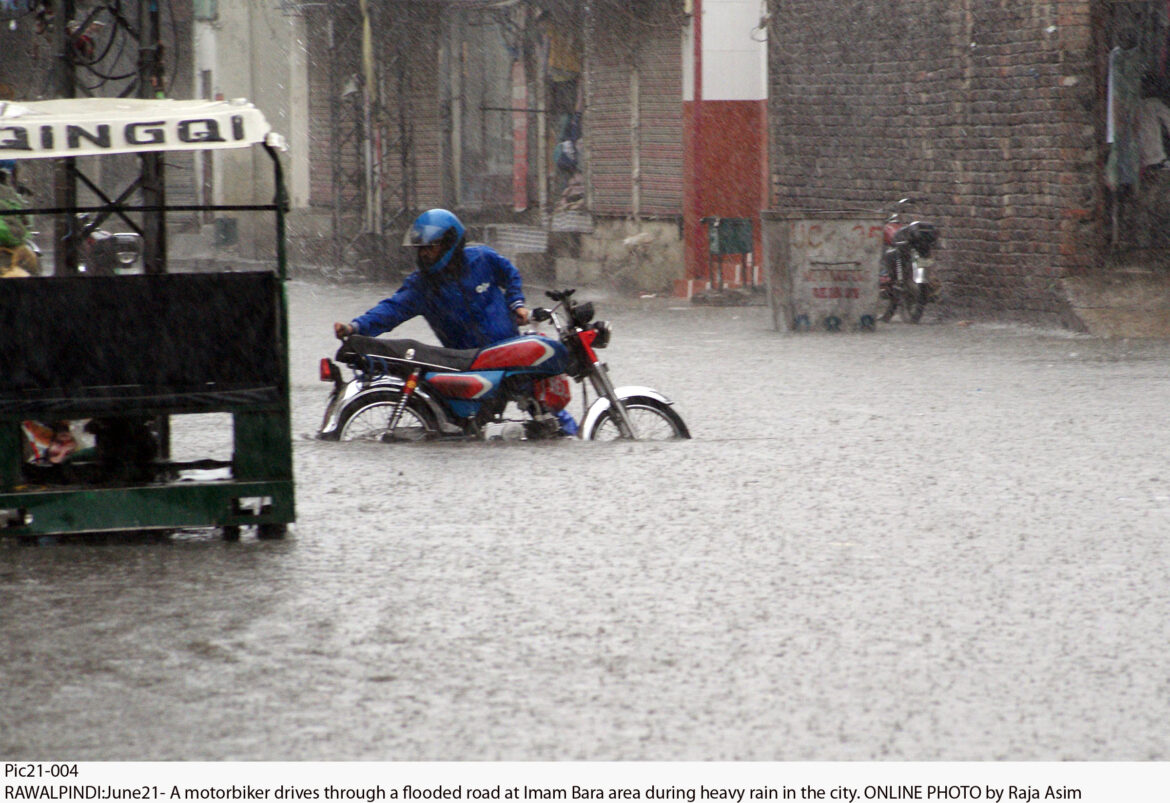
The Pakistan Meteorological Department (PMD) forecasts heavy showers and thundershowers in several provinces, urging local authorities to take immediate precautions. The looming deluge comes as the country grapples with the intensifying effects of climate change, already evident in the devastation unfolding in Gilgit-Baltistan, Punjab and KPK.
Almost half of the 266 deaths linked to Pakistan’s heavier-than-normal monsoon rains were children on their national school holidays, officials said Friday.
Most of the deaths have occurred in Punjab, the most populous province, where monsoon rainfall has been 70% higher than last year, said Mazhar Hussain from the Punjab Provincial Disaster Management Agency (PDMA).
“Children are very vulnerable to this situation. They are playing in the water, bathing, and electricity shocks can happen,” he told AFP. “That’s why their ratio is higher than any other, especially because it’s a holiday in Punjab, so schools and colleges are closed.”
The National Disaster Management Authority (NDMA) said that 266 people had been killed across the country since the monsoon rains hit on June 26, with 126 of them children.
Flash floods, building collapses, lightning strikes and drownings were among the causes of death. Hundreds more have been injured.
The PMD reported that weak monsoon currents are strengthening, with a westerly wave set to arrive on July 29, intensifying the weather system. From July 27 to 31, rain with wind and isolated heavy showers will batter Azad Jammu and Kashmir, including Neelum Valley, Muzaffarabad, and Mirpur, and Gilgit-Baltistan, covering areas like Diamer, Skardu, and Hunza.
In Khyber Pakhtunkhwa, rain and thundershowers are forecast from July 28 to 31 for districts such as Chitral, Swat, Peshawar, and Dera Ismail Khan. Punjab and Islamabad will see scattered heavy showers in Rawalpindi, Lahore, Gujranwala, and Faisalabad from July 28 to 31, while southern Punjab, including Multan and Bahawalpur, will be hit from July 29 to 31.
Balochistan’s northeastern and southern districts, including Quetta, Zhob, and Lasbela, are expected to experience rain and thundershowers with isolated heavy falls from the night of July 29 through July 31. In Sindh, while hot and humid conditions will prevail, rain and thunder showers are forecast for Tharparkar, Larkana, and Sukkur on July 30 and 31.
A joint advisory from the PMD and Punjab’s Provincial Disaster Management Authority (PDMA) highlighted the province’s fifth monsoon spell next week, with heavy falls expected in Lahore, Rawalpindi, and Faisalabad, and rainfall in southern Punjab from July 29 to 31.
The PMD has issued alerts for flash floods in hilly streams across Khyber Pakhtunkhwa, northeast Balochistan, northeast Punjab, and Kashmir from July 29 to 31. Urban flooding is likely in low-lying areas of Islamabad, Rawalpindi, Gujranwala, Lahore, and Sialkot from the night of July 28 through July 31.
Landslides and mudslides could block roads in the mountainous regions of Khyber Pakhtunkhwa, Gilgit-Baltistan, Murree, Galiyat, and Kashmir during this period. PDMA Director General Irfan Ali Kathia has ordered all commissioners and deputy commissioners to remain on high alert and complete precautionary measures. Civil defense, rescue services, and related agencies are on standby.
“We’re anticipating landslides in Murree and Galiyat, and weak structures like mud houses could take a hit,” Kathia said, advising residents to avoid unnecessary travel, steer clear of flooded roads, and stay away from electrical infrastructure.
According to a PDMA fact sheet, Punjab has already faced significant rainfall in the past 24 hours: Multan recorded 117 millimeters, Lahore 43mm, Sheikhupura 37mm, Hafizabad 15mm, Okara 13mm, and Sahiwal 12mm. Ten people were injured in roof collapses over the last 12 hours, though no fatalities were reported from rain-related incidents in the same period.
Water storage levels are at 54 percent in Mangla Dam and 79 percent in Tarbela, with medium-level flooding in the Indus River at Chashma and Taunsa. The Chenab, Ravi, Jhelum, and Sutlej rivers are currently flowing at normal levels. Punjab has banned bathing in rivers, canals, and storm drains, with strict penalties for violators.
Meanwhile, in Gilgit-Baltistan, the impacts of climate change are stark. The regional government reported Friday that floods triggered by melting glaciers and cloudbursts have caused widespread destruction, cutting off access to drinking water, irrigation, electricity, and roads in several areas. Landslides, floods, and soil erosion have damaged water channels, power infrastructure, and communication networks.
GB Chief Secretary Abrar Ahmed Mirza confirmed nine deaths since July 10 , eight in Diamer’s Babusar and Thor valleys, including two women and two children, and one in Astore. “Many areas are isolated due to landslides and mudflows,” Mirza said.
The Karakoram Highway’s blockage at Chilas has prompted C-130 flights to evacuate stranded tourists and patients to Islamabad, with four tourists airlifted from Fairy Meadows near Nanga Parbat. Floods have destroyed 196 homes, damaged 200 others, and swept away over 12 kilometers of roads, 26 bridges, 20 vehicles, and vast tracts of agricultural land and infrastructure.
Mirza noted that relief efforts are underway, with tents, food, and emergency supplies being distributed. He attributed the increasing frequency of cloudbursts and glacial melt to climate change.
Special flights from Skardu and Gilgit have evacuated 135 people, including 80 tourists, while search operations continue for 10 to 12 missing tourists in Babusar Valley. The GB government has urged residents to follow travel advisories and plans to review early warning systems, including the UNDP-funded Glof-II project.
Copyright © 2021 Independent Pakistan | All rights reserved