By Staff Reporter
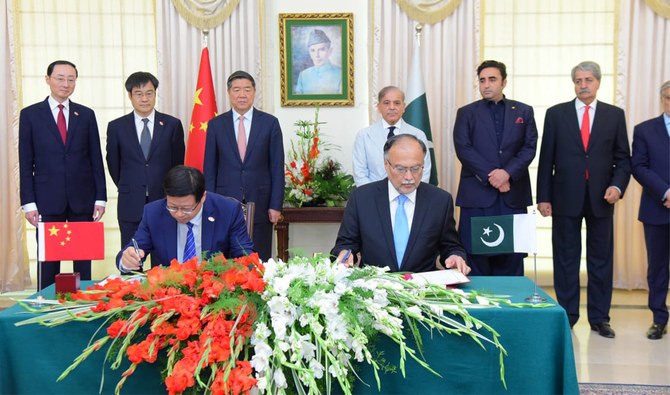
ISLAMABAD: Pakistan and China have agreed to exchange trade documents and data electronically to curb rampant under-invoicing that’s plagued Pakistan’s economy, as the two nations seek to deepen ties in trade, defence and technology amid ongoing regional tensions.
The accord, detailed in a five-year action plan through 2029, targets persistent gaps in trade data while strengthening economic bonds under the China-Pakistan Economic Corridor, or CPEC. It arrives as Islamabad wrestles with circular debt in its energy sector and aims to boost exports to its northern neighbour.
“In the wake of the persistence of discrepancies in trade data and to overcome massive under-invoicing haunting Pakistan’s economy, Pakistan and China have agreed to exchange trade documents and data electronically to jointly enhance trade facilitation and security,” the agreement states.
Trade data pact
The countries also pledged to broaden economic and trade exchanges, foster deeper business links, bolster financial-sector support and enhance connectivity in customs, ports, civil aviation and postal services. They’ll pursue further talks on liberalising trade under the China-Pakistan Free Trade Agreement, eyeing mutual concessions for win-win results, and sustain efforts to lift Pakistan’s export capabilities, particularly into China.
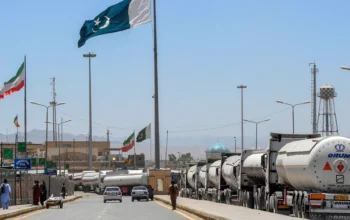
To spur collaboration, the plan promotes ties via trade bodies and associations, easing enterprise partnerships. It backs established Chinese companies investing in Pakistan, with Islamabad committing to a secure business climate. The deal fast-tracks “single window” links for digital data sharing. Border upgrades include modernising the Khunjerab-Sost pass for year-round access and creating a “green channel” for farm products to streamline crossings.
Postal policies will align more closely, with exchanges on tech and standards, plus support for expanded cross-border logistics networks. The blueprint calls for closer bonds between Pakistani groups and Chinese regions, harnessing strengths to fuel fresh cooperation. It aids business-to-business deals through targeted events, forums and platforms in both nations to drive tech ties and supply-chain meshing.
On finance, China will extend aid as feasible, with both sides ramping up bilateral ties and mutual backing in multilateral forums. “China will continue to provide Pakistan with financial support within its capacity,” the document notes.
Defence cooperation
Defence and security provisions build on Pakistan’s repulsion of Indian aggression in May 2025, aided by Chinese tech in the clash between longtime foes. The pair will intensify strategic defence collaboration, pushing bilateral and multilateral anti-terror work aligned with China’s Global Security Initiative.
They emphasised that “strategic defence and security cooperation between China and Pakistan plays an irreplaceable and critical role in maintaining peace, stability, and strategic balance in the region.” Noting strong military trust, cooperation and coordination, they vowed to keep up high-level exchanges and advance joint drills, exercises and tech sharing.
Terrorism draws a zero-tolerance stance, with commitments to fight all forms, build capabilities and swap insights. Pakistan will probe attacks on Chinese interests, nab culprits and tighten safeguards for Beijing’s staff, ventures and facilities there.
Acknowledging Pakistan’s lead in global anti-terror fights, the plan endorses its moves, calls for worldwide teamwork and rejects double standards or politicizing the issue. It seeks equitable legal and judicial swaps, including updates to border enforcement pacts.
Anti-graft efforts will grow via shared know-how, coordination in the UN, SCO and Asian Ombudsman Association, shunning corruption havens and aiding repatriations and asset chases. They’ll enact the Beijing Initiative for a Clean Silk Road to foster Belt and Road ethics.
Cultural bridges
Cultural bridges will widen in education, youth, arts, media, think tanks, publishing, broadcasting, sports, heritage and environment to nurture enduring friendship and people links. Plans include finalising a 2025-2029 education pact between ministries, boosting swaps of students, faculty and researchers, and aiding the CPEC university alliance. China will host more skilled Pakistani scholars and run BRI youth schemes for joint growth.
Cultural work entails rolling out the 2023-2027 deal, staging marquee events and backing Pakistan at Chinese expos. Beijing urges Pakistani outfits to enter Silk Road networks for theatre, festivals, museums, galleries, libraries and tourism hubs. Additional Pakistani media and analysts will join Belt and Road forums, with trips, swaps and training on offer.
Publishers will team on translations, attend book fairs and dive into the Belt and Road coop, bolstering copyrights and joint editions. Film and TV will see more visits, with China open to Pakistani bids for Golden Panda prizes. Broadcasting ties cover policy, content, tech and training, plus co-productions to spread bilateral tales wider.
Aviation will spur new flights and routes. Sports will encourage athlete, coach and admin interactions, plus global coordination. Heritage focus strengthens the Asian Cultural Heritage Alliance, deepening studies, digs, restorations and museum ties to elevate it internationally.
Environmental dialogue aims at domestic and global gains, with China inviting Pakistan into the BRI Green Coalition. Exchanges will flourish among citizens, local governments and twin cities. Under CPEC’s IT wing, coordination deepens, including an Innovation Corridor.
ICT builds will advance, with Chinese firms eyed for fiber, satellite net and cables, handling transit via Pakistan too. Enterprises will chase projects in software, AI, 5G, cloud and data. IT rules and spectrum talks are set, plus digital education links and talent builds. Broadband will expand, drawing Chinese digital investments.
Khunjerab land links will upgrade, maxing trade including Afghan flows. A debut border committee meet will sharpen management. Vocational training ties grow through courses and tie-ups. Aid projects in health, farming, schooling, climate and disasters persist, with extra “small and beautiful” ones to heighten mutual perks. Energy upgrades address lingering repayments and debt cycles, unlocking CPEC plant potential and honing Pakistan’s grid ops and oversight.
Copyright © 2021 Independent Pakistan | All rights reserved