By Staff Reporter
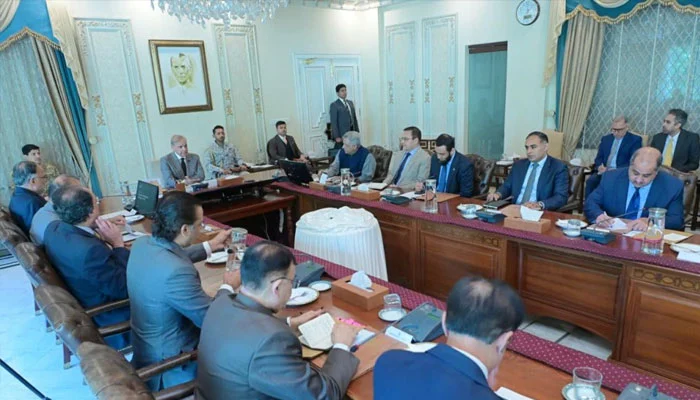
ISLAMABAD: Pakistan has dropped plans to create a new tax agency and will instead seek legal powers to compulsorily retire underperforming officers at the Federal Board of Revenue, according to officials who attended a meeting chaired by Prime Minister Shehbaz Sharif on Monday.
The government will fast-track parliamentary approval of amendments to the Civil Servants Act that would allow it to declare officers redundant in any restructuring, offer them severance and retire them, a senior official told local media. The amendments have been pending before the National Assembly since 2024.
The decision followed a confrontation with the tax bureaucracy. The Inland Revenue Service Officers Association had called a pen-down strike against the proposed overhaul, then withdrew the threat after seeking assurances from senior FBR officials. Sharif was displeased with the strike call, a source privy to the meeting told Dawn.
“We will not tolerate any resistance against the ongoing reforms in the FBR,” Sharif was quoted as saying. He added that officers unwilling to work would be asked to leave.
Sharif reminded officers that their salaries had been raised fourfold and that they had been given vehicles and accommodation. “We have extended every facility to these officers,” he said, according to the same source, adding that it was now their job to deliver results.
The FBR moved against the officers behind the strike call the same day. It suspended two Inland Revenue Service officers, one in grade BS-20 and one in BS-19, and recalled two other BS-20 officers to headquarters for investigation. The board cited an unauthorised press statement and a call to stop official work. Media reported that the suspended officials are Naib Ali Pathan, commissioner at the Hyderabad regional tax office, and Ali Salah Hayat, additional commissioner at the Sargodha office.
The FBR said the conduct was, prima facie, a violation of Rules 23 and 26 of the Civil Servants (Conduct) Rules, 2026, and amounted to misconduct under Rule 34. Disciplinary proceedings will begin under the Civil Servants (Efficiency and Discipline) Rules, 2020.
The idea of an entirely new organisation was floated at a high-level meeting earlier this month. Some participants argued it would take years to become operational and could develop the same problems as the FBR. Media reported the proposal, and the officers’ association then threatened to strike. Officials told local newspaper that Sharif said there was no room for an association that could blackmail the government. The FBR’s senior management said action could be taken against officers for illegally forming a collective bargaining body.
Under the proposed clause 22B, which applies to all service groups, the federal government could abolish or restructure any division, department or office at any time and declare the affected posts and their holders surplus. The appointing authority would then offer a severance package that the officer must accept. The officer could appeal only against its monetary value.
The clause would override the Civil Servants Act, its rules, any other law, contracts, service terms and any court or tribunal order. It would also cover officers facing departmental or criminal proceedings, though their severance would depend on the department’s final decision.
The government will restructure FBR personnel both vertically and horizontally, officials said. The aim is a leaner, less top-heavy and more taxpayer-friendly organisation. The FBR has been told to submit a report on the restructuring to Sharif within the week.
Officials told the meeting that reforms over the past three years had narrowed the estimated tax gap to 5% of gross domestic product from 6%. They said technology had substantially reduced the discretionary powers of FBR officials.
They also said 957 auditors had been hired on merit as third-party contractors, quadrupling audit capacity. New recruits are training at the Lahore University of Management Sciences, and a peer-rating system now evaluates officers’ performance.
Attendees included Finance Minister Muhammad Aurangzeb, ministers Ahsan Iqbal, Azam Nazeer Tarar, Ahad Khan Cheema and Attaullah Tarar, Minister of State Bilal Azhar Kayani and Attorney General Mansoor Awan, the Prime Minister’s Office said.
Sharif also ordered a faster nationwide rollout of faceless tax collection. FBR Chairman Rashid Mahmood Langrial briefed him on a pilot of faceless audit and assessment. The board set up the National Faceless Centre in Islamabad last month to end direct contact between taxpayers and tax officers, drawing its legal authority from the Finance Act, 2026. Each case passes through three officers: one audits, a second assesses and a third reviews quality before any order is issued.
The centre started with 27 officers. Under the pilot, which took effect Oct. 1, it will audit and assess third-party data on 300,000 to 400,000 individuals, referred in phases once initial compliance checks are done.
“These reforms are in the larger interest of the state and will continue under all circumstances,” Sharif said, according to the Prime Minister’s Office. He called for indiscriminate action against corrupt officials. Staff who show genuine improvement should get a chance to reform, he said, while those who persist in corruption and inefficiency would have no place in the organisation.
Copyright © 2021 Independent Pakistan | All rights reserved