By Staff Reporter
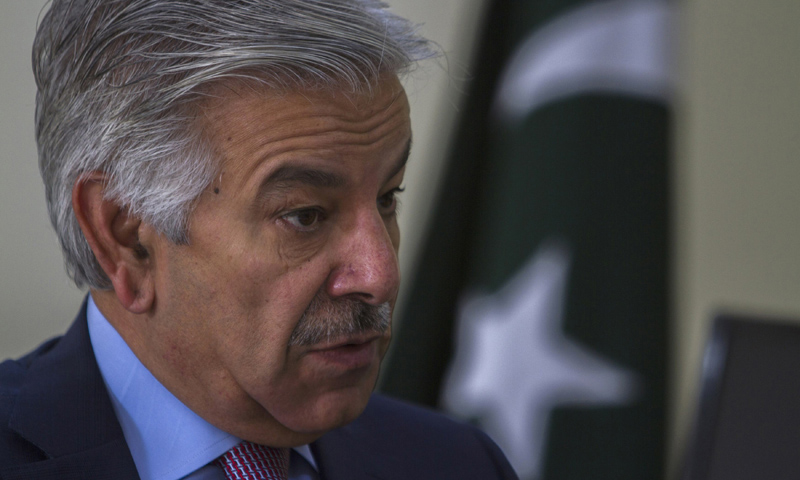
ISLAMABAD: Defence Minister Khawaja Asif said on Monday the next few days were ‘crucial’ with risks of an Indian military incursion, as a deadly attack in occupied Kashmir that killed 26 people heightened tensions between the nuclear-armed neighbours.
The assault last week in Pahalgam, a tourist resort in the disputed Kashmir region claimed by both nations, sparked outrage in India and calls for action against Pakistan, which New Delhi accused of involvement. Islamabad rejected the allegations, denying India’s claim that two attackers were Pakistani and urging a neutral probe.
India has long accused Pakistan of fueling militancy in Kashmir, a charge Pakistan denies, saying it offers only diplomatic and moral support to Kashmiris seeking self-determination.
With cross-border firing along the Line of Control (LoC) persisting for four days, both sides traded blame for the violence. Pakistani officials and analysts raised concerns about potential Indian airstrikes or special forces raids near the border, raising fears of a broader conflict between the two nations, which have fought two wars over Kashmir.
Defence Minister Asif told Reuters that Pakistan had strengthened its military posture in response to the perceived threat. “We have reinforced our forces because it is something which is imminent now. So in that situation, some strategic decisions have to be taken, so those decisions have been taken,” he said, without elaborating on specific measures.
Asif said the military had briefed the government on the possibility of an Indian attack, but he declined to elaborate on the reasons behind his assessment that an incursion was imminent.
“Pakistan is on high alert,” Asif said, adding that the country would only use its nuclear arsenal if “there is a direct threat to our existence”.
In an interview with private Samaa TV, Asif struck a dire tone. “We should be mentally prepared, there is a war looming on the horizon,” he said, adding there was a “vivid possibility” of conflict. “We can have war in the next day or two or three or four.”
Asif, later, clarified his remarks on private Geo television. “They [Samaa TV] asked me what the chances of war are, so I said that the next two to three days were crucial,” he said. “If something has to happen, then it will occur in the next two to four days … otherwise the immediate danger will pass.”
Asif stressed that his comments were not a definitive prediction. “The threat [of Indian attacks] is there, there is absolutely no doubt about it, but I have not suggested anything about its inevitability,” he said. “I have not said that war is inevitable. I said there is a danger of war breaking out in the next few days, but it could also be averted.”
He affirmed Pakistan’s readiness, stating: “Our armed forces have 100 percent preparation, be it in our waters, air or soil. No one should have a doubt about this.”
Tensions were further inflamed by India’s decision to suspend the Indus Waters Treaty, a 1960 pact governing the sharing of the Indus River Basin, critical for 80 percent of Pakistan’s farmland. The move, among punitive measures announced after the attack, prompted a strong rebuke from Islamabad.
Deputy Prime Minister and Foreign Minister Ishaq Dar, chairing a meeting on the issue on Monday, vowed to protect Pakistan’s water rights. “Pakistan will take all appropriate steps to safeguard its due share of water, guaranteed by the Indus Waters Treaty,” Dar said, according to a foreign ministry statement. “Pakistan will continue to advocate for the full implementation of the Treaty to ensure the protection of its water rights and the well-being of its people.”
The ministry condemned India’s suspension as “unilateral and illegal,” violating international law and the treaty’s provisions. “Noting that the waters of the Indus River System remain a lifeline for Pakistan’s 240 million people, he [Dar] deplored the Indian attempts to weaponize water,” the statement said.
Asif said Pakistan had sought international support to ease the crisis, engaging allies and global powers. “We have approached friendly countries, including Gulf states and China, and also briefed Britain, the United States and others on the situation,” he said. “Some of our friends in the Arabian Gulf have talked to both sides,” he added, without naming specific countries.
He expressed hope that these efforts could prevent escalation, noting that “other countries in the region were working to avert any contentious situation and de-escalate the matter.”
The Kashmir dispute, dating back to the 1947 partition of India and Pakistan, remains a volatile issue. The LoC, a heavily militarized de facto border, has seen frequent skirmishes, with both sides accusing each other of ceasefire violations.
The Pahalgam attack, described by India as a planned assault on a tourist hub, intensified New Delhi’s rhetoric, though its claim of Pakistani involvement lacks evidence, according to Islamabad.
India’s 2019 revocation of Jammu and Kashmir’s autonomy further strained ties, leading Pakistan to downgrade diplomatic and trade relations. The treaty suspension marks a new escalation, threatening Pakistan’s agricultural backbone.
Copyright © 2021 Independent Pakistan | All rights reserved