By Staff Reporter
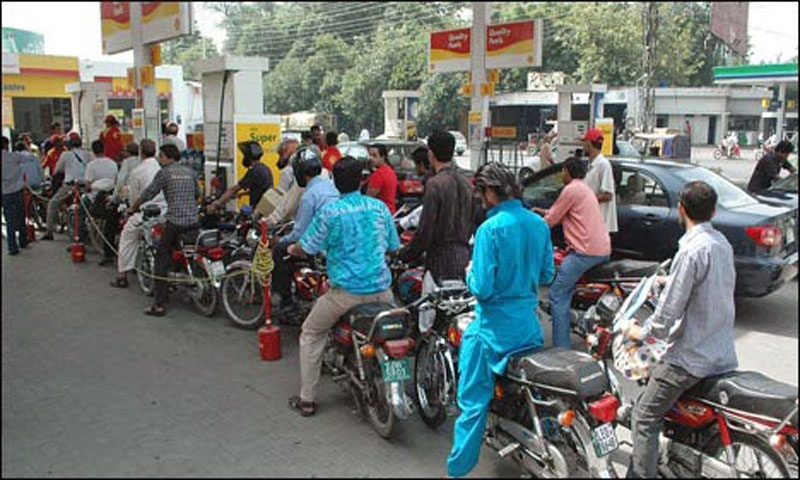
ISLAMABAD: Pakistan’s petroleum dealers said talks with the government aimed at averting a nationwide strike had collapsed, setting the stage for a threatened shutdown of fuel pumps from Saturday, even as retail prices rose for a second consecutive day.
Petroleum Minister Ali Pervaiz Malik told a delegation of dealers in Islamabad on Wednesday that the government would keep its daily price-revision mechanism in place, rejecting the dealers’ demand to revert to monthly adjustments, according to the Pakistan Petroleum Dealers Association. Malik voiced displeasure at the 72-hour ultimatum the association had issued days earlier, but did not move from the government’s position on pricing frequency.
The minister spent only about 20 minutes with the delegation before being summoned by the prime minister, PPDA Chairman Malik Khuda Bakhsh said. A subsequent round of talks with senior officials from related government departments and ministries stretched for five hours without producing an agreement.
Bakhsh said the delegation had pressed Malik to honour an earlier commitment that dealers’ demands would be approved within 15 days. The minister replied that the decision rested with the prime minister and was beyond his authority to guarantee.
Malik did offer one concession during the talks: a Rs1.34-per-litre increase in dealers’ margins, pending for close to two years, had already been forwarded to the Economic Coordination Committee and was awaiting approval from the federal cabinet. That figure falls well short of what dealers are seeking. The PPDA has been pushing for margins to be fixed at 8% of the retail price. Bakhsh said dealers currently earn a margin of Rs8.64 per litre, which shrinks to roughly Rs2.20 per litre once operating expenses are factored in.
With no breakthrough reached, the PPDA said its delegation left for Karachi to convene an emergency session, and the association’s 30-member Executive Committee met Friday to review Wednesday’s negotiations and determine the final shape of the shutdown planned for Aug. 15. The association has said it remains committed to the strike beginning Saturday morning unless its demands are met.
The standoff adds pressure on a government already navigating a volatile pricing environment. Retail petrol and diesel rates have moved on a near-daily basis since Ogra assumed responsibility for setting prices last month, a shift the minister has defended as a way to track international benchmarks more closely using a seven-day rolling average of global prices.
Prices rise again for August 14
Even as the strike threat loomed, Ogra raised fuel prices for a second straight day. Petrol increased by 45 paisa a litre and high-speed diesel by Rs1.16, according to a notification from the Petroleum Division. The new rates — Rs325.43 for petrol and Rs383.95 for HSD — took effect from midnight and applied through Friday, August 14.
Thursday’s move followed a cut of 94 paisa in petrol prices a day earlier, alongside a 54-paisa increase in diesel, illustrating the frequency of swings under the new mechanism. Petrol had stood at Rs324.98 and diesel at Rs382.79 before the latest adjustment.
Taxes remain a significant component of the retail price. The government levies Rs114 per litre in combined taxes and duties on petrol and Rs100 per litre on diesel. The Petroleum Levy on petrol held at Rs80 per litre, while HSD carried a levy of Rs78.28. A Climate Support Levy of Rs5 per litre applies to both fuels, alongside customs duty of Rs21 per litre on petrol and Rs15.68 on diesel.
Roots in Middle East volatility
The daily-pricing system traces back to the surge in global oil markets that followed the outbreak of conflict between the US and Iran on February 28. Petrol, trading around Rs266 a litre in the first week of March, climbed to a peak of Rs458.41 by April 3. Diesel followed a similar trajectory, rising from Rs281 to a high of Rs520.35 on the same date. Both fuels have since retreated well off those highs, though Thursday’s diesel price remains far above pre-conflict levels.
Pakistan initially responded to the volatility by shifting from its longstanding fortnightly review cycle to weekly revisions in early March, pairing the change with fuel-conservation measures. In April, the government layered on targeted relief measures offering subsidized fuel to specific groups. The move to daily pricing followed weeks later, with Malik saying the cabinet and prime minister had assigned Ogra responsibility for tracking international trends on a rolling basis.
A pattern of postponed confrontation
Thursday’s breakdown is not the first time dealers have brought Pakistan to the brink of a fuel-pump shutdown over the new pricing system. The All Pakistan Petrol Pumps Owners Association previously announced its own nationwide strike after talks with the government failed, before agreeing to postpone action following assurances from Malik that Ogra would begin publishing daily prices, along with a breakdown of how they are calculated, in both English and Urdu.
This time, the PPDA’s ultimatum has run its course without a resolution, and the association’s Executive Committee met in Karachi on Friday carrying the outcome of Wednesday’s failed talks into its final decision on whether the Aug. 15 shutdown proceeds as planned.
Uneven impact across the economy
The consequences of the pricing shifts, and any resulting disruption from a strike, fall differently across the population. Petrol is used predominantly in private transport — small vehicles, rickshaws, and two-wheelers — meaning price swings and supply interruptions weigh most heavily on middle- and lower-middle-income households. Diesel powers the heavy transport sector, power plants, and large generators, giving its price movements and availability a broader economic footprint that touches freight costs, electricity generation, and public transport.
Petrol and diesel remain the government’s principal sources of fuel-related revenue, with combined monthly sales running between 700,000 and 800,000 tonnes. Kerosene, by comparison, sees monthly demand of roughly 10,000 tonnes.
Copyright © 2021 Independent Pakistan | All rights reserved