By Staff Reporter
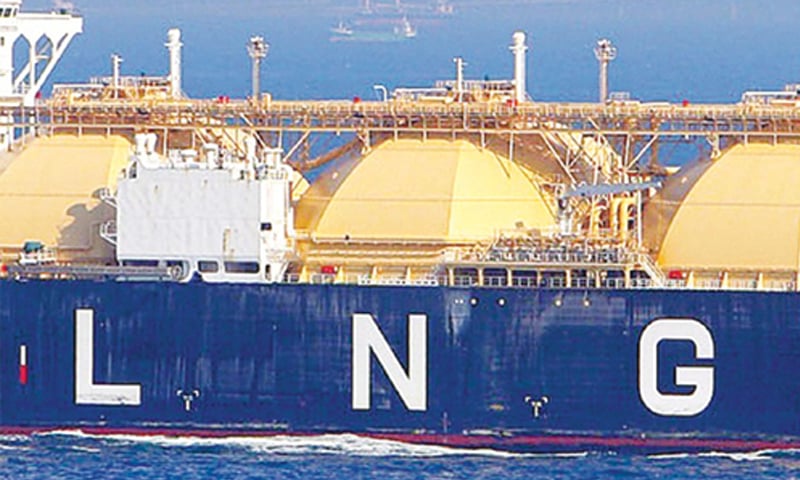
KARACHI: Pakistan has issued a spot tender for a liquefied natural gas cargo to be delivered within days, acting on instructions from a prime ministerial crisis body, as the government races to prevent power shortfalls during peak summer demand, and bids are likely to arrive at prices near $20 per million British thermal units.
Pakistan LNG Limited, the state-owned procurement arm, invited offers from international trading companies for a 140,000-cubic-metre cargo on a Delivered Ex-Ship basis at Port Qasim, Karachi, with a delivery window of June 6-7. Bids were due by 2 p.m. on June 4, with an opening scheduled 30 minutes later. Under Pakistan’s amended Public Procurement Regulatory Authority rules, PLL must notify bidders of acceptance or rejection by 10 p.m. the same day — an unusually compressed timeline that underscores the urgency driving the purchase.
The tender was issued at the direction of the National Crisis Management Cell, a body constituted by Prime Minister Shehbaz Sharif to coordinate responses to acute national supply and energy security challenges, according to people familiar with the matter.
Spot LNG prices are currently trading above $18.50 per MMBtu, and suppliers are expected to submit bids in the $19.50-to-$20 range, which would make this among the costlier emergency purchases Pakistan has made in recent months. The country has historically struggled with the fiscal burden of spot LNG procurement during demand surges, when global prices tend to spike simultaneously with domestic need.
The emergency cargo comes on top of three LNG shipments Pakistan has secured under long-term contracts with Qatar, plus one earlier spot purchase, as officials try to keep pace with rising demand from the power sector and broader industrial consumers through the summer months. Petroleum Minister Ali Pervaiz Malik said the government approved LNG imports on a full cost-recovery basis at the Power Division’s request to backstop electricity supply — a policy that passes the cost of expensive spot cargoes directly through to the energy system rather than shielding consumers through subsidy.
The Qatari contract volumes remain comparatively cost-effective, officials noted, as they are secured on a Cost and Freight basis — meaning shipping costs are embedded in the agreed price, insulating Pakistan from freight market volatility.
Alongside the import push, the government has simultaneously moved to reduce its dependence on expensive LNG by diverting domestic gas to power plants at a steeply subsidized rate of 200 rupees per MMBtu, against a standard market price of 3,500 rupees. A summary to formalize that pricing mechanism is being prepared for submission to the Economic Coordination Committee for approval, Petroleum Division officials said.
Separately, Petroleum Minister Malik signalled that domestic gas consumers could see relief rather than an increase in tariffs at the July 1 pricing review, despite gas distribution companies pushing for higher rates. “You will hear good news” on gas prices, he told reporters, without elaborating on the scale of any reduction.
The government has already decided to price gas supplied to power generation at 2,000 rupees per million British thermal units, compared with 3,500 rupees per mmBtu for liquefied natural gas, Malik said. A formal summary will be submitted to the federal cabinet to align pricing across fuel types and protect consumers from cost pass-throughs, he added.
Local gas production has been raised by 400 million cubic feet per day in response to supply disruptions, Malik said, while proposals to address the sector’s chronic circular debt — a buildup of unpaid obligations that has constrained investment and supply — are also under review.
On the refinery sector, Petroleum Secretary Hamed Yaqoob Sheikh said Islamabad was optimistic about securing IMF concessions to support the modernization of Pakistan’s aging oil refineries. The minister had made a “strong case” to the Fund, Sheikh said, arguing that failure to upgrade domestic refining capacity would ultimately not serve Pakistan’s economic interests.
Copyright © 2021 Independent Pakistan | All rights reserved